


Small Conical Compression Springs: What Material Properties Does Ndlspr Prioritize
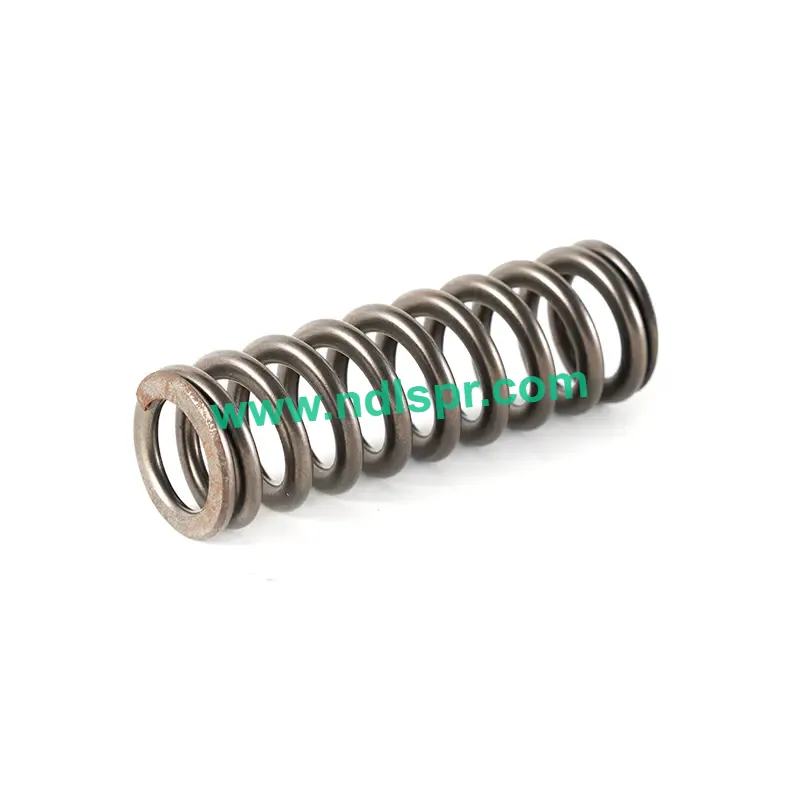
Material Selection Defines Small Conical Compression Springs Performance
Engineers designing compact mechanical systems frequently specify Small Conical Compression Springs for their space-saving properties and progressive spring rates, yet material selection remains a critical determinant of spring performance and longevity. The tapered geometry, with its varying coil diameters, places unique stress distributions across the spring body, demanding materials with specific mechanical properties. Ndlspr, manufactured by Zhejiang Ningdeli Spring Co., Ltd., provides Small Conical Compression Springs in multiple material grades that address diverse application requirements. Which material characteristics should guide selection for your specific spring application?
The material selection process begins with understanding the operating environment's demands on the spring. Temperature extremes affect material properties through thermal expansion and modulus changes. High-temperature applications require materials that maintain their elastic properties and resist relaxation over time. Low-temperature conditions demand materials that retain toughness and ductility to prevent brittle fracture. Ndlspr offers alloys selected for their thermal stability, including high-temperature steel grades and stainless steel variants that perform across wide temperature ranges. The company's engineering team assists customers in matching material thermal properties to operating conditions.
Corrosion resistance represents another primary consideration in material selection for Small Conical Compression Springs. Moisture, chemicals, and environmental exposure cause corrosion that reduces wire diameter and introduces stress concentrations, accelerating fatigue failure. Stainless steel grades, including 302, 304, and 316, provide varying levels of corrosion protection suitable for different exposure conditions. Ndlspr produces springs from these grades, with 316 offering superior resistance to chloride environments. For less demanding conditions, zinc-plated or phosphate-coated carbon steel springs provide adequate protection at lower cost. The application's expected exposure level determines the appropriate corrosion resistance specification.
Fatigue life requirements directly influence material selection through tensile strength and surface quality considerations. The conical geometry concentrates stress at specific coil locations, requiring materials with high yield strength and consistent surface finish. Ndlspr utilizes high-tensile materials, including chrome vanadium and chrome silicon alloys, that demonstrate fatigue resistance for dynamic applications with repeated compression cycles. The heat treatment and surface preparation processes affect fatigue performance, with shot peening recommended for applications requiring extended cycle life. Material selection considers both static load capacity and dynamic cycle requirements.
The manufacturing capabilities of Small Conical Compression Springs producers affect material availability and product quality. Wire drawing, coiling, and heat treatment processes require specific equipment and expertise for different material grades. Ndlspr maintains production equipment capable of processing wire diameters from 0.03mm to 6.0mm, accommodating a wide range of spring sizes and material options. The company's IATF 16949:2016 certification indicates quality management systems suitable for demanding applications, including automotive, aerospace, and medical devices. Material selection should consider the manufacturer's processing capabilities for consistent quality.
Economic factors influence material decisions, with cost considerations balanced against performance requirements. Carbon steel springs offer cost advantages for non-corrosive, moderate-temperature applications. Stainless steel and specialty alloys provide extended service life but increase material and processing costs. Ndlspr assists customers in evaluating cost-performance tradeoffs, recommending material grades that satisfy technical requirements without unnecessary expense. The total cost of ownership approach considers not only initial material cost but also expected service life and replacement frequency.
Standard material specifications provide engineering certainty through documented properties and testing procedures. Ndlspr follows ASTM standards for spring wire, ensuring that material properties meet established requirements. Hardness testing, tensile testing, and chemical analysis confirm material conformity. The company maintains testing laboratory capabilities that verify material properties for each production batch, providing documentation that supports quality assurance. Specification compliance gives engineers confidence in material performance predictions.
The surface treatment options available for Small Conical Compression Springs extend material capabilities beyond base properties. Electroplating, zinc coating, and phosphate coating provide corrosion protection for carbon steel springs. Passivation enhances stainless steel corrosion resistance by removing surface contamination. Ndlspr offers surface treatments as part of its manufacturing services, integrating these processes into the production flow. Surface treatment selection depends on the application's environmental exposure and aesthetic requirements.
The relationship between material selection and spring performance manifests through measurable properties. Hardness correlates with load capacity and wear resistance. Ultimate tensile strength determines maximum load capability before plastic deformation. Modulus of elasticity affects spring rate calculations and deflection behavior. Ndlspr publishes material property data that supports accurate spring design, enabling engineers to predict performance under specified conditions. This transparency facilitates appropriate material selection.
Quality assurance processes verify material compliance through documented testing protocols. Incoming material inspection, in-process verification, and final product testing ensure that spring materials meet specifications. Ndlspr maintains its testing laboratory with advanced inspection equipment that verifies dimensional accuracy, load performance, and surface quality. The company's commitment to quality, including IATF certification, provides assurance that material properties remain consistent across production runs.
Material selection for Small Conical Compression Springs requires balancing multiple factors including operating environment, fatigue requirements, corrosion exposure, manufacturing capability, and cost constraints. Ndlspr offers engineering expertise and material options that support informed selection for diverse applications. The company's experience across healthcare, aerospace, automotive, electronics, and new energy industries provides practical knowledge that benefits customers. Explore the conical compression spring product line and material specifications available through https://www.ndlspr.com/ to identify the optimal material solution for your requirements.

 English
 Arabic
 French
 Spanish
 Portuguese
 Deutsch
 Turkish
 Dutch
Dutch
 Italiano
 Russian
 Romaian
 Greek
Greek
