


How to Choose the Right Dental Billing Partner in the USA for Stronger Revenue Cycle Performance
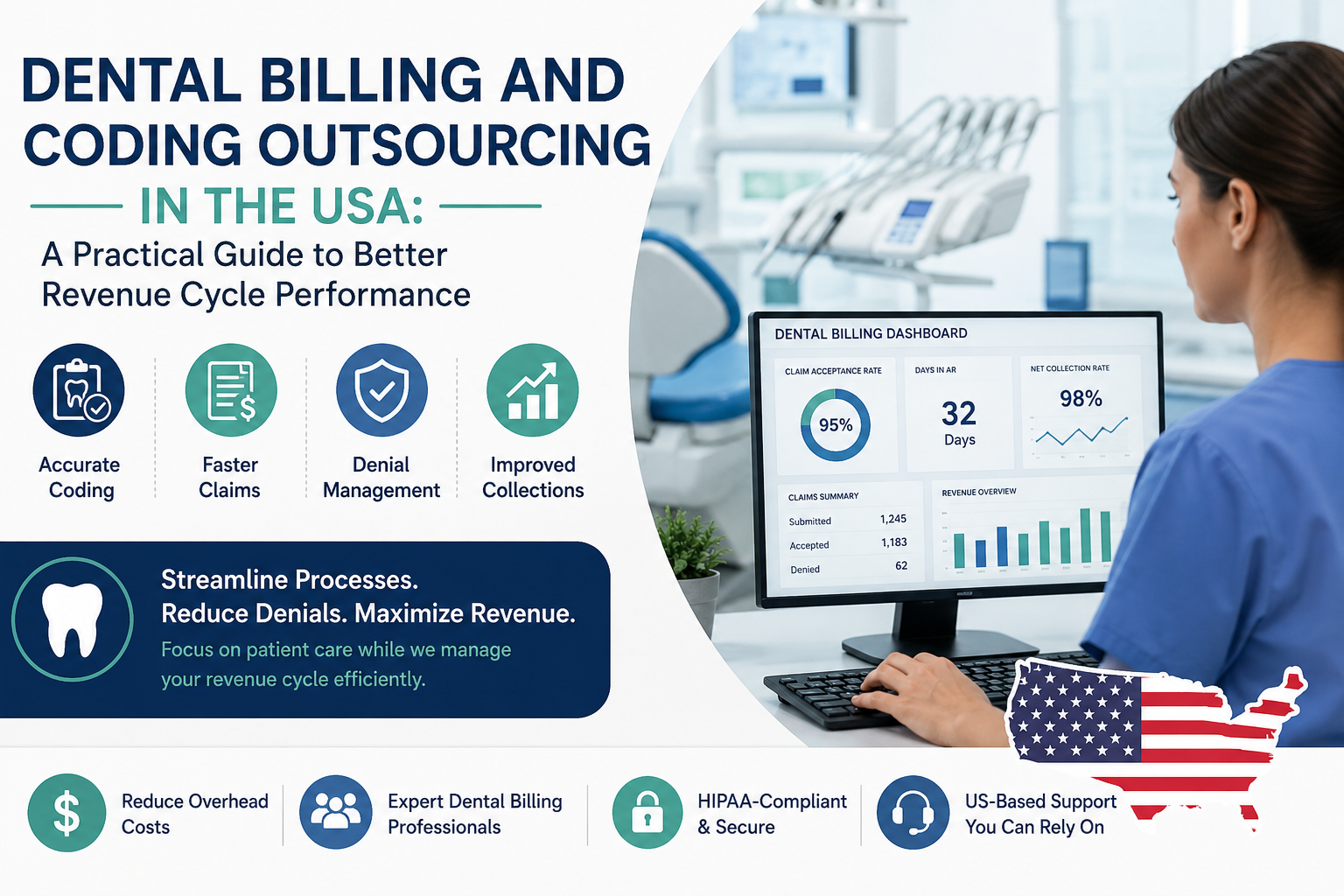
Running a dental practice is about much more than treating patients. Alongside clinical care, dental teams have to manage insurance verification, claim submission, coding, payment posting, denials, patient balances, and follow-up. When these administrative responsibilities begin taking time away from patient care, many practices consider whether they should outsource dental billing company operations to an experienced external partner.
The decision is not simply about reducing paperwork. A capable billing partner can help a dental practice create a more organized revenue cycle, identify payment delays, reduce avoidable claim errors, and improve visibility into accounts receivable. On the other hand, choosing the wrong provider can create communication gaps, delayed follow-ups, and additional administrative work.
For dental practices in the USA, the right outsourcing relationship should therefore be evaluated around accuracy, payer knowledge, technology, communication, compliance, and measurable financial performance.
Why Dental Billing Has Become More Complicated
Dental billing may appear straightforward from the outside, but the financial side of a practice involves numerous moving parts. Insurance benefits vary between plans, coverage limitations can affect reimbursement, and claims may require accurate documentation before a payer processes them.
A busy practice may also deal with:
- Eligibility and benefits verification
- Pre-treatment estimates
- Dental procedure coding
- Claim creation and submission
- Electronic claim attachments
- Insurance follow-up
- Denial management
- Payment posting
- Patient balance management
- Accounts receivable follow-up
- Secondary insurance claims
- Coordination of benefits
When these activities are handled manually or inconsistently, small mistakes can accumulate. A missing attachment or incorrect patient detail might delay an otherwise clean claim. Over time, these delays can contribute to an aging accounts receivable balance.
This is one reason dental practices increasingly evaluate dental billing companies that can manage the financial workflow systematically.
What Does a Dental Billing Company Actually Do?
A professional dental billing partner generally manages financial and administrative processes that occur after or around the delivery of dental care.
The scope differs between providers, but dental billing company services commonly include claim preparation, submission, payment posting, insurance follow-up, denial resolution, and accounts receivable management.
The better providers do more than submit claims. They examine where revenue is getting delayed and identify recurring problems.
For example, suppose a practice notices that several claims are repeatedly rejected because required information is missing. A proactive billing team should not simply resubmit those claims individually. It should identify the pattern, determine why the information is missing, and work with the practice to prevent the same issue from recurring.
That distinction separates transactional billing from effective revenue cycle management.
Key Factors to Evaluate Before Outsourcing Dental Billing
Not every outsourcing company is suited to every dental practice. Before signing an agreement, practices should examine several areas.
1. Experience With Dental Payers
Dental insurance processes can differ considerably from one payer and plan to another. A billing provider should understand common payer workflows, documentation requirements, benefit limitations, and claim follow-up procedures.
Ask potential dental billing providers about the types of dental practices they support and the payer environments they regularly handle.
Experience matters particularly for practices dealing with a high volume of insurance claims or multiple locations.
2. Coding and Documentation Accuracy
Accurate coding is central to clean claims. Coding errors can result in rejected or denied claims, incorrect reimbursement, or unnecessary rework.
A reliable partner should have trained staff who understand current dental coding practices and can identify inconsistencies before claims are submitted.
The goal is not merely to submit claims quickly. The goal is to submit accurate claims with appropriate documentation.
3. Denial Management Capabilities
Denials deserve close attention when comparing dental billing companies in USA markets.
A billing company should be able to distinguish between different denial causes rather than treating every rejected claim the same way.
Common issues can include:
- Eligibility problems
- Missing information
- Incorrect coding
- Documentation requirements
- Coverage limitations
- Frequency restrictions
- Coordination of benefits
- Timely filing concerns
A strong denial workflow records the reason for denial, determines the appropriate corrective action, and tracks the claim until resolution.
4. Accounts Receivable Follow-Up
Unpaid claims are not automatically lost revenue, but they require consistent attention.
An experienced billing team should segment outstanding accounts by age, payer, claim status, and reason for delay. This allows staff to prioritize older or higher-value accounts instead of following up randomly.
For example, a claim that has been outstanding for 75 days may deserve more immediate attention than one submitted only a few days ago.
This structured approach is an important part of dental billing RCM because it connects individual billing activities to the broader financial health of the practice.
Technology Should Support the Billing Team, Not Replace Judgment
Technology can improve the speed and visibility of dental revenue cycle operations, but software alone does not solve billing problems.
When evaluating a dental billing services company, practices should ask how the provider uses technology for:
- Claim tracking
- Eligibility verification
- Payment posting
- Denial reporting
- Accounts receivable monitoring
- Workflow management
- Performance reporting
- Secure communication
The important question is how technology is integrated into the workflow.
For instance, automated claim status monitoring may help identify unpaid claims sooner, while reporting dashboards can help practice owners understand where revenue is being delayed. However, human review remains important when a claim requires interpretation, payer communication, or corrective action.
Compliance and Data Security Matter
Dental billing involves sensitive patient and financial information. Outsourcing does not remove the practice's responsibility to work with organizations that handle information appropriately.
Before selecting a provider, practices should understand how patient information is accessed, stored, transmitted, and protected.
They should also ask about:
- HIPAA-related procedures
- Staff access controls
- Data security practices
- Employee training
- Business associate arrangements
- Documentation and audit procedures
A lower-cost billing service is not necessarily a better choice if its processes create compliance or security concerns.
How Outsourcing Can Improve Practice Efficiency
One of the strongest reasons practices consider outsourcing is the opportunity to reduce administrative pressure on internal staff.
Imagine a dental office where front-desk employees spend several hours each week checking claim statuses and calling insurance companies. That time could instead be used for scheduling, patient communication, insurance verification, or other activities that directly support practice operations.
Outsourcing can provide access to specialized billing personnel without requiring the practice to build a large internal billing department.
Potential benefits include:
- More consistent claim follow-up
- Faster identification of billing issues
- Better accounts receivable visibility
- Reduced administrative workload
- Access to specialized billing knowledge
- More structured denial management
- Scalable support as the practice grows
The financial benefit should ultimately be evaluated through measurable results rather than promises.
What Performance Metrics Should Dental Practices Monitor?
A billing partner should provide meaningful performance data. Simply reporting the number of claims submitted does not tell a practice whether its revenue cycle is improving.
Useful metrics may include:
Clean Claim Rate
This measures how many claims are submitted without errors requiring correction or rework. A higher clean claim rate generally indicates stronger front-end and billing processes.
Days in Accounts Receivable
This helps practices understand how quickly outstanding revenue is being collected. An increasing number can indicate payer delays, unresolved denials, or weaknesses in follow-up.
Denial Rate
Tracking denials by payer and reason can reveal recurring operational problems.
Collection Rate
This provides insight into how effectively billed services are ultimately converted into collected revenue.
Aging Accounts Receivable
A detailed aging report helps identify balances that have remained unpaid for extended periods.
These metrics allow practice owners to judge whether their outsourcing relationship is producing meaningful operational improvements.
When Is Outsourcing a Better Choice Than an In-House Team?
Outsourcing is not automatically the right answer for every dental office.
A small practice with low claim volume and experienced internal staff may be able to manage billing effectively in-house. However, outsourcing becomes more attractive when the practice experiences rapid growth, staffing shortages, increasing denial volume, or persistent accounts receivable problems.
It can also be useful when an office manager or clinical team is spending too much time on billing administration.
For multi-location practices, outsourcing can offer another advantage: standardization. A centralized billing workflow can make it easier to compare locations, identify recurring issues, and maintain consistent financial processes.
Questions to Ask Potential Dental Billing Companies
Before choosing a partner, practice owners should have a detailed conversation rather than relying solely on pricing.
Consider asking:
- How much experience do you have with dental practices similar to ours?
- Which billing functions are included in your service?
- How do you handle rejected and denied claims?
- How frequently do you follow up on outstanding claims?
- What performance reports will we receive?
- How do you protect patient information?
- Who will be our primary point of contact?
- How do you handle difficult payer issues?
- Can your services scale as our practice grows?
- How do you measure the success of the billing relationship?
The answers can reveal whether the company is focused on genuine revenue cycle performance or simply processing transactions.
Where Broader Revenue Cycle Expertise Can Add Value
Although dental practices have specific billing requirements, some financial challenges overlap with the broader healthcare revenue cycle. Practices operating across multiple healthcare services may benefit from a partner with experience beyond dental claims.
For example, 247 Medical Billing Services supports healthcare organizations with broader administrative and financial workflows. Depending on the practice's needs, related medical billing services, medical coding services, and medical billing and coding services can provide additional support where dental and healthcare operations intersect.
Likewise, comprehensive revenue cycle management services can help organizations address claims, payment workflows, accounts receivable, and denial-related processes as connected parts of one financial cycle. Credentialing services may also be relevant when provider enrollment and payer participation become part of a growing organization's administrative workload.
The important consideration is whether the provider's capabilities match the practice's actual requirements rather than selecting a company based only on the number of services it advertises.
The Real Value of Choosing the Right Outsourcing Partner
The best outsourcing relationship should feel like an extension of the dental practice rather than a separate vendor operating in isolation.
A strong partner communicates clearly, reports performance consistently, understands payer behavior, and takes responsibility for following claims through the revenue cycle.
More importantly, the practice should be able to identify measurable improvements over time. If outstanding claims are being addressed more consistently, denial patterns are declining, staff workload is improving, and financial reporting is becoming clearer, outsourcing is serving a practical purpose.
Before making a decision, dental practices should compare providers based on experience, workflow, communication, compliance, technology, reporting, and demonstrated results—not simply monthly fees.
Frequently Asked Questions
1. What does an outsourced dental billing company handle?
An outsourced dental billing company may handle claim preparation and submission, insurance follow-up, payment posting, denial management, accounts receivable follow-up, eligibility-related tasks, and financial reporting. The exact scope depends on the agreement.
2. Are dental billing companies in USA familiar with different insurance payers?
Experienced providers generally work with multiple dental insurance environments and understand common payer procedures. However, practices should ask prospective providers which payers and practice types they regularly handle.
3. How can outsourcing reduce dental billing problems?
Outsourcing can provide dedicated billing personnel, standardized workflows, consistent claim follow-up, and structured denial management. These processes can help reduce avoidable errors and prevent unpaid claims from being overlooked.
4. Is outsourcing dental billing suitable for small practices?
Yes. Small practices may benefit when billing tasks consume significant staff time or when there is no dedicated billing specialist. The decision should be based on claim volume, internal resources, financial performance, and administrative workload.
5. What should a dental practice look for in a billing provider?
Look for dental billing experience, coding knowledge, payer expertise, denial management capabilities, secure data handling, transparent reporting, responsive communication, and the ability to demonstrate measurable performance.
6. How should a practice measure the success of outsourced billing?
Practices can monitor clean claim rates, denial rates, days in accounts receivable, collection performance, aging balances, and the resolution of outstanding claims. Comparing these metrics before and after outsourcing provides a clearer picture of whether the partnership is delivering value.
Conclusion
Choosing to outsource dental billing is ultimately a business decision tied to efficiency, cash flow, staff productivity, and patient service. The right dental billing services company should do more than send claims. It should understand the complete revenue cycle, identify recurring problems, communicate clearly, and help the practice maintain better control over its financial operations.
For dental practices evaluating dental billing companies, the strongest choice is rarely the provider offering the lowest price. A better approach is to find a partner with relevant expertise, reliable processes, transparent reporting, and a clear commitment to improving the practice's revenue cycle.
With the right dental billing providers supporting the financial side of the business, dentists and their teams can spend less time chasing administrative issues and more time focusing on the patients who depend on them.

 English
 Arabic
 French
 Portuguese
 Deutsch
 Turkish
 Dutch
Dutch
 Italiano
 Russian
 Romaian
 Portuguese (Brazil)
 Greek
Greek
