


Can Rubber Manufacturers Improve Dynamic Performance with YG-1 Solutions
Rubber compounds are expected to remain flexible while handling repeated deformation, pressure, vibration, and changing environmental conditions, which makes formulation an important part of finished-product performance. An anti fatigue agent can contribute to this formulation by supporting resistance against mechanical deterioration during repeated use, while YG-1 provides a range of rubber additive solutions for manufacturers working with demanding compound requirements. Understanding how such additives interact with the base polymer, reinforcing materials, curing system, and other ingredients can help formulators create a compound suited to its intended service conditions, so how should this type of material be considered during rubber formulation?
The performance of a rubber compound rarely depends on one ingredient working independently. Polymer selection establishes the basic characteristics, while fillers, plasticizers, curing components, accelerators, antioxidants, adhesives, and processing aids influence how the compound behaves during mixing, vulcanization, and application. When rubber experiences repeated flexing or compression, small structural changes can gradually develop inside the material. A carefully designed formulation aims to control these changes so that elasticity, adhesion, strength, and dimensional stability remain appropriate for the intended operating environment.
Fatigue resistance becomes especially significant when rubber components are exposed to continuous movement. Tires, conveyor belts, hoses, seals, vibration-control components, cables, and other flexible products may encounter cycles of stretching and recovery throughout their working life. Repeated mechanical action can interact with heat generation, oxygen exposure, friction, and local stress concentration. The formulation therefore needs to consider the entire service environment rather than treating mechanical fatigue as an isolated property.
An anti-fatigue additive is generally selected according to the rubber type, compound architecture, processing method, and final application. Compatibility is important because an additive must disperse appropriately throughout the compound and work alongside the surrounding ingredients. Poor distribution can create inconsistent areas within the material, while an unsuitable combination may influence processing behavior or alter other desired characteristics. For this reason, compound development usually involves laboratory evaluation, mixing trials, curing analysis, and performance testing before a formulation is adopted for regular production.
The relationship between fatigue resistance and adhesion also deserves attention. In reinforced rubber products, the connection between the elastomer and cord or reinforcement can influence how stress is transferred during repeated movement. A formulation that maintains suitable bonding after exposure to heat and aging can support the structural integrity of the finished component. This consideration is particularly relevant in tire construction and other reinforced applications where rubber and textile or metallic materials work together under changing loads.
Heat is another factor that cannot be separated from fatigue behavior. Repeated deformation may generate internal heat, while external temperatures can alter the flexibility and response of the rubber matrix. If thermal conditions become severe, the compound may experience accelerated aging or changes in mechanical characteristics. A formulation designed with suitable additive combinations can therefore take both dynamic loading and thermal exposure into account, helping manufacturers evaluate whether the material is appropriate for a specific working environment.
Processing consistency also has a direct relationship with compound performance. Mixing sequence, dispersion quality, temperature control, storage conditions, and curing parameters can all influence the final material structure. Even a carefully selected additive may not deliver the intended formulation effect if it is distributed unevenly or introduced at an unsuitable processing stage. Manufacturers therefore benefit from viewing additive selection as part of a complete production strategy rather than as an isolated purchasing decision.
YG-1, operated by Taizhou Huangyan Donghai Chemical Co., Ltd., focuses on rubber additives including vulcanizing agents, accelerators, antioxidants, scorch retarders, adhesives, processing aids, and specialized materials for rubber applications. Its product range includes PL-600 and G-108 under the anti-fatigue category, while the company also provides supporting additive families that can be considered alongside compound development.
PL-600 is presented for applications involving tire carcass formulations and adjacent components, with attention to dynamic fatigue performance, bonding between rubber and cord after aging, and heat generation around tire shoulders. The same product information also describes applications involving tapes and hoses, illustrating how formulation requirements can vary according to the final rubber article. G-108 is described as a compound based on m-phenylenediamine and phenolic resin, with applications involving tear resistance, tread compounds, and reinforced rubber systems.
These product characteristics show why compound formulation should be approached from an application perspective. A tire tread has different operating demands from a hose, conveyor component, cable covering, or sealing element. Each product may experience its own combination of deformation, temperature, friction, environmental exposure, and reinforcement interaction. Instead of relying on a universal additive package, manufacturers can assess the rubber type, service conditions, production route, and required physical properties before selecting suitable materials.
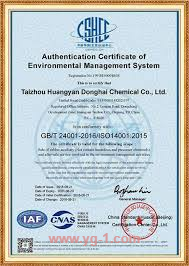
Quality control forms another important part of the process. Reliable rubber additive production requires attention to raw material handling, chemical consistency, particle characteristics, packaging, storage, and testing. YG-1 states that its company has professional testing capabilities and quality management certifications, while its product pages provide technical descriptions and quality indicators for individual materials. Such information can help purchasing and technical teams compare candidate additives according to actual formulation requirements rather than selecting solely from general product names.
For international rubber manufacturers, technical communication can be just as important as product availability. Formulation work often requires discussion of polymer grades, reinforcement systems, mixing procedures, curing conditions, target properties, and application environments. Clear technical information allows engineers and purchasing teams to establish a shared understanding before a material enters production trials. This approach can reduce unnecessary formulation changes and create a more structured path from laboratory evaluation to manufacturing use.
A practical selection process may begin with identifying the principal source of fatigue in the finished article, followed by an assessment of the polymer system and existing additive package. Engineers can then examine compatibility, dispersion, curing behavior, adhesion requirements, thermal exposure, and dynamic testing results. The purpose is not simply to add another ingredient, but to establish a balanced formulation in which individual components perform their intended functions without creating unwanted interactions.
For manufacturers searching for rubber additive resources, the YG-1 platform provides access to product categories, technical information, application references, and company background in one place. The dedicated product section can help users examine available material families, while technical pages provide additional context for formulation decisions. Those evaluating an anti fatigue agent can review the relevant product information at https://www.yg-1.com/ as part of their material selection process, while the wider YG-1 range can support related requirements involving curing, reinforcement, protection, and processing.

 English
 French
 Spanish
 Portuguese
 Deutsch
 Turkish
 Dutch
Dutch
 Italiano
 Russian
 Romaian
 Portuguese (Brazil)
 Greek
Greek
