


Improving Agricultural Efficiency Through Fluid Engineering
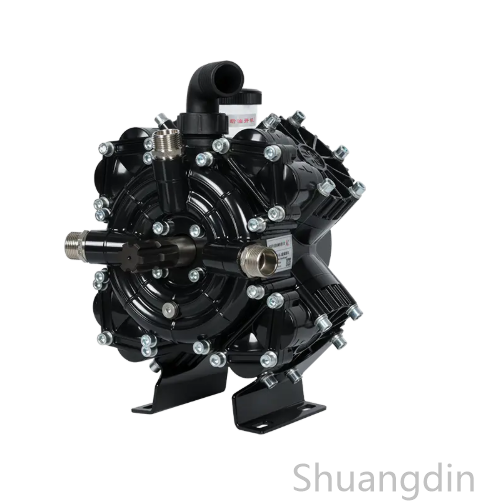
Modern agricultural production increasingly relies on engineered fluid systems to support irrigation, crop protection, fertilization, and other field operations. Within these systems, a spray pump used in agriculture provides the hydraulic foundation for moving liquid from a storage container through filters, regulators, hoses, and spray nozzles. For equipment manufacturers and agricultural system integrators, effective pump selection involves more than fluid transfer alone. Material compatibility, pressure stability, mechanical durability, maintenance access, and coordination with downstream components all influence the overall performance of a spraying system.
One of the most important design considerations is the nature of the working liquid. Agricultural fluids can contain fertilizers, pesticides, suspended particles, or cleaning residues, creating demanding conditions for wetted components. Engineers therefore evaluate polymers, elastomers, metals, seals, and valve materials according to chemical exposure and repeated operating cycles. Suitable material combinations can help reduce corrosion, swelling, cracking, and premature wear. Material engineering also needs to account for outdoor temperature changes, ultraviolet exposure, vibration, and frequent equipment cleaning, ensuring that the pumping assembly remains suitable for practical agricultural environments.
Hydraulic efficiency depends strongly on the internal structure of the pumping system. Fluid passages should be designed to support smooth movement while limiting unnecessary resistance. Valves need to open and close consistently, while the diaphragm and associated components must maintain coordinated movement throughout repeated cycles. Careful structural optimization can reduce mechanical stress and improve the consistency of fluid delivery. This becomes particularly important when spraying equipment operates for extended periods, because small inefficiencies can influence energy consumption, component wear, and the stability of downstream application equipment.
Pressure regulation is another essential element of agricultural fluid management. Spray nozzles require suitable hydraulic conditions to distribute liquid consistently, while excessive fluctuations can affect application uniformity and increase stress on connected components. A complete system may combine the pump with regulators, filters, accumulators, hoses, and valves to create a more balanced hydraulic circuit. Engineers should evaluate these components as a coordinated system because the performance of one element can directly influence the operating conditions experienced by another.
Filtration contributes to both reliability and maintenance efficiency. Agricultural liquids may contain particles that can enter the fluid circuit during filling, storage, or field operation. Without appropriate filtration, these particles can interfere with valves, restrict passages, and affect nozzle performance. Properly positioned filters help protect the hydraulic system and support more consistent fluid delivery. Service access is equally important. Components that require periodic inspection should be easy to reach, allowing technicians to perform cleaning and replacement without unnecessary disassembly.
Different farming environments create different engineering requirements. Open-field crops may involve large-area application, while orchards require equipment capable of managing more complex spray paths and nozzle arrangements. Greenhouse operations may prioritize compact equipment and controlled distribution, whereas nursery and landscaping applications can require flexible fluid delivery layouts. A spray pump used in agriculture therefore needs to be evaluated within its intended application rather than considered independently. Hose routing, spray pattern, pressure regulation, filtration, and liquid characteristics should all be included in the equipment design process.
Safety should remain part of the engineering process from the beginning. Agricultural spraying systems may operate under significant hydraulic pressure, so secure connections, reliable seals, controlled pressure, and suitable hose routing are important. Designers should also consider operator access during inspection and maintenance. Components should be arranged so routine servicing can be completed efficiently while minimizing unnecessary contact with agricultural liquids. A predictable hydraulic system can make operating procedures easier to manage and help reduce avoidable equipment-related risks.
Technology integration is also changing modern agricultural machinery. Electronic pressure sensors, automated regulators, field mapping systems, and variable-rate application technologies can work together to improve resource management. These systems depend on reliable mechanical components underneath the digital control layer. A pump must respond consistently to changing hydraulic requirements if electronic control is expected to produce stable application results. This creates a growing need for agricultural fluid equipment that combines sound mechanical engineering with compatibility across increasingly connected machinery.
Long-term performance also depends on maintenance planning and component design. Diaphragms, valves, seals, and filters experience repeated mechanical or chemical stress, so their condition should be monitored as part of routine equipment management. Accessible replacement components can simplify servicing, while logical assembly structures help technicians identify abnormal pressure, reduced flow, or leakage more efficiently. Manufacturers that incorporate serviceability into the original design can support more predictable maintenance and improve the practical usability of agricultural machinery throughout its operating life.
SHUANG DIN continues to develop agricultural fluid equipment around practical hydraulic engineering, material selection, and system compatibility. Its approach supports the needs of manufacturers and agricultural operators seeking dependable pumping solutions for modern crop management. More information about related products and agricultural fluid technologies can be found at https://www.agriculturaldiaphragmpump.com/product/ as part of the broader evaluation of efficient and adaptable farm spraying systems.

 English
 Arabic
 French
 Spanish
 Portuguese
 Deutsch
 Turkish
 Dutch
Dutch
 Italiano
 Romaian
 Portuguese (Brazil)
 Greek
Greek
