


What Manufacturers Should Review When Export Growth Requires New Machinery
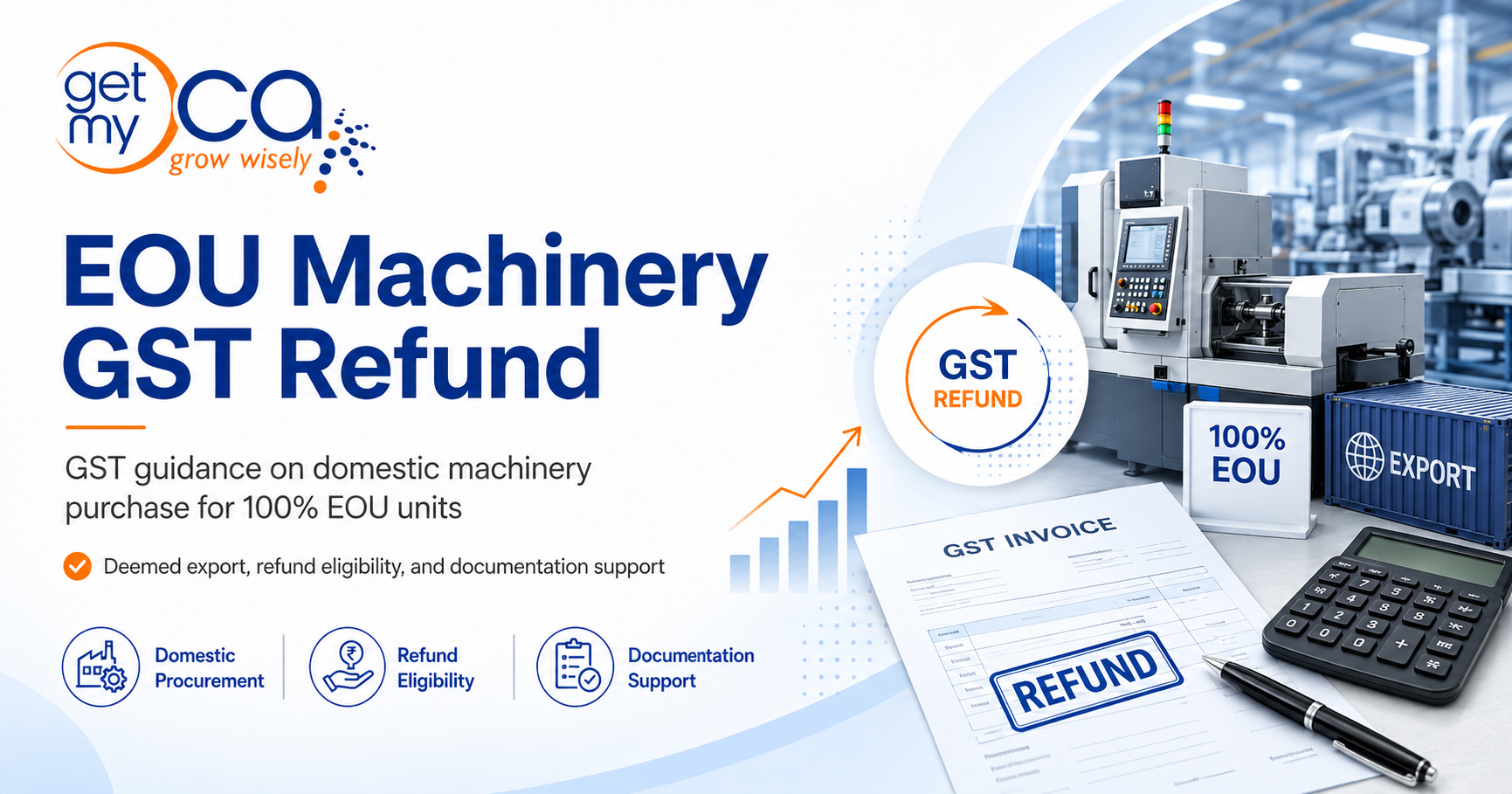
Growing export orders can create a need for additional production capacity. A manufacturer may have to invest in new machinery, increase raw material purchases, improve packaging systems or automate part of the production process.
While expansion is mainly a commercial decision, GST implications should also be reviewed because export transactions and machinery purchases can affect input tax credit in different ways.
Why Can Export Growth Affect GST Credit?
Export-oriented businesses often purchase goods and services in India while making outward supplies to overseas customers.
As production increases, input purchases may also increase. This can result in a higher amount of eligible input tax credit appearing in GST records.
For this reason, GST compliance planning for export manufacturers should include regular review of purchase records, export documentation and return data.
The purpose of this review is to understand why credit is accumulating and whether any refund mechanism may apply under the relevant GST provisions.
Why Should Machinery Purchases Be Reviewed Separately?
A business expanding production may purchase:
- manufacturing equipment,
- packaging machinery,
- testing systems,
- automation equipment,
- material-handling machinery,
- quality-control equipment, and
- additional production-line infrastructure.
GST paid on capital equipment should not automatically be treated in the same way as GST on routine manufacturing inputs.
Understanding the tax treatment of machinery investment can help businesses distinguish between input tax credit availability and refund eligibility.
A large GST amount on a machinery invoice does not, by itself, mean that the amount is available as a cash refund.
What Should Businesses Check Before Buying Machinery?
ITC Eligibility
The business should verify whether input tax credit is available on the proposed equipment under applicable GST provisions.
Supplier Information
GST registration details, invoice information and machinery descriptions should be accurate.
Purpose of Equipment
The company should maintain records showing how the machinery is connected with its business operations.
Export Structure
Export-oriented manufacturers should also consider how the proposed investment fits with their existing GST and export compliance framework.
Why Is Reconciliation Important?
As transaction volumes increase, differences can arise between accounting records and GST data.
Manufacturers should periodically reconcile:
- purchase registers,
- supplier invoices,
- GST returns,
- export invoices,
- shipping-related records, and
- input tax credit balances.
Regular reconciliation makes it easier to identify mismatches before any refund application is considered.
How Can Documentation Support Future Compliance?
Businesses should maintain relevant documents from the beginning of the procurement cycle.
These may include:
- machinery quotations,
- purchase orders,
- tax invoices,
- payment records,
- accounting entries,
- GST return data,
- export documentation, and
- ITC reconciliation records.
The exact documentation required can depend on the type of transaction and the refund category being considered.
Why Should Export Refund and Machinery ITC Be Kept Separate?
Export-related refunds and machinery-related input tax credit are not automatically the same issue.
A manufacturer may simultaneously have export transactions and make significant capital purchases, but the GST treatment of each should be evaluated under the applicable provisions.
Keeping the records separate can help the business understand which credits relate to routine inputs, exports or capital equipment.
Conclusion
Export growth often leads to higher production and new capital investment. As a result, GST records can become more complex.
Manufacturers should review export transactions, accumulated credit and machinery purchases separately rather than assuming that all GST balances follow the same refund route.
Regular reconciliation, accurate documentation and advance review of major purchases can make GST compliance more structured as the business expands.

 English
 Arabic
 French
 Portuguese
 Deutsch
 Turkish
 Dutch
Dutch
 Italiano
 Russian
 Romaian
 Portuguese (Brazil)
 Greek
Greek
