


How Is a Handcrafted Hanuman Ji Marble Statue Made by Skilled Artisans?
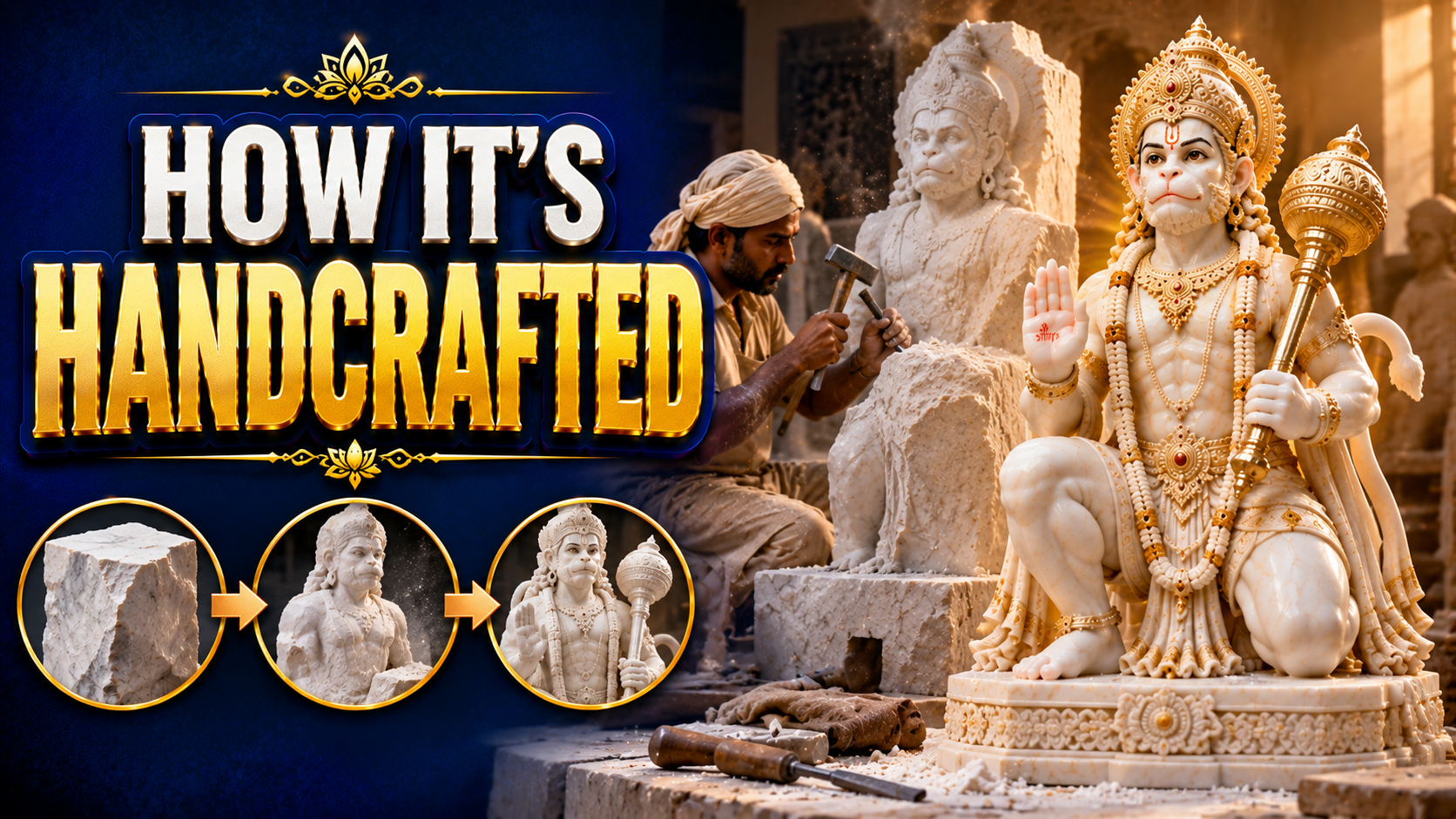
A handcrafted devotional statue is the result of patience, experience, precision, and an understanding of traditional sculpture. Unlike a simple decorative object, a carefully carved Hanuman Ji marble statue takes shape through a series of deliberate stages, beginning with the selection of suitable marble and ending with detailed finishing.
Lord Hanuman is traditionally associated with strength, courage, devotion, humility, and selfless service. Skilled artisans aim to reflect these qualities through the statue's posture, facial expression, proportions, ornaments, and traditional attributes.
A Hanuman Ji marble statue therefore represents both devotional significance and the craftsmanship of Indian marble sculpture.
But how does a solid block of marble become a detailed representation of Hanuman Ji? Let's look at the process step by step.
What Makes Handcrafted Marble Sculpture Different?
Handcrafted marble sculpture depends heavily on the artisan's skill and judgment.
Machines can assist with certain stages of shaping or finishing, but traditional hand carving requires the artisan to understand the material and make careful decisions throughout the process.
Every cut changes the form. Once marble is removed, it cannot simply be put back. This makes precision, patience, and planning essential.
Handcrafted work can also give each statue a distinctive character. Even when artisans follow the same traditional design, subtle differences in facial expression, carving, and finishing may make individual pieces unique.
Step 1: How Is the Right Marble Selected?
The process begins with choosing a suitable piece of marble.
The artisan considers factors such as:
-
Size of the marble block
-
Overall quality
-
Surface characteristics
-
Structural suitability
-
Colour and appearance
-
Potential for detailed carving
For a detailed Hanuman statue, the marble needs to be suitable for creating both larger sculptural forms and finer decorative details.
The selected block should provide enough material for the intended dimensions and design.
Step 2: How Is the Design Planned?
Before detailed carving begins, the artisan needs a clear idea of the final sculpture.
The design may establish:
-
Overall height and width
-
Posture
-
Body proportions
-
Position of the arms
-
Facial orientation
-
Placement of the gada
-
Crown and ornaments
-
Clothing details
-
Pedestal design
Traditional proportions are particularly important for devotional sculpture because the figure needs to maintain a harmonious and recognizable appearance.
The planning stage helps the artisan understand how much marble must remain around each major feature.
Step 3: How Is the Basic Shape Created?
Once the marble and design are finalized, the artisan begins removing material to establish the basic form.
At this stage, the focus is not on tiny decorative details. Instead, the artisan works on the overall silhouette and major proportions.
Large sections of unnecessary marble are gradually removed to establish the head, torso, arms, legs, and general posture.
This stage requires careful judgment because removing too much material from an important area can affect the final sculpture.
Step 4: How Are the Body Proportions Developed?
After the basic shape is established, the artisan begins refining the figure.
The relationship between the head, torso, arms, legs, and feet is carefully adjusted.
For a Hanuman Ji statue, the artisan may also pay particular attention to the posture because it contributes strongly to the character of the sculpture.
A powerful standing posture, blessing gesture, or devotional pose can each create a different visual impression.
The goal is to make the figure appear balanced from multiple viewing angles.
Step 5: How Is Hanuman Ji's Face Carved?
Facial carving is one of the most delicate stages of the process.
The artisan gradually develops features such as:
-
Eyes
-
Eyebrows
-
Nose
-
Lips
-
Cheeks
-
Facial contours
The expression needs to be carefully controlled. A small change in the shape or position of the eyes can influence the entire character of the statue.
For this reason, facial carving requires considerable experience.
The artisan must remove just enough material to create definition while preserving the natural proportions of the face.
Step 6: How Are the Hands and Fingers Detailed?
Hands are another challenging area of marble carving.
The fingers need to have appropriate proportions and spacing while remaining structurally strong.
Depending on the chosen posture, the hands may be positioned in a blessing gesture, devotional pose, or another traditional representation.
Because fingers and other thin elements can be relatively delicate, artisans must work carefully to achieve definition without compromising the strength of the marble.
Step 7: How Is the Gada Created?
The gada is one of the most recognizable traditional attributes of Lord Hanuman.
Once the main figure is established, the artisan carefully shapes the gada according to the overall composition.
Its size and placement need to correspond with the body and posture of Hanuman Ji.
The artisan may also carve details into the handle or head of the gada, depending on the design.
The objective is to make the gada look like an integrated part of the sculpture rather than an unrelated accessory.
Step 8: How Are the Crown and Ornaments Carved?
Once the main body and important attributes are defined, decorative details can be developed.
These may include:
-
Crown
-
Neck ornaments
-
Armlets
-
Bracelets
-
Waist ornaments
-
Other traditional decorative elements
The artisan creates these details gradually, using controlled carving to establish patterns, edges, curves, and textures.
The challenge is to create enough detail to enrich the sculpture without making the design visually crowded.
Step 9: How Are Clothing and Fabric Details Added?
Traditional clothing can give the statue greater depth and movement.
Artisans may carve:
-
Fabric folds
-
Pleats
-
Borders
-
Drapery
-
Decorative patterns
These details help distinguish the clothing from the body and create variations in light and shadow across the marble.
Fine fabric carving requires a steady hand because the artisan must create delicate forms without making them excessively thin.
Step 10: How Are Fine Decorative Details Created?
Once the main elements are complete, the artisan can concentrate on smaller details.
This may include refining:
-
Jewellery patterns
-
Crown motifs
-
Facial features
-
Clothing borders
-
Decorative elements
-
Pedestal carving
At this point, the sculpture begins to reveal its final personality.
The artisan may repeatedly examine the statue from different angles to ensure that details remain balanced throughout the composition.
Step 11: How Is the Pedestal Carved?
The pedestal is more than a support structure.
It can also contribute to the overall visual character of the statue.
Depending on the design, the base may feature simple geometric forms or more traditional decorative carving.
Its dimensions should complement the main figure. A pedestal that is too small can make the statue appear unstable, while one that is too elaborate may distract attention from Hanuman Ji.
For a home mandir, stability is especially important.
Step 12: How Is the Surface Refined?
After the major carving and fine detailing are complete, the marble surface is carefully refined.
Different areas may require different levels of smoothing depending on the intended appearance.
Smooth sections can provide a clean contrast against intricate carved areas. This contrast helps decorative details stand out.
The artisan carefully removes unwanted roughness while preserving important carved features.
Step 13: How Is the Marble Polished?
Polishing is an important finishing stage.
A properly finished marble surface can enhance the natural appearance of the stone and improve the way light interacts with the sculpture.
Polishing may be particularly noticeable on larger smooth areas, while detailed carved sections can retain enough texture to remain visually defined.
The final finish should complement the style of the statue rather than hide its craftsmanship.
Step 14: How Is the Statue Inspected?
Before the statue is considered complete, the artisan carefully examines the entire piece.
This inspection may focus on:
-
Proportions
-
Facial expression
-
Symmetry
-
Carving quality
-
Decorative details
-
Surface finish
-
Stability
-
Overall appearance
The statue can be viewed from the front, sides, and back to identify areas that require further refinement.
This final inspection is important because small imperfections can become more noticeable once the statue is installed in a well-lit home mandir.
Why Does Artisan Experience Matter So Much?
Marble carving is both a technical and artistic process.
An experienced artisan understands how the material behaves and how much pressure can be applied during different stages of carving.
More importantly, the artisan knows how to translate a traditional representation into a three-dimensional form.
This involves understanding proportion, anatomy, composition, decorative design, and devotional symbolism.
Experience also helps artisans recognize when a detail has reached the right level of refinement.
Sometimes adding more carving does not improve a sculpture. Knowing when to stop is itself an important part of craftsmanship.
How Does Hand Carving Create Individual Character?
No two handcrafted sculptures need to look completely identical.
Even when the same basic design is followed, small differences can appear in:
-
Facial expression
-
Ornament patterns
-
Clothing folds
-
Surface finishing
-
Decorative details
These subtle variations can give a handcrafted statue its own personality.
For many buyers, this individuality is one of the attractions of traditional marble craftsmanship.
How Long Does It Take to Create a Handcrafted Marble Statue?
The time required depends on several factors, including:
-
Statue size
-
Complexity of the design
-
Amount of decorative carving
-
Level of detailing
-
Type of finishing
-
Artisan's working process
A relatively simple statue may require less time than a highly detailed piece with elaborate ornaments and intricate carving.
Rather than treating craftsmanship as a race against time, skilled artisans generally focus on maintaining accuracy and consistency throughout the process.
What Makes Detailed Marble Carving Challenging?
The biggest challenge is that marble is a subtractive material.
The artisan starts with more material than necessary and gradually removes it to reveal the final form.
This means every carving decision matters.
If too much material is removed from a delicate feature, correcting the mistake may be impossible without changing the design.
Fine areas such as fingers, facial features, jewellery, clothing edges, and decorative patterns therefore require exceptional care.
How Do Traditional Designs Guide the Artisan?
Traditional representations provide a visual framework for the sculpture.
They help establish important aspects such as:
-
Posture
-
Attributes
-
Proportions
-
Facial character
-
Clothing
-
Ornaments
-
Overall composition
The artisan then interprets these elements through the physical properties of marble.
This is where traditional knowledge and individual artistic skill come together.
How Does the Final Statue Reflect the Artisan's Skill?
When the process is completed, the final statue contains the result of numerous individual decisions.
The artisan has shaped the marble from a rough block into a recognizable figure, developed the proportions, refined the face, created traditional attributes, carved decorative elements, and finished the surface.
The quality of the final piece therefore depends on more than the raw material.
It reflects the combination of marble quality, planning, craftsmanship, patience, traditional knowledge, and finishing skill.
What Should You Look for in a Handcrafted Hanuman Ji Marble Statue?
Understanding the creation process can also help buyers evaluate a finished statue.
Look for:
Balanced Proportions
The body, head, arms, legs, gada, and pedestal should work together naturally.
Carefully Carved Facial Features
The eyes, nose, lips, and expression should appear precise and harmonious.
Fine Decorative Work
Ornaments, crown, clothing, and other details should show controlled craftsmanship.
Strong Composition
The statue should look balanced from different viewing angles.
Appropriate Finish
The marble surface should complement rather than overpower the carving.
Clean Detailing
Small elements should appear intentional and well defined.
Stable Base
The pedestal should provide secure support and complement the figure.
Can Traditional Craftsmanship Make a Marble Statue Timeless?
Yes. Traditional craftsmanship is one of the reasons marble devotional sculptures can remain visually appealing for generations.
Classical proportions and traditional design elements are not dependent on short-term interior trends.
A well-crafted Hanuman Ji statue can therefore work within a traditional temple as well as a carefully designed contemporary home mandir.
Its lasting appeal comes from the combination of spiritual meaning and artistic craftsmanship.
Conclusion
Creating a handcrafted Hanuman Ji marble statue is a gradual process that combines traditional knowledge with skilled marble carving. From selecting the right stone and planning the design to shaping the figure, carving the face, developing the gada and ornaments, refining the surface, and completing the final finish, every stage contributes to the finished sculpture.
The most important part of this process is the artisan's ability to understand both the material and the traditional form. Precision, patience, proportion, and experience allow a simple block of marble to become a meaningful devotional sculpture.
For anyone interested in traditionally crafted marble idols, choosing an experienced marble murti manufacturer in Jaipur can provide access to artisans who understand the detailed craftsmanship required to create distinctive devotional sculptures.
Frequently Asked Questions
How is a Hanuman Ji marble statue made?
A handcrafted statue is generally created through stages such as marble selection, design planning, rough shaping, proportion development, detailed carving, polishing, and final inspection.
How long does it take to carve a marble Hanuman statue?
The time depends on the statue's size, complexity, level of decorative detailing, and finishing requirements. Highly detailed sculptures generally require more time and careful craftsmanship.
Which parts of a Hanuman Ji statue require the most precision?
Facial features, fingers, ornaments, clothing details, the gada, and other delicate decorative elements require particularly careful carving.
Why is marble suitable for Hanuman Ji statues?
Marble provides a smooth, durable surface that allows artisans to create both broad sculptural forms and intricate traditional details.
Are handcrafted marble statues identical?
Not necessarily. Even when artisans follow the same design, subtle differences in carving, expression, ornaments, and finishing can give each handcrafted statue its own character.
What makes an artisan skilled at marble carving?
An experienced artisan combines knowledge of marble, traditional sculpture, proportions, carving techniques, finishing, and artistic composition to create a balanced final piece.
Can a handcrafted Hanuman marble statue be used in a home mandir?
Yes. The appropriate size, posture, design, and proportions can make a handcrafted Hanuman Ji marble statue suitable for a home mandir or dedicated prayer space.

 English
 Arabic
 French
 Spanish
 Portuguese
 Deutsch
 Turkish
 Dutch
Dutch
 Italiano
 Russian
 Portuguese (Brazil)
 Greek
Greek
