


From Dreaming of the Cockpit to Becoming a Commercial Pilot: A Student’s Guide to Pilot Training in India
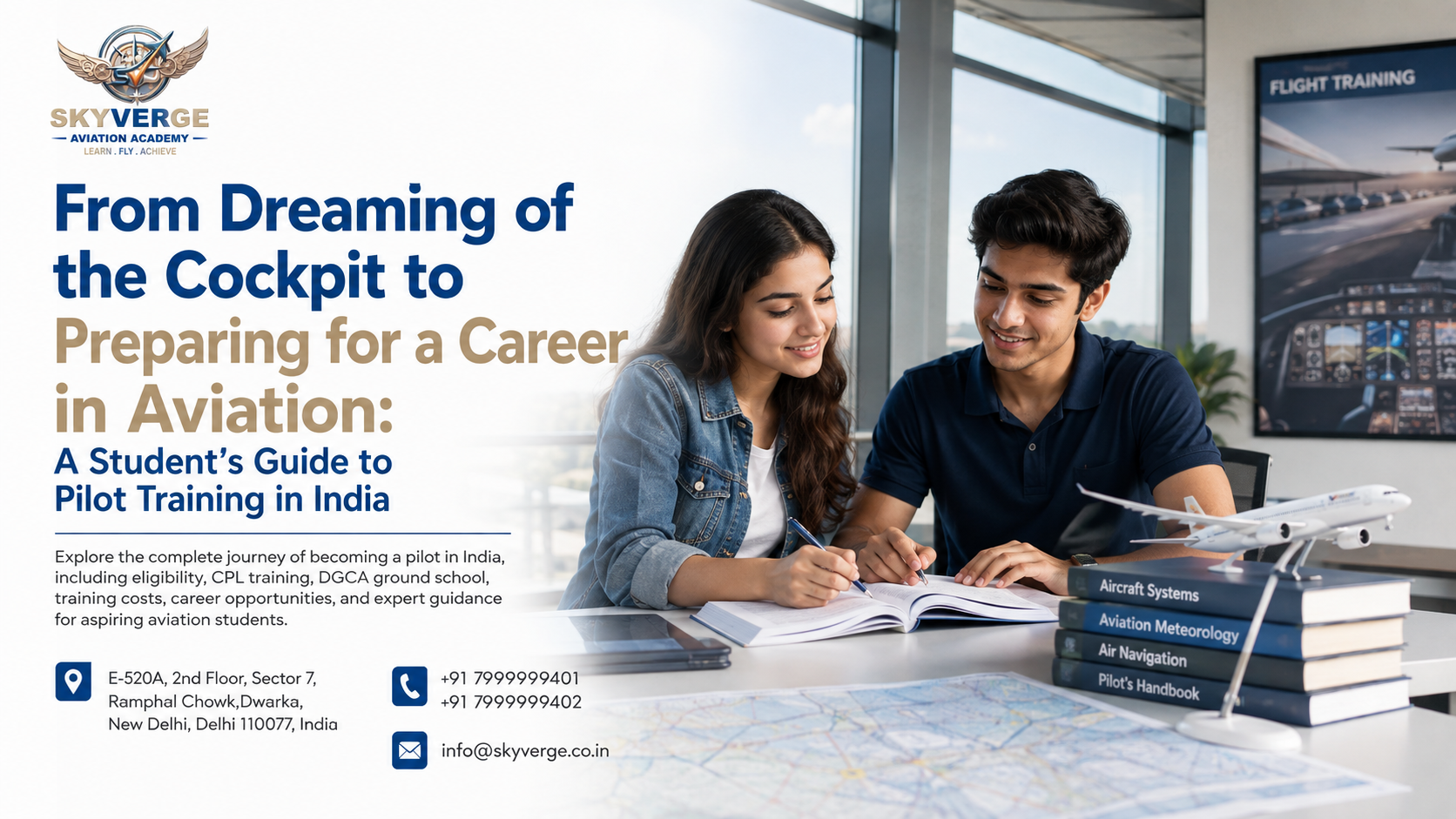
For many students, becoming a pilot begins with a simple fascination with the sky. Watching an aircraft take off, seeing a pilot walk confidently through an airport, or sitting beside a window during a flight can create a dream that stays for years. But when that dream turns into a serious career goal, several questions begin to appear: Where should I start? What qualifications do I need? How does pilot training work? How much does it cost? And what exactly should I study before beginning flight training?
Choosing aviation as a career is an exciting decision, but it also requires proper planning. Students need to understand the academic requirements, DGCA procedures, ground training, flight training, examinations, medical requirements, and financial planning before taking their first major step.
This is where structured guidance can make the journey easier. SkyVerge Aviation Academy, based in Dwarka, New Delhi, focuses on helping aspiring aviation students understand the pathway toward professional pilot training and prepare themselves for the different stages of their aviation journey.
Every Pilot Has a Beginning
Imagine a student named Aarav.
Aarav had wanted to become a pilot since he was in school. He knew that he wanted to fly commercial aircraft, but whenever someone asked him how he would achieve that goal, he had no clear answer.
He knew the names of airlines. He knew what a cockpit looked like. He had even watched countless videos about aircraft and aviation. But he didn't understand the actual process of becoming a commercial pilot.
One evening, he decided to write down everything he needed to know. His list started with simple questions: What is a CPL? What does DGCA require? How should I prepare for ground subjects? What is the approximate training budget? Which training institute should I consider?
That was the point when Aarav realised something important: dreaming about becoming a pilot is only the beginning; understanding the pathway is what turns the dream into a plan.
This is the situation many aspiring students experience. They have the ambition but need reliable information to understand what comes next.
Understanding the Pilot Training Journey
Becoming a commercial pilot in India is not simply about learning how to operate an aircraft. It involves a combination of academic preparation, regulatory requirements, theoretical knowledge, flight training, examinations, medical fitness, and practical experience.
Students generally need to approach the journey step by step rather than trying to understand everything at once.
- Understand the eligibility requirements.
- Complete the necessary medical assessment.
- Prepare for DGCA-related theoretical examinations.
- Build strong aviation fundamentals through ground training.
- Complete the required flight training.
- Maintain proper documentation and training records.
- Work toward meeting the requirements for a Commercial Pilot Licence.
- Continue developing knowledge and skills for future airline opportunities.
Having a clear roadmap can help students avoid confusion and make better decisions when selecting training options.
What Is a CPL and Why Does It Matter?
A Commercial Pilot Licence, commonly known as a CPL, is an important milestone for students who want to pursue flying professionally. Unlike learning to fly purely as a hobby, professional pilot training involves meeting regulatory requirements and developing the knowledge and skills expected from a commercial pilot.
Students researching a CPL course in India should look beyond advertisements and focus on understanding what the training pathway actually involves.
A CPL-oriented training journey normally combines theoretical studies with practical flight training. Students also need to understand the applicable DGCA requirements and plan their preparation accordingly.
The journey requires discipline because aviation education involves subjects that demand consistent study. Students should be prepared to spend time understanding concepts rather than simply memorising information for examinations.
Why Ground Training Is So Important
When students imagine becoming pilots, they often think first about flying an aircraft. However, a significant part of professional pilot preparation takes place outside the cockpit.
Before and alongside flight training, students need to develop knowledge of subjects such as air navigation, aviation meteorology, air regulations, aircraft-related concepts, and other areas relevant to professional aviation.
A structured DGCA ground school can help students build the theoretical foundation required for their aviation journey.
Ground training is not merely about passing an examination. Understanding aviation theory can directly support a student's confidence when they eventually apply that knowledge during practical flight training.
For example, understanding weather conditions can help a student appreciate why certain flying decisions are made. Similarly, knowledge of navigation helps students understand how pilots plan and conduct flights.
How Should Students Choose a Pilot Training Institute?
One of the most important decisions students make is selecting a training and education partner. With numerous aviation institutes and training options available, comparing them only on advertisements or price can be misleading.
Students should investigate factors such as the learning environment, faculty experience, course structure, student guidance, training pathway, facilities, regulatory alignment, and the kind of support available throughout the process.
When searching for the Best pilot training institute in India, students should first define what “best” means for their own requirements.
A suitable institute should provide students with clarity rather than unrealistic promises. Aviation is a highly structured profession, and students benefit from transparent information about training stages, examinations, documentation, and expected responsibilities.
How Much Should Students Budget for Pilot Training?
Financial planning is another major part of the pilot training journey. The total expenditure can vary depending on several factors, including the training organisation, aircraft availability, flying hours, location, accommodation, examination-related expenses, medical requirements, and other associated costs.
Students and parents should therefore avoid making decisions based solely on a single advertised course fee.
Before beginning the journey, students researching Pilot training cost in India should understand what is included in the quoted amount and which expenses may need to be budgeted separately.
A practical financial plan can reduce unexpected pressure during training. Families can also compare different options based on the complete estimated training pathway rather than looking only at the initial fee.
Questions Every Aspiring Pilot Should Ask
Students should never hesitate to ask questions before committing to a pilot training pathway. In fact, asking the right questions can help them make a much more informed decision.
1. What are the eligibility requirements?
Students should understand the academic, age, medical, and regulatory requirements before beginning the process. Knowing these requirements early can prevent unnecessary delays later.
2. What subjects will I study?
Aviation education involves several theoretical subjects. Students should understand the syllabus and prepare themselves for consistent academic work.
3. How is flight training different from classroom learning?
Flight training requires practical application of theoretical knowledge. Students should be prepared for both academic learning and hands-on development.
4. What expenses should my family plan for?
Instead of asking only for the course fee, students should ask about additional expenses that may arise during the training journey.
5. What kind of guidance will I receive?
Students entering aviation for the first time may have questions about documentation, examinations, training stages, and future planning. Understanding the level of guidance available can be valuable.
Why Planning Before Flight Training Matters
Many students are eager to start flying as soon as possible. However, rushing into training without understanding the complete process can create unnecessary difficulties.
A better approach is to build a personal roadmap.
Start by understanding eligibility. Then look into medical requirements, theoretical preparation, training options, expected costs, documentation, and the overall licensing pathway. Once these areas are clear, students can make decisions with greater confidence.
This approach also helps parents. Pilot training represents a significant investment of time, effort, and money, so families should have a realistic understanding of the journey before making commitments.
Learning to Think Like a Pilot
There is another important aspect of pilot training that students sometimes overlook: the mindset.
A professional pilot needs more than technical knowledge. Aviation requires discipline, responsibility, situational awareness, communication, decision-making, and a willingness to keep learning.
Students can begin developing these qualities even before their first flight.
Being punctual, maintaining study schedules, reviewing mistakes, asking questions, following procedures, and taking responsibility for learning are all habits that can contribute to a professional approach toward aviation.
The goal should not simply be to complete a course. Students should aim to develop the knowledge, attitude, and discipline expected from aviation professionals.
Starting the Journey with SkyVerge Aviation Academy
Located in Dwarka, New Delhi, SkyVerge Aviation Academy is focused on aviation education and preparation for students who aspire to build careers in the aviation industry.
The team helps students understand their aviation journey step by step, including guidance related to the broader process of planning their training and preparing for the requirements associated with pursuing a professional pilot career.
For students who are unfamiliar with the aviation industry, having access to structured information and guidance can make the initial stages easier to understand.
At the same time, students should remember that becoming a pilot is a personal commitment. An academy can provide education and guidance, but students themselves must remain consistent with their studies, examinations, training, documentation, and professional development.
A Career That Begins Long Before the Cockpit
Returning to Aarav's story, his biggest change did not happen when he first entered an aircraft. It happened when he replaced a vague dream with a structured plan.
He started researching the requirements. He understood the importance of ground studies. He discussed the financial side of training with his family. He asked questions instead of assuming that every training provider followed the same approach.
Most importantly, he understood that becoming a pilot was not a shortcut. It was a journey that required patience, preparation, discipline, and continuous learning.
That is the mindset aspiring pilots should carry with them.
The cockpit may be the destination students imagine, but the real journey begins much earlier—with the decision to learn, prepare, ask questions, and plan carefully.
Begin With the Right Information
If you are a student dreaming of becoming a commercial pilot, you do not need to know everything on day one. What you need is the willingness to learn and a clear understanding of the next step.
Research your eligibility. Understand the DGCA requirements. Learn about ground subjects. Explore flight training pathways. Prepare a realistic financial plan. Compare training options carefully and ask questions before making important decisions.
With the right preparation, the dream of flying can become a structured and achievable career journey.
SkyVerge Aviation Academy – Contact Information
SkyVerge Aviation Academy
E-520A, 2nd Floor, Sector 7, Ramphal Chowk,
Dwarka, New Delhi, Delhi 110077, India
Phone: +91 7999999401
Phone: +91 7999999402
Email: info@skyverge.co.in

 English
 Arabic
 French
 Spanish
 Portuguese
 Deutsch
 Turkish
 Dutch
Dutch
 Italiano
 Russian
 Portuguese (Brazil)
 Greek
Greek
