


How Global Trade Risks Are Influencing Polymer Procurement
Polymer Sourcing in the Age of EPR Mandates
For decades, operational success across the plastics manufacturing floor followed a remarkably stable pattern: lock in long-term resin contracts, track standard crude and monomer indices, run uninterrupted high-volume production cycles, and pass routine feedstock fluctuations downstream.
That traditional framework is no longer sufficient, and recent market movements highlight this exact tension. Major producers like Dow have seen temporary revenue gains in packaging and specialty plastics driven by firmer polyethylene prices, bolstered by constrained global availability and rising international polymer rates. Yet beneath those short-term pricing gains, fundamental headwinds remain: persistent energy and feedstock cost pressures, persistent supply uncertainty stemming from Middle East trade disruptions, and cautious demand across core end-use markets. The result is a market held firm by supply constraints rather than a true, demand-driven recovery.
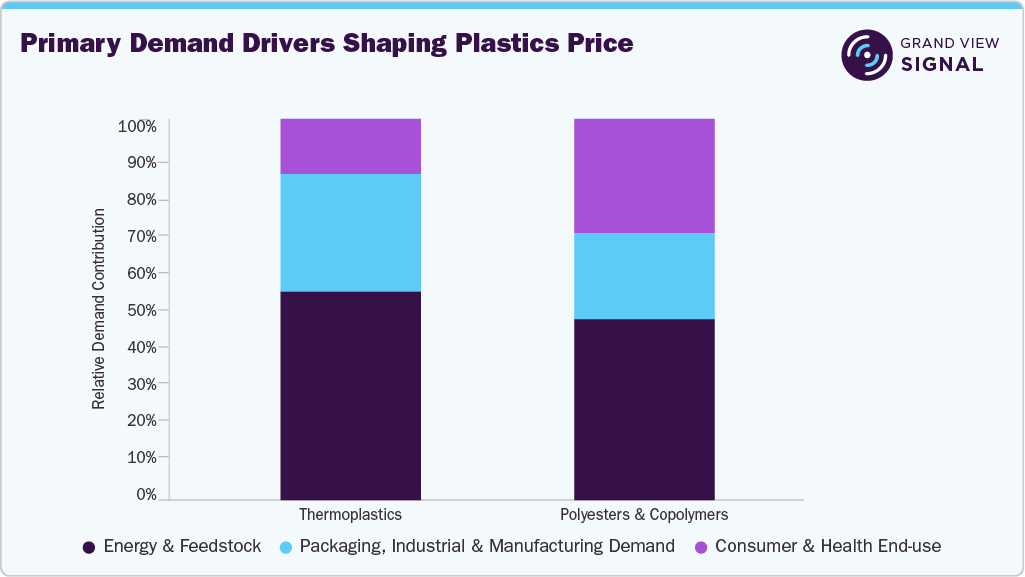
Compounding these economic pressures is an even deeper structural shift: the rapid rise of extended producer responsibility (EPR) regulations and mandatory post-consumer recycled (PCR) content thresholds. These policy mandates are fundamentally decoupling polymer sourcing from traditional market economics. Raw material procurement is no longer simply about securing the lowest market rate per pound; it has become an exercise in risk management and strict regulatory compliance.
Schedule a free demo of Grand View Signal to get real-time preview of price fluctuations in the Plastics Sector
The New Reality: Blending PCR with Virgin Resin
As state and federal authorities introduce stricter circular economy guidelines, administrative policies are directly influencing processing standards and raw material trade flows. The result is a growing friction between established virgin resin markets and the increasingly tight market for high-grade PCR.
For procurement teams, this shift creates a more complex sourcing equation. Virgin resin can typically be evaluated through established benchmarks, supplier contracts, and regional availability, while PCR sourcing requires additional consideration of collection rates, recycling capacity, feedstock quality, certification, and geographic availability. Two materials with similar technical specifications may therefore carry very different procurement risks depending on their origin and traceability.
The challenge becomes more pronounced when PCR demand rises faster than recycling infrastructure. As more manufacturers compete for limited volumes of high-quality recycled resin, buyers may face longer lead times, greater price volatility, and increased competition for certified material. This can make it difficult to secure consistent PCR volumes through conventional spot purchasing.
Procurement leaders must consequently evaluate recycled and virgin polymers as interconnected components of a broader material strategy. Rather than treating PCR as a simple substitute for virgin resin, companies increasingly need to assess the right blend of cost, performance, availability, regulatory requirements, and supply security for each product category.
California’s AB 793 offers a clear look at where the rest of the market is heading. The law requires plastic beverage containers sold within the state to incorporate at least 25% PCR content today, a target that rises to 50% by 2030.
Mandates of this nature create three distinct operational challenges for processors:
- Direct Financial Penalties: Failing to meet required material ratios triggers significant per-pound fines, turning non-compliance into a direct hit on operating margins.
- The Recycled Cost Premium: Because supply chains for clean, food-grade PCR remain constrained, recycled resin prices often decouple from cheaper virgin polymers, driving up overall formulation costs.
- Quality and Import Rules: Successfully running higher PCR percentages through high-speed molding or extrusion lines demands rigorous quality checks to remain aligned with changing trade standards, tariff rules, and local quality orders.
Get historical, current, and forecast plastics price assessments. Request Free Access to Grand View Signal
Cautious End Demand Meets Rising Costs
What makes this regulatory shift particularly challenging is the current state of downstream demand. Major end-use sectors, including commercial construction, automotive manufacturing, consumer electronics, and general packaging, are maintaining cautious, highly selective purchasing patterns.
Without strong pull-through demand from end consumers, converters find it difficult to pass elevated compliance and material costs down the chain. The resulting margin squeeze forces purchasing teams to abandon lagging price reports and reactive spot-market buying in favor of more proactive procurement strategies.
This environment also changes how procurement teams measure supplier performance. A lower quoted resin price does not necessarily represent the lowest total procurement cost if the supplier cannot guarantee PCR content, consistent quality, delivery reliability, or documentation required for regulatory reporting. Companies therefore need to evaluate suppliers using a broader set of metrics that includes delivered cost, compliance readiness, material consistency, lead times, and contingency capacity.
Inventory planning is becoming equally important. Holding excessive resin inventory can increase working-capital requirements, while operating with minimal safety stock can leave manufacturers vulnerable when supply disruptions or regulatory-driven demand increases occur. A balanced approach requires procurement teams to identify critical grades, establish appropriate safety-stock levels, and maintain alternative suppliers before market conditions tighten.
Access commodity-wise monthly forecast datasets for the next 6 months. Request Free Access to Grand View Signal
3 Strategic Priorities for Manufacturing Leaders
To protect operating margins against regulatory pressures and volatile feedstock costs, forward-thinking processors are refining their supply chain strategies:
1. Build Multi-Regional Sourcing Networks
Relying on single-source import models leaves operations exposed to unexpected port delays, localized plant outages, and tariff changes. Establishing localized, multi-regional supply agreements helps shield plant operations from regional logistics choke points.
2. Optimize Part Design and Material Blends
To offset the cost of premium PCR content, engineering and procurement teams are collaborating to redesign parts. Techniques like down-gauging, integrating high-performance polyolefin blends, and testing alternative substrates allow plants to reduce overall polymer weight without compromising structural integrity.
3. Utilize Forward-Looking Market Intelligence
Managing complex regulatory shifts requires real-time data rather than trailing monthly averages. Leading procurement operations now rely on predictive risk modeling and real-time commodity price intelligence tools, such as Grand View Signal, to track spreads across both virgin and recycled resin lines. Clear visibility into price gaps and upcoming supply contractions gives teams the leverage needed to negotiate better contract terms and secure required volumes ahead of market spikes.
The next stage of polymer procurement will increasingly depend on connecting commercial decisions with regulatory and operational data. Procurement teams need visibility not only into current resin prices, but also into regional supply balances, import flows, producer operating conditions, recycled material availability, and emerging policy requirements.
This broader view can help manufacturers distinguish between temporary price movements and structural changes in polymer markets. For example, a short-term increase in virgin resin prices may require a different response from a sustained widening of the price gap between virgin and PCR materials. Similarly, a regional supply disruption may justify temporary inventory protection, while a long-term regulatory change may require supplier diversification or product redesign.
For manufacturing leaders, the objective is therefore to create a procurement model that remains flexible as both markets and regulations evolve. Companies that can identify supply risks early, quantify the financial impact of compliance requirements, and secure suitable material sources ahead of competitors will be better positioned to protect margins.
Get detailed driver impact analysis on Plastics Prices. Request Free Access to Grand View Signal
Moving Forward
Meeting circular economy standards is no longer just a corporate sustainability goal; it is a core requirement for operational stability. As regulatory enforcement expands, the gap between reactive buyers and strategic procurement teams will continue to widen.
By diversifying supply channels, refining material formulations, and grounding procurement decisions in real-time commodity pricing and market data, plastics leaders can turn compliance demands into a durable competitive advantage.
Read our latest articles on

 English
 Arabic
 French
 Spanish
 Portuguese
 Deutsch
 Turkish
 Dutch
Dutch
 Italiano
 Russian
 Romaian
 Portuguese (Brazil)
