


Log Loader Trailer, Log Trailer A Practical Guide for Efficient Timber Handling
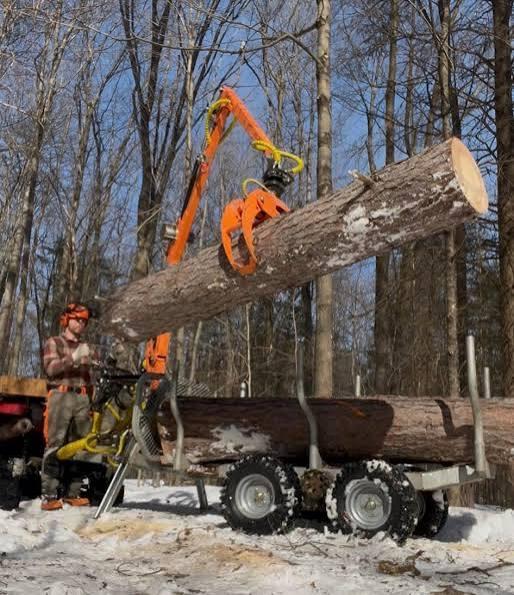
A reliable log loader trailer can make timber handling safer, faster, and more organized. Whether you move logs from a woodlot, clearing site, or processing area, the right log trailer helps reduce manual handling and keeps work moving smoothly. Instead of relying on separate loading equipment for every task, operators can use a practical trailer setup to pick, position, transport, and unload logs with better control. Choosing equipment that matches the terrain and workload can improve daily productivity.
Why a Log Loader Trailer Improves Timber Work
Moving logs is demanding, especially when ground conditions are uneven or access is limited. A log loader trailer combines transport capacity with mechanical loading capability, reducing repeated lifting and repositioning. This setup is useful when logs must be collected from scattered locations before being moved to a central processing point. A properly configured log trailer also improves control during loading. Instead of dragging logs across the ground, operators can lift them and place them where weight is distributed evenly. That can protect the work area, reduce soil disturbance, and create a more stable load for transport.
Match Capacity to the Workload
Capacity should be an early consideration. A larger log loader trailer may suit frequent heavy loads, while a compact setup can be easier to maneuver on narrow trails or smaller properties. The goal is to choose a log trailer that remains balanced, manageable, and practical for the conditions where it will operate.
Key Features That Support Safer Operation
Good equipment design can make routine work easier. Look for a stable frame, secure bunks or stakes, practical tie-down points, and a loading system that provides controlled movement. A log loader trailer should allow the operator to position timber without sudden shifts that affect balance. Tire size and ground clearance matter too. Forestry work often involves mud, ruts, snow, roots, and soft surfaces. A log trailer with suitable clearance and traction can travel more confidently while reducing the chance of getting hung up on uneven ground.
Consider Reach and Loading Access
Loader reach affects how easily logs can be collected from both sides of the trailer. Greater reach can reduce repositioning, but it should still be matched to trailer stability and intended load. Operators should also consider control access and visibility during lifting and placement.
Efficiency Beyond Simple Transportation
The value of a log loader trailer is not limited to hauling. It can become part of a more efficient material-handling system. Logs can be gathered, sorted, and delivered directly to a cutting or processing area with fewer handling steps. Reducing repeated movement can save meaningful time during a full working day. For seasonal firewood work, a log trailer can also help keep raw material organized. Loads can be separated by diameter, species, or intended use before processing. This approach can make later cutting and splitting more consistent when several loads are being managed.
Maintenance Helps Protect Long-Term Performance
Regular inspection is essential. Check tires, fasteners, pivots, hydraulic lines, structural welds, and loading components before heavy use. Remove dirt and debris from moving parts, and keep lubrication points maintained. A log loader trailer that receives routine attention is easier to operate and less likely to develop avoidable problems. The same applies to the log trailer frame. Small issues such as loose hardware, worn supports, or damaged connection points should be corrected before they become larger repair concerns. Preventive checks help operators notice handling changes before they affect safety.
Choosing a Setup That Fits Your Operation
The best choice depends on where the equipment will travel, how often it will be used, and what type of timber it will carry. Think about turning space, towing capability, average log length, terrain, storage, and loading frequency. A compact operation may value maneuverability, while larger timber jobs may place more importance on load capacity and reach. A well-matched log loader trailer can simplify timber movement and make daily work more organized from pickup to unloading. When paired with the right log trailer layout, it can reduce manual handling, improve load control, and support a smoother forestry or firewood workflow. By focusing on capacity, stability, terrain suitability, loader reach, and routine maintenance, operators can choose equipment that fits their needs without overcomplicating the job.

 English
 Arabic
 French
 Spanish
 Portuguese
 Deutsch
 Turkish
 Dutch
Dutch
 Russian
 Romaian
 Portuguese (Brazil)
 Greek
Greek
