


Why Industries Are Investing in Next-Generation Environmental Test Chambers
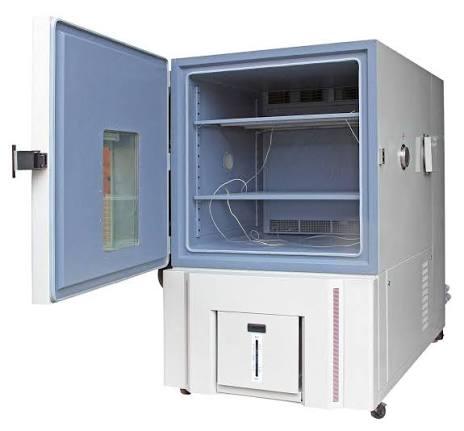
The global industrial landscape relies heavily on rigorous quality assurance and simulation tools to ensure product reliability across varying environmental conditions. In this context, the demand for advanced testing equipment has surged, driven by stringent regulatory frameworks, growing consumer expectations, and rapid technological advancements in major industries such as automotive, aerospace, electronics, and pharmaceuticals. Companies are increasingly investing in sophisticated simulation setups to evaluate how raw materials, components, and finished assemblies respond to extreme temperatures, humidity, pressure, vibration, and corrosive elements. This proactive evaluation minimizes product failure risks, reduces costly recalls, and accelerates time-to-market for innovative products. Furthermore, the rising integration of electric vehicles, renewable energy systems, and miniaturized electronic components requires highly precise thermal and climatic stress testing, creating expanded avenues for industry growth. As global supply chains become more interconnected, manufacturers are aligning their testing procedures with international standards to ensure seamless cross-border trade and compliance. Consequently, modern infrastructure demands chambers capable of offering precise environmental control, higher energy efficiency, and modular scalability to accommodate diverse testing protocols across multiple geographical domains.
Understanding the broader scope of market movements requires analyzing strategic investments, technological integration, and regional shifts. Modern environmental test chambers are no longer limited to basic static temperature control; they now incorporate advanced automation, Internet of Things (IoT) connectivity, data logging, and remote monitoring capabilities. These technological enhancements enable real-time telemetry, predictive maintenance, and streamlined data collection, which are essential for research and development teams working under tight deadlines. Additionally, custom-designed chambers tailored for specialized applications, such as high-altitude simulation or lithium-ion battery testing, are becoming a significant segment of the market. Key industry participants are actively focusing on sustainable design, integrating eco-friendly refrigerants and energy-saving compressor technologies to align with global environmental regulations. As emerging economies accelerate their industrialization and establish robust manufacturing hubs, market participants are expanding their regional footprints through strategic partnerships, localized distribution networks, and enhanced service offerings. To gain deeper intelligence on industry trajectories, detailed Environmental Test Chamber Market analysis provides valuable insights into current shifts and prospective opportunities shaping the future of global testing standards.
What is the main function of an environmental test chamber in modern manufacturing? An environmental test chamber simulates varying climatic conditions—such as extreme temperatures, humidity, altitude, and moisture—to assess the durability, safety, and performance of components, materials, and finished products under controlled environmental stress before mass commercial distribution.
Which key industries drive the adoption of environmental testing equipment globally? The automotive, aerospace, defense, electronics, pharmaceutical, and telecommunications sectors are the primary drivers of demand, as they require strict compliance with international safety and quality control standards to ensure product operational integrity.
➤➤➤Explore MRFR’s Related Ongoing Coverage In Semiconductor Industry:
Robotic Process Automation Market
Building Automation System Market

 English
 Arabic
 French
 Spanish
 Portuguese
 Deutsch
 Turkish
 Italiano
 Russian
 Romaian
 Portuguese (Brazil)
 Greek
Greek
