


Train Express Service: When Rail Logistics Actually Makes Business Sense
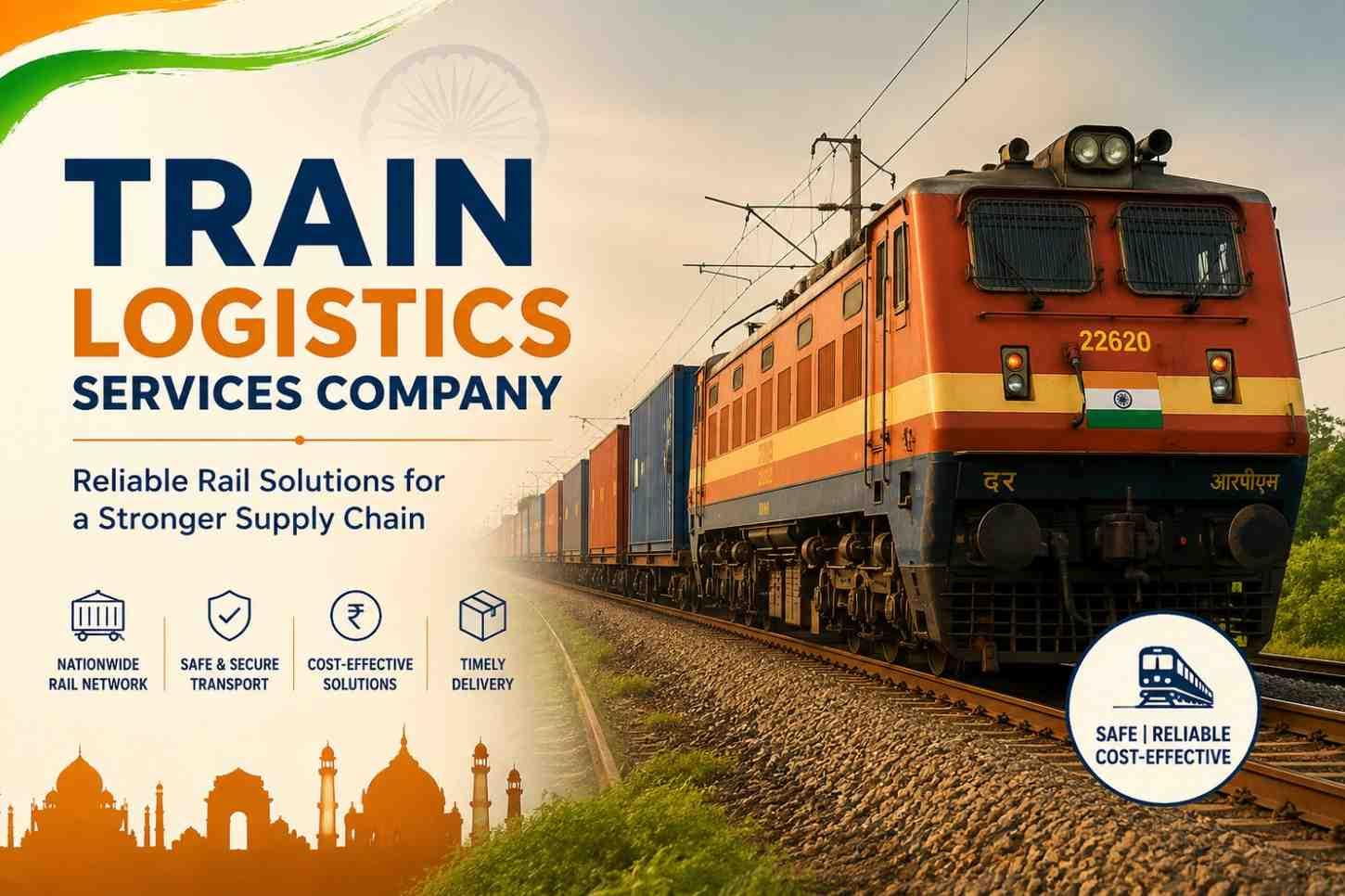
A shipment does not become efficient just because it moves by train. That sounds obvious, but it is one of the most common mistakes businesses make when evaluating rail freight. They compare a railway freight rate with a road quotation, see a lower number, and assume the decision is simple. In practice, the real cost of transportation starts before the cargo reaches the railway terminal and ends only when the shipment reaches its destination.
This is where a train express service can become useful for logistics teams. Rail can be a practical option for certain long-distance movements, particularly when the shipment can work around planned schedules and the business has suitable first-mile and last-mile arrangements. India's rail freight network is also becoming more capable of handling modern cargo movements, with dedicated freight infrastructure and multimodal cargo terminals expanding the options available to businesses.
The important question, therefore, is not whether rail is cheaper than road. It is whether rail fits the shipment.
The Real Problem Is Usually Not the Train
Imagine a company needs to move several consignments from a manufacturing location to a distribution centre hundreds of kilometres away. The obvious calculation is the line-haul cost. But the logistics manager has several other things to solve.
How will the goods reach the origin terminal? How much time will loading take? Is the shipment ready before the terminal cut-off? What happens when the cargo reaches the destination? Who arranges the truck for the final delivery?
These questions sound operational, but they can completely change the economics of a shipment.
This is where most businesses struggle. They treat rail as a single transportation activity when it is actually one part of a larger movement. NITI Aayog has also identified first and last-mile connectivity and intermodal infrastructure as important areas for improving rail freight efficiency.
A business that ignores those handover points can save money on the railway leg and lose it again through additional handling, waiting time, local transportation, or poor coordination.
Why Train Express Service Is Not the Same for Every Shipment
There is no single shipment profile that automatically makes rail the right choice.
A company shipping heavy or recurring consignments over a long distance may have a strong reason to consider rail. A business sending a small urgent package to a customer's doorstep may have very little reason to use it.
The difference is predictability.
Rail works better when logistics teams know roughly how much cargo they need to move, where it is going, when it will be ready, and how the receiving location will handle it. When every shipment is treated as an emergency, road transport can offer more practical flexibility.
This does not mean the road is always faster or rail is always slower. It means each mode has a different operating model. Roads can respond more easily to changing pickup points and delivery requirements. Rail works best when the movement can be planned around a defined network and scheduled handovers.
That distinction becomes especially important for logistics managers handling recurring B2B shipments. If the same route is used repeatedly, the business can gradually build a transportation pattern around it instead of making a fresh decision every time.
Where Rail Logistics Can Give a Business an Advantage
The strongest case for rail is usually found in the middle of a longer supply chain.
Consider a manufacturer supplying goods to multiple regional warehouses. Moving everything by road may provide flexibility, but the cost and operational workload of repeated long-distance trips can become significant. A planned rail movement can handle the longer portion while road transportation takes care of the collection and final delivery.
That is a very different proposition from asking a train to replace the truck completely.
A capable rail logistics company in India therefore needs to think about the entire route. The railway movement is only one section of the journey. Origin pickup, cargo preparation, terminal coordination, destination handling and final-mile delivery all have to connect properly.
Indian Railways has been moving in this direction through Gati Shakti Multi-Modal Cargo Terminals, which are intended to strengthen cargo handling and connectivity between different transport modes. As of August 2026, the government reported 142 commissioned GCTs with an estimated combined handling capacity of 224 million tonnes per annum.
That development matters because better rail freight is not simply about putting more trains on tracks. The connections around those trains matter just as much.
The Cost Calculation Businesses Often Get Wrong
When someone says rail freight is affordable, the next question should be: affordable compared with what?
A proper comparison should include the complete journey. A railway quote may look attractive until a business adds pickup from the warehouse, terminal handling, unloading, destination transportation and other associated expenses.
The opposite can also happen. A shipment that initially appears more expensive may become commercially sensible when it reduces the cost of repeated long-distance road movement.
This is why affordable train shipment services should not be judged purely by the quoted rail rate.
For example, a business might move a large recurring shipment between two distribution regions. If the company has predictable dispatch cycles, suitable terminal access and organised final-mile transportation, rail can become part of a repeatable logistics process. The benefit comes from the entire system working together.
On the other hand, if a shipment is too small, highly urgent, or going somewhere far from a suitable rail terminal, the apparent saving can disappear quickly.
The practical approach is simple: calculate the cost from warehouse to customer, not from railway station to railway station.
What Actually Makes Train Cargo Services Work
The cargo itself matters more than many businesses initially realise.
Packaging, weight, dimensions, handling requirements, loading method and delivery location can all influence whether rail is suitable. A logistics team should know these details before selecting the transportation method rather than discovering restrictions after the shipment has already been planned.
There is another factor that deserves more attention: timing.
A shipment arriving at a terminal at the wrong time can create more trouble than a shipment travelling slightly longer. If cargo misses a planned movement, the business may have to wait for the next suitable arrangement. That can affect inventory planning and customer commitments.
This is why good Train Cargo Services are not simply about arranging transportation capacity. They require coordination between the warehouse, transport provider, terminal and receiving location.
One practical observation from freight operations is that the longest part of a journey is not always where the delay occurs. A shipment can cover hundreds of kilometres without a serious issue and then spend hours waiting for a local vehicle at the destination.
The last few kilometres can sometimes be more difficult than the first few hundred.
Rail Versus Road Should Be a Shipment Decision, Not a Company-Wide Rule
Some logistics teams make the mistake of deciding that they are either a road-first or rail-first organisation. That approach is unnecessarily rigid.
A better strategy is to assign the mode according to the shipment.
Road remains valuable for flexible pickup and delivery, particularly where destinations are scattered or the shipment requires direct movement. Rail becomes more attractive when the distance, shipment pattern and volume make scheduled movement practical. Air can remain relevant when the cost of waiting is higher than the transportation premium.
This is also why long-distance rail logistics solutions should not be designed in isolation. The strongest model is often a combination of transportation modes, with each one doing the job it handles most efficiently.
The 2026 freight environment is increasingly moving in this direction. India's Dedicated Freight Corridor network has expanded rail's ability to handle long-distance freight, while multimodal infrastructure is being developed around it. Current reporting indicates that the Eastern and Western DFCs together cover about 2,843 km, connecting important industrial and logistics regions.
How Logistics Teams Should Decide
Instead of asking a provider whether rail is "better", logistics managers should test the shipment against a few practical conditions:
-
Is the shipment large or frequent enough to justify planned rail movement?
-
Can the delivery requirement accommodate the expected transportation schedule?
-
Are origin and destination terminals reasonably accessible?
-
Can first-mile and last-mile transportation be arranged without creating excessive additional cost?
-
Does the total warehouse-to-customer cost make sense compared with road or another mode?
The last question is the one that matters most.
A railway quotation can never tell the full story by itself.
What Changes in Rail Logistics in 2026
Rail freight is becoming more interesting for businesses because the infrastructure around it is changing. Indian Railways reported record freight loading of 1,670 million tonnes in 2025-26, while freight terminals and first-and-last-mile initiatives continue to receive attention.
Dedicated Freight Corridors are another important part of this shift. The Western DFC now connects Dadri with the Jawaharlal Nehru Port area, while the Eastern DFC connects Ludhiana with Sonnagar. These corridors are designed to provide dedicated infrastructure for freight movement and improve capacity for long-distance cargo.
But infrastructure alone will not solve every logistics problem.
Businesses still need accurate planning, proper cargo preparation, reliable handovers and suitable final-mile arrangements. Technology can improve visibility and coordination, but it cannot fix a shipment that was badly planned from the beginning.
The future is therefore likely to be less about choosing rail instead of road and more about combining them intelligently.
Conclusion
A train express service can be a useful option when the shipment has the right characteristics. But businesses should stop looking at rail as simply a cheaper truck alternative.
The more useful question is: where does rail create value inside this particular supply chain?
If the answer is a predictable long-distance movement with suitable cargo, planned terminal access and controlled first and last-mile transportation, rail deserves serious consideration. If the shipment is urgent, small, highly variable or difficult to connect with terminals, another mode may make more sense.
That is the difference between selecting transportation and designing logistics.
For businesses, the objective should not be to move cargo by rail simply because rail is available. The objective should be to build a movement plan where every part of the journey supports the next one. When that happens, rail becomes more than a transportation option. It becomes a useful part of the overall logistics strategy.
FAQs
1. What is a train express service in logistics?
Ans. A train express service refers to organised rail-based movement of cargo where shipments are transported through a scheduled rail network. For businesses, its usefulness depends on cargo type, route, timing and how pickup and final delivery are managed.
2. When should a business choose rail instead of road transportation?
Ans. Rail is worth considering when the shipment involves suitable cargo, longer distances and relatively predictable movement requirements. Road may remain more practical when delivery points are flexible, highly dispersed or time-sensitive.
3. Are railway logistics services always cheaper than road freight?
Ans. No. The comparison should include pickup, terminal handling, rail movement, destination handling and final delivery. A lower railway rate does not automatically mean a lower total logistics cost.
4. What should I check before selecting a rail logistics company in India?
Ans. Check whether the provider can coordinate the complete movement, including origin pickup, rail transportation, terminal handling, shipment visibility and destination delivery. Route suitability and total cost should also be evaluated.
5. Are Train Cargo Services suitable for small businesses?
Ans. They can be, depending on shipment size, route and available aggregation options. Small businesses should first determine whether the available rail service fits their dispatch frequency and delivery requirements rather than assuming rail is suitable solely because it costs less.

 English
 Arabic
 French
 Spanish
 Portuguese
 Deutsch
 Dutch
Dutch
 Italiano
 Russian
 Romaian
 Portuguese (Brazil)
 Greek
Greek
