


Panoramic Dental X Ray: What Can It Detect?
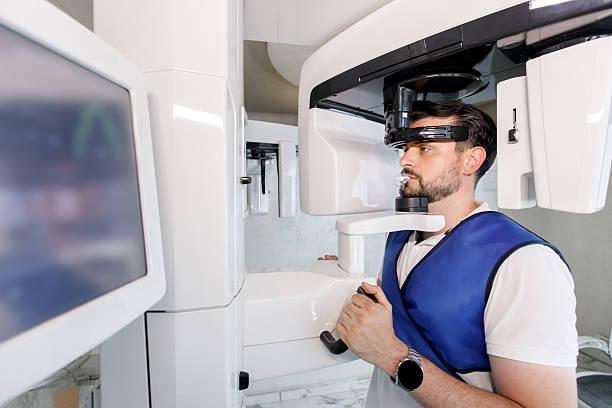
A Panoramic Dental X Ray in Dubai can provide a broad view of the teeth, upper and lower jaws, and surrounding structures in one image. This makes it useful when a dentist needs to examine several areas of the mouth at the same time. While it cannot identify every dental condition on its own, it can reveal findings that may not be fully visible during a regular oral examination.
Panoramic imaging can help dentists evaluate developing teeth, impacted teeth, wisdom teeth, missing teeth, general tooth positioning, and certain changes involving the jaw. The information can then be combined with a clinical examination and, when necessary, other forms of dental imaging.
The exact findings visible on a panoramic image depend on the patient's age, dental condition, and the quality and positioning of the scan.
Detecting Impacted Teeth
One of the important uses of panoramic imaging is identifying teeth that have not erupted normally. An impacted tooth may remain beneath the gum or bone instead of appearing naturally in the mouth.
Wisdom teeth are frequently assessed for impaction because they develop at the back of the jaw where space can be limited. A panoramic image can show the general position and angle of these teeth and their relationship with nearby structures.
Other developing teeth can also be evaluated when their eruption appears delayed or unusual. This can be particularly useful during certain dental and orthodontic assessments.
Identifying Wisdom Tooth Concerns
Wisdom teeth can develop in different positions, and some may remain partially or completely within the jaw. A panoramic X-ray provides a broad view that allows the dentist to assess their development.
The image may show whether a wisdom tooth appears upright, angled, or impacted. It can also help the dental professional evaluate its general relationship with neighboring teeth.
If the image indicates an area that needs closer assessment, additional imaging may be recommended. This ensures that decisions are based on sufficient information rather than relying on a panoramic image alone.
Dental Clinic: Evaluating What the Image Shows
At a Dental Clinic, a panoramic image is interpreted by a dental professional rather than being used as a standalone diagnostic tool. The dentist considers the patient's symptoms, dental history, oral examination, and X-ray findings together.
The panoramic scan itself is generally straightforward. The patient is positioned carefully in front of the machine, and the head is stabilized using positioning supports. The machine then rotates around the head to capture the required information.
Remaining still during the scan is important because movement can affect image clarity. Once the image is produced, the dentist can assess the visible structures and determine whether further examination is necessary.
Assessing Missing or Developing Teeth
Panoramic imaging can also help show teeth that are missing or have not yet erupted. This can be particularly useful for children and teenagers whose permanent teeth are still developing.
If a tooth does not appear when expected, the dentist may use an X-ray to determine whether it is developing beneath the gums and where it is positioned. This information can be useful when deciding whether additional monitoring or orthodontic assessment is appropriate.
In adults, panoramic imaging can also provide an overview of missing teeth and surrounding structures, particularly when dental procedures are being considered.
Examining Tooth Position and Alignment
A panoramic image can provide a general overview of how teeth are positioned within the jaws. It may reveal crowding, unusual angles, overlapping teeth, or other positioning concerns.
This can be useful during orthodontic assessments. Before braces or other alignment options are planned, the dental professional may want to understand the overall arrangement of the teeth and developing structures.
However, panoramic imaging does not provide every detail required for orthodontic planning. Other examinations and diagnostic records may also be needed.
Looking at Jaw Structures
Because a panoramic X-ray captures a large area, it can provide information about the general appearance of the upper and lower jaws. Certain changes may become visible and require further investigation.
If the dentist notices an unusual area, additional imaging may be recommended to obtain more detailed information. More focused or three-dimensional scans can sometimes provide a clearer view of a specific region.
This is why panoramic imaging is best understood as one component of a broader dental assessment.
Can It Detect Cavities?
A panoramic X-ray is not usually the preferred imaging method for detecting small cavities between individual teeth. Smaller intraoral X-rays can provide more detailed views of specific teeth and may be more appropriate for evaluating certain types of decay.
However, a panoramic image can still contribute useful information about the overall condition and positioning of the teeth. The dentist decides which imaging method is most suitable according to the concern being investigated.
Supporting Dental Treatment Planning
Panoramic imaging may be used before certain dental procedures to provide a general overview of the mouth and jaws. It can be helpful during assessments involving wisdom teeth, orthodontics, missing teeth, and other dental concerns.
For procedures requiring highly detailed information, additional imaging may be necessary. The dentist can determine which diagnostic tools are appropriate before planning the next steps.
Why Professional Interpretation Matters
Patients should not attempt to diagnose themselves from a panoramic X-ray. Dental images can contain subtle findings that require professional training and clinical context.
A dentist can explain what the image shows and whether anything requires further investigation. This approach helps prevent unnecessary concern and ensures that imaging results are considered alongside the patient's overall oral health.
Final Thoughts
A Panoramic Dental X Ray can reveal valuable information about teeth, wisdom teeth, developing teeth, jaw structures, and tooth positioning. Although it does not replace every type of dental examination or X-ray, its broad coverage makes it a useful diagnostic resource. When interpreted professionally, Panoramic Dental X Ray imaging can support a clearer understanding of oral structures and help guide appropriate dental care.

 English
 Arabic
 French
 Spanish
 Portuguese
 Deutsch
 Turkish
 Dutch
Dutch
 Italiano
 Russian
 Romaian
 Greek
Greek
