


Forging Technology in Heavy Duty Valve Manufacturing
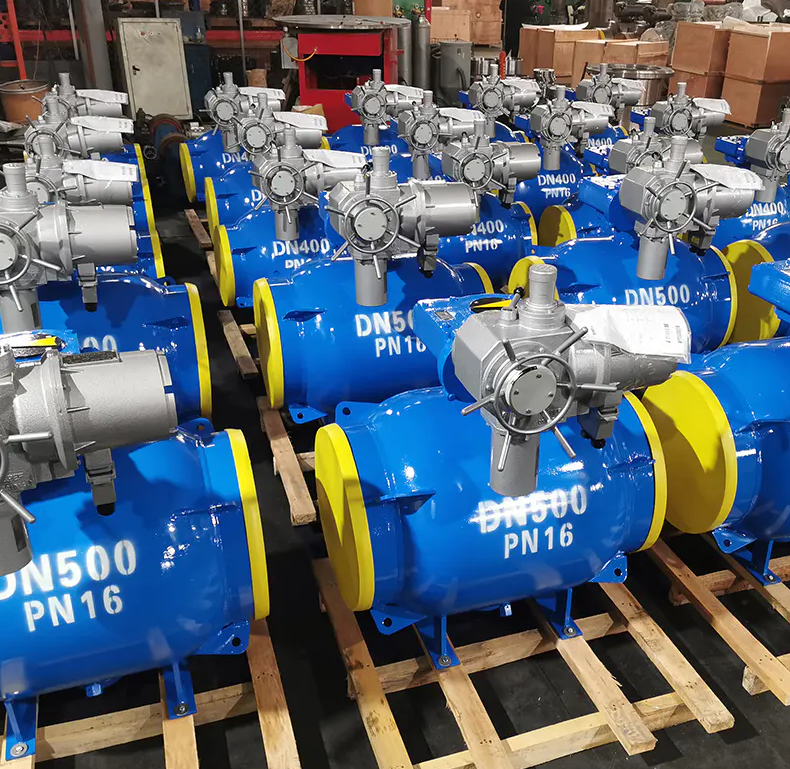
Forged steel ball valves are designed for applications where material strength, dimensional consistency, and dependable shutoff performance are important. Unlike cast construction, forging shapes metal through controlled mechanical force, helping create a dense material structure suitable for demanding service conditions. When combined with a supported ball mechanism, this approach provides a practical solution for industrial pipelines that experience high mechanical loads, frequent operation, or strict reliability requirements. For engineering teams evaluating a Forged Steel Trunnion Mounted Ball Valve, the relationship between forging quality and internal component design deserves close attention.
The forging process begins with carefully selected steel that is heated to a controlled temperature before being formed through dies or other shaping equipment. The process can improve material continuity and reduce the risk of certain internal imperfections associated with poorly controlled casting. However, forging alone does not guarantee performance. Heating uniformity, deformation control, cooling conditions, and subsequent heat treatment all influence the final properties of the body material. Manufacturers must also consider grain flow, residual stress, hardness, and dimensional stability when developing a forging process for industrial valve components.
Carbon steel, stainless steel, and alloy steel may be selected according to the operating environment. Carbon steel is often used where strength and general industrial suitability are required. Stainless steel can be considered for systems exposed to corrosive media or humid environments. Alloy steel may be appropriate where additional resistance to temperature, pressure, or mechanical stress is needed. Material selection should include the body, ball, stem, trunnion, fasteners, and sealing components because differences in thermal expansion or chemical compatibility can influence the behavior of the complete valve assembly.
The trunnion mounted structure supports the ball through fixed upper and lower bearings or support points. This arrangement reduces the load carried by the stem and helps control operating torque. In larger valves, the support system can make actuator operation more manageable and reduce stress on the operating mechanism. Accurate alignment is essential because the ball, trunnions, bearings, and seat pockets must work together without excessive friction. Poor alignment may cause uneven contact, increased torque, accelerated wear, or difficulty completing the required operating cycle.
Sealing performance depends on the interaction between the ball and the valve seats. Seat designs may use spring loading, line pressure, or a combination of both to maintain contact with the ball. The appropriate arrangement depends on the direction of pressure, operating conditions, and required isolation performance. Soft seat materials may provide effective sealing for compatible media, while metal-seated designs may be considered for high-temperature or abrasive service. The material must be selected according to chemical resistance, temperature stability, wear behavior, and the frequency of valve operation.
The ball surface requires careful finishing because even small defects can affect sealing reliability. Grinding and polishing processes help create a consistent contact surface, while dimensional inspection confirms that the ball meets the intended geometry. The same attention is needed for the stem and trunnion components. Bearing surfaces should be smooth and properly aligned, and internal passages should be free from machining debris or foreign particles. Clean assembly is particularly important because contamination can damage seats or increase friction during the first operating cycles.
Forged bodies also require appropriate testing and documentation. Pressure testing evaluates the integrity of the pressure boundary, while seat testing checks the ability of the valve to isolate the pipeline. Depending on the project, inspection may include visual examination, dimensional verification, material identification, hardness testing, non-destructive examination, and functional testing. Traceability records are useful for confirming material batches, heat treatment history, machining results, and inspection outcomes. These records support quality management and make future maintenance or technical evaluation more efficient.
Actuator selection should be based on actual operating torque rather than valve size alone. The actuator must overcome friction, seat loading, pressure-related forces, and any additional resistance caused by the medium or installation conditions. Gearboxes or powered actuators may be used where manual operation is impractical. Proper mounting alignment and protection from environmental exposure are important for reliable performance. In automated systems, valve position feedback and control compatibility should also be considered during project planning.
Installation and maintenance influence the long-term value of the equipment. Pipeline supports should reduce external stress on the valve body, and the line should be cleaned before commissioning. Operators should avoid forcing the valve beyond its designed travel and should monitor changes in torque, leakage, actuator response, and seat behavior. Periodic inspection of external seals, mounting connections, and operating components can help identify developing problems before they interrupt production.
A Forged Steel Trunnion Mounted Ball Valve should therefore be evaluated as a complete engineered system involving forging quality, heat treatment, support structure, seat materials, machining accuracy, testing, and actuator integration. Matching the design to the medium and service environment is more important than relying on a single material label. Industrial users can review suitable valve solutions through https://www.ncevalve.com/product/ when comparing equipment for demanding pipeline and process applications.

 English
 Arabic
 French
 Spanish
 Portuguese
 Deutsch
 Dutch
Dutch
 Italiano
 Russian
 Romaian
 Portuguese (Brazil)
 Greek
Greek
