


Why Exporters Should Review EPCG and GST Separately Before Buying Machinery
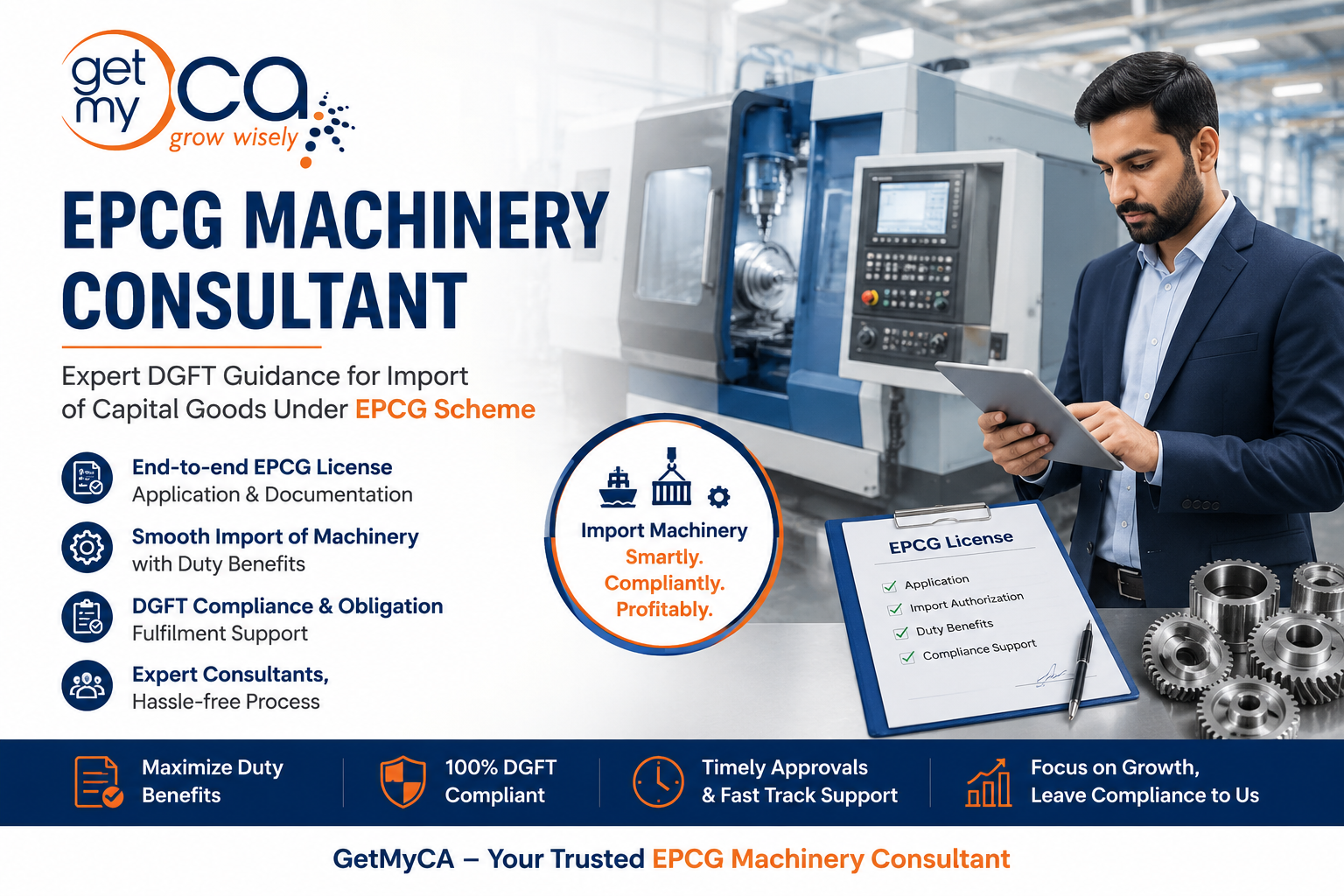
Buying machinery for export production is a major investment. Businesses usually compare machine price, supplier terms, production capacity, and delivery time before placing an order.
But exporters should also look at two separate areas: customs-related planning under EPCG and the GST impact of the machinery purchase. Both can affect project cost, but they work differently.
Start With the Machinery Requirement
Before checking any scheme or tax benefit, the business should first understand why the machine is needed.
It may be required to:
- Increase production
- Improve product quality
- Replace old equipment
- Add a new product line
- Reduce manufacturing time
- Support future export orders
Once the purpose is clear, management can compare the expected benefit with the total investment.
Review EPCG Before Finalising an Import
If machinery is being imported for export-related production, the business may need to understand the EPCG framework before completing the transaction.
Reviewing EPCG planning for export machinery can help manufacturers understand areas such as capital-goods eligibility, export obligations, installation requirements, and documentation.
It is better to check these points early rather than after the machinery has already been ordered.
Export projections should also be realistic. A business should consider its current export levels, production capacity, customer demand, and available working capital.
GST Needs a Separate Review
EPCG planning does not automatically answer every GST question connected with a machinery purchase.
Whether the equipment is imported or purchased from an Indian supplier, the GST impact should be reviewed separately.
Businesses may need to check:
- GST charged on the purchase
- Input tax credit position
- Supporting invoices
- Nature of the transaction
- Accounting treatment
- Working-capital impact
Understanding GST treatment for machinery purchases can help finance teams assess the transaction without assuming that every tax amount paid will automatically become refundable.
Keep Both Sets of Documents Organised
Machinery projects usually generate many documents.
Useful records may include:
- Supplier quotations
- Purchase orders
- Commercial or tax invoices
- Payment proofs
- Shipping documents
- Customs records
- Installation records
- Machinery specifications
- GST records
Keeping these documents organised from the beginning makes future compliance much easier.
Look at the Full Project Cost
The machinery price is only one part of the investment.
Businesses should also consider freight, insurance, installation, taxes, financing costs, testing, and possible production downtime.
A complete project budget helps management understand how much cash will be required before the machinery starts generating revenue.
Do Not Mix Different Compliance Questions
One common mistake is to treat EPCG, customs, and GST as one single issue.
In practice, each area may have different rules, documents, and conditions.
Keeping them separate during planning makes it easier for the finance and operations teams to understand what needs to be checked at each stage.
Final Thought
For exporters, machinery investment should be planned from both an operational and compliance point of view.
Reviewing EPCG requirements and GST implications separately, while keeping proper records and calculating the full project cost, can help businesses make a more informed investment decision.

 English
 Arabic
 French
 Spanish
 Portuguese
 Deutsch
 Turkish
 Dutch
Dutch
 Italiano
 Russian
 Romaian
 Greek
Greek
