


Material Control in Heavy-Duty Fastener Production
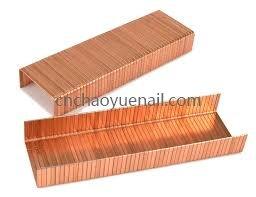
Demanding fastening applications require products that combine dependable holding performance with consistent installation. In this environment, Heavy Wire Staples are often evaluated for applications where material stability and structural support are important. Their quality depends on a complete manufacturing process involving steel selection, wire preparation, forming accuracy, tooling management, surface treatment, and inspection.
Steel is commonly used for heavy-duty fastening products because it offers strength and suitable mechanical formability. However, the raw material must be carefully controlled. Variations in chemical composition, cleanliness, or internal structure may affect how the wire responds to cutting, bending, and shaping. Reliable incoming material inspection helps manufacturers establish stable production conditions from the beginning.
Wire preparation is an important stage in the production sequence. Drawing can help create a consistent wire profile, while straightening supports predictable feeding through automated equipment. Stable preparation reduces the risk of irregular movement during cutting and forming. It also helps manufacturers maintain repeatable results when producing large quantities for industrial customers and distributors.
Automated forming technology allows feeding, cutting, bending, and shaping operations to be coordinated in a continuous workflow. This improves production repeatability and reduces unnecessary manual handling. Automation also allows operating conditions to be standardized, making it easier to maintain consistent staple geometry across different batches and production schedules.
Tooling quality has a direct influence on the final product. Forming tools experience repeated mechanical stress and may gradually wear during continuous operation. If wear is not identified in time, it can affect crown formation, leg alignment, or overall shape. Preventive maintenance and regular tooling inspection help manufacturers detect changes early and reduce production variation.
Surface treatment is another important consideration for steel fastening products. During transportation, storage, and use, fasteners may encounter humidity, condensation, or changing temperatures. An appropriate surface treatment can help reduce corrosion-related deterioration and preserve product condition. Treatment selection should be based on the intended application and expected environmental exposure.
Manufacturing safety should be considered throughout the production process. Wire feeding, cutting, forming, and handling operations require controlled procedures and suitable machine safeguards. Consistent material behavior can also help reduce unexpected movement during production. From the application perspective, stable staple geometry supports more predictable interaction with professional fastening tools.
Quality inspection should cover both materials and finished products. Incoming wire can be checked for consistency, while in-process monitoring can evaluate forming stability and equipment performance. Final inspection may review geometry, surface condition, and packaging integrity. Automated vision systems can provide additional support by identifying visible deviations during continuous production.
Application requirements should guide product evaluation. Packaging operations may prioritize reliable closure and smooth feeding, while furniture and upholstery applications may require secure attachment and clean installation. Construction and industrial assembly may involve more demanding environmental or structural conditions. Buyers should consider the substrate, fastening equipment, working environment, and required holding function together.
Compatibility with installation equipment is particularly important for professional users. Automated or pneumatic fastening tools depend on consistent product feeding and predictable installation behavior. Variation in staple geometry can create interruptions and reduce productivity. Stable forming processes therefore support both product quality and the efficiency of the customer’s assembly workflow.
Packaging and logistics also influence product condition. Suitable packaging helps protect steel fasteners from moisture, contamination, and physical damage during transportation. Clear batch identification can support traceability and inventory management. These practices are valuable for international B2B supply chains where products may pass through several distribution stages before reaching the end user.
Manufacturing efficiency can contribute to responsible resource use. Accurate wire feeding, controlled forming, and early defect detection can reduce scrap and unnecessary reprocessing. Preventive equipment maintenance can further reduce downtime and material losses. Efficient production practices support stable quality while helping manufacturers manage resources more effectively.
The reliability of Heavy Wire Staples ultimately comes from the combined performance of steel quality, wire preparation, forming technology, tooling maintenance, surface engineering, inspection, and packaging. For professional buyers, evaluating the entire manufacturing system provides a clearer basis for judging consistency and application suitability. Companies seeking additional information about steel fastening products can visit https://www.cnchaoyuenail.com/product for further product references.

 English
 Arabic
 French
 Spanish
 Portuguese
 Deutsch
 Turkish
 Dutch
Dutch
 Russian
 Romaian
 Portuguese (Brazil)
 Greek
Greek
