


Types of Copper Flanges Used in Industrial Piping Systems
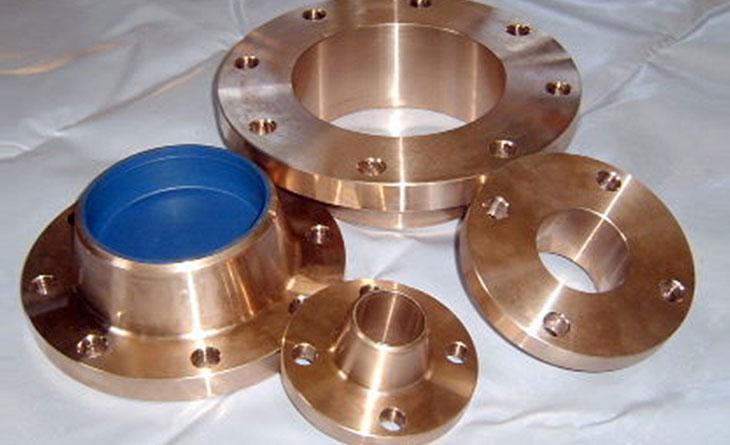
Copper flanges are widely used in industrial piping systems to connect pipes, valves, pumps, and other equipment. These flanges create strong and leak-proof joints while allowing easy disassembly for maintenance and inspection. Because copper offers excellent corrosion resistance, thermal conductivity, and durability, copper flanges are commonly used in industries such as HVAC, plumbing, chemical processing, and heat exchanger systems.
Weld Neck Copper Flanges
Weld neck copper flanges are designed with a long tapered hub that is welded directly to the pipe. This structure provides strong reinforcement at the connection point and reduces stress on the pipe. Due to their strength and reliability, weld neck copper flanges are often used in high-pressure and high-temperature piping systems where durability is essential.
Slip-On Copper Flanges
Slip-on copper flanges are easy to install because they slide over the pipe before being welded into place. This design simplifies alignment during installation and reduces fabrication time. Slip-on flanges are generally used in low to medium pressure applications such as water supply systems, cooling systems, and general industrial piping.
Blind Copper Flanges
Blind copper flanges are used to seal the end of a pipeline or close a pressure vessel opening. Since they do not have a central bore, they completely stop the flow of fluids within the pipeline. These flanges are commonly used in maintenance operations, system testing, and temporary pipeline closures.
Threaded Copper Flanges
Threaded copper flanges contain internal threads that allow them to be connected to threaded pipes without welding. These flanges are particularly useful in systems where welding may be difficult or unsafe. They are typically used in smaller piping systems and low-pressure applications.
Socket Weld Copper Flanges
Socket weld copper flanges are designed for small diameter piping systems that operate under high pressure. In this type of flange, the pipe is inserted into a socket before welding, creating a strong and reliable connection. Socket weld flanges are commonly used in industrial systems where leak-proof joints are required.
Lap Joint Copper Flanges
Lap joint copper flanges are used together with stub ends and can rotate around the pipe. This rotating feature makes bolt hole alignment easier during installation. Lap joint flanges are often used in systems that require frequent dismantling for maintenance, inspection, or cleaning.
Industrial Applications of Copper Flanges
Copper flanges are used in a variety of industrial applications because of their durability and corrosion resistance. Some common industries that use copper flanges include:
-
HVAC and refrigeration systems
-
Plumbing and water distribution networks
-
Chemical and processing industries
-
Marine and shipbuilding applications
-
Heat exchanger systems
These industries benefit from copper’s ability to resist corrosion and maintain performance in challenging environments.
Advantages of Copper Flanges
Copper flanges provide several benefits in industrial piping systems. They offer excellent resistance to corrosion, which increases the lifespan of pipelines and equipment. Copper also has high thermal conductivity, making it suitable for heat transfer systems. Additionally, copper flanges are easy to fabricate, install, and maintain, which improves overall operational efficiency.
Conclusion
Copper flanges are essential components in many industrial piping systems. With different types such as weld neck, slip-on, blind, threaded, socket weld, and lap joint flanges, they offer flexibility for various applications. Their durability, corrosion resistance, and reliable performance make copper flanges an important choice for industries that require strong and efficient pipe connections.

 English
 Arabic
 French
 Spanish
 Portuguese
 Deutsch
 Turkish
 Dutch
Dutch
 Italiano
 Russian
 Portuguese (Brazil)
 Greek
Greek
