


SDM Full Form: Meaning, Role, Salary, Eligibility and Responsibilities
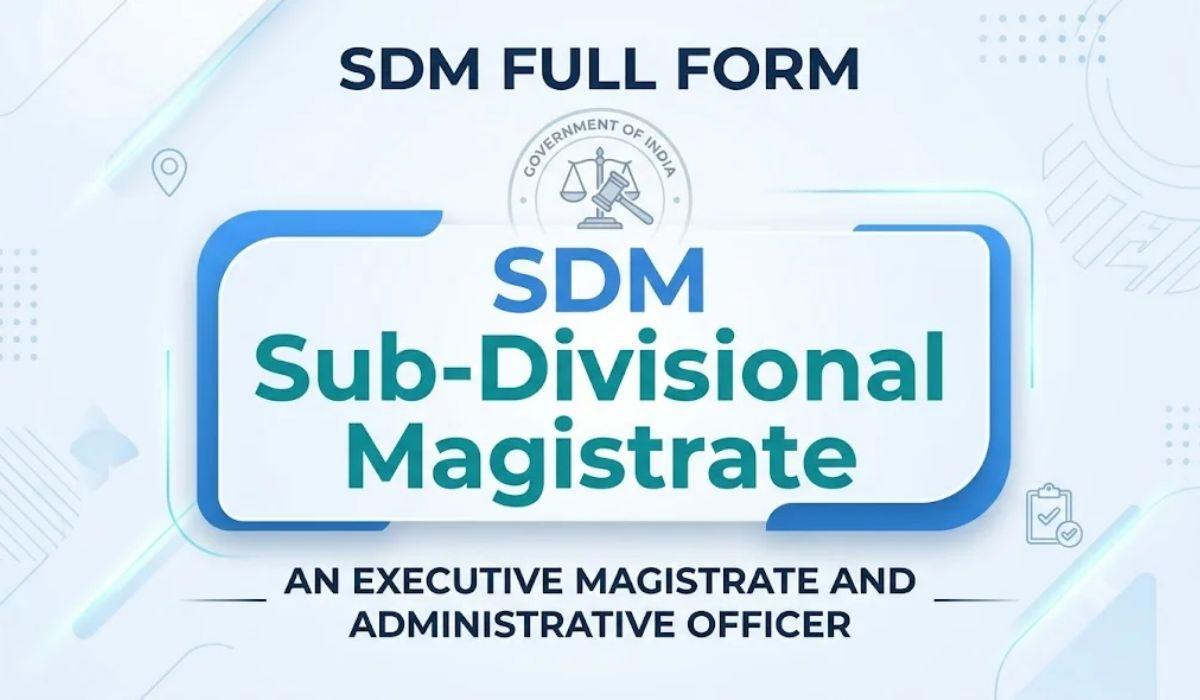
If you are preparing for government jobs or competitive examinations, you may have come across the term SDM. Understanding the SDM Full Form is important because the Sub-Divisional Magistrate is a key administrative officer at the sub-divisional level. An SDM performs several responsibilities related to administration, revenue, public safety and law and order.
For students and job aspirants, knowing about the position can help build a better understanding of India's administrative structure. The Salary Slip provides useful information about government jobs, salaries, career opportunities and different public-sector positions.
SDM Full Form
The SDM Full Form is Sub-Divisional Magistrate. An SDM is generally responsible for the administration of a subdivision within a district. The officer works under the District Magistrate or Collector and coordinates with different government departments to ensure effective administration.
The post is commonly associated with the Indian Administrative Service (IAS) at the early stages of an officer's career, although state civil service officers can also serve as SDMs depending on the state and administrative rules.
What Is an SDM?
A Sub-Divisional Magistrate is an important government official who manages administrative matters within a particular sub-division. A district can contain multiple subdivisions, and each subdivision may have an SDM responsible for coordinating government activities.
The officer acts as a link between the district administration and people at the local level. The responsibilities can include revenue administration, executive-magisterial duties, disaster management and coordination during important public events.
According to The Salary Slip, government administrative positions such as SDM offer candidates an opportunity to work directly with public institutions and contribute to local governance.
Duties and Responsibilities of an SDM
The responsibilities of an SDM can vary depending on the state and assignment. Some of the major duties include:
-
Maintaining law and order within the subdivision.
-
Handling revenue-related administrative matters.
-
Supervising subordinate revenue officials.
-
Coordinating with police and other government departments.
-
Managing situations involving public emergencies.
-
Conducting inquiries assigned by senior authorities.
-
Supporting disaster management and relief operations.
-
Implementing government policies at the local level.
-
Handling certain executive-magisterial responsibilities.
-
Coordinating administrative arrangements during elections and major events.
Because of these responsibilities, an SDM needs strong decision-making, communication and leadership skills.
How to Become an SDM?
Candidates generally become SDMs through competitive civil service examinations. Understanding the SDM Full Form, which is Sub-Divisional Magistrate, is useful for aspirants interested in this administrative position. There are two common routes depending on the state and service structure.
One route is through the UPSC Civil Services Examination, after which an IAS officer may receive a sub-divisional posting during their career. Another route is through a State Public Service Commission examination. State civil service officers can be appointed to administrative positions such as SDM according to the applicable state service rules.
Candidates should check the official recruitment notification of the relevant examination because eligibility conditions, age limits, qualifications and selection procedures can vary.
SDM Salary in India
The salary of an SDM depends on the service through which the officer is appointed, the applicable pay rules, posting and allowances. Government officers may receive basic pay along with allowances and other benefits according to their service conditions.
An SDM's overall compensation can include components such as basic salary, dearness allowance, house-related benefits and other applicable allowances. The exact amount can therefore vary between officers and postings.
The Salary Slip regularly covers salary structures, government positions and career-related information to help aspirants understand how public-sector compensation works.
SDM vs DM: What Is the Difference?
Although both posts are important administrative positions, their responsibilities are different.
|
SDM |
DM |
|
Works at the sub-divisional level |
Generally heads district administration |
|
Reports to senior district authorities |
Oversees administration of the district |
|
Handles administrative matters within a subdivision |
Coordinates administration across the district |
|
Supervises local revenue and administrative activities |
Supervises multiple departments and subdivisions |
In simple terms, an SDM generally manages a subdivision, while the District Magistrate has broader administrative responsibility across the entire district.
Skills Required for an SDM
An effective SDM needs several professional qualities. Good communication skills help the officer interact with citizens and government departments. Decision-making is also essential because administrative officers often have to respond to urgent situations.
Leadership, problem-solving, knowledge of government rules and the ability to work under pressure are other valuable skills. Candidates preparing for civil service examinations should therefore focus not only on academic knowledge but also on developing analytical and communication abilities.
For detailed information about government salaries and career paths, The Salary Slip can be a useful resource for job aspirants researching different positions.
Career Growth of an SDM
An SDM position can provide valuable administrative experience and opportunities for career progression. Officers may move to higher administrative responsibilities depending on their service, performance, seniority and applicable government rules.
Career progression differs between IAS and state civil service officers, so candidates should understand the service structure associated with their recruitment examination.
Conclusion
Understanding the SDM Full Form is the first step toward learning about one of India's important administrative positions. The Sub-Divisional Magistrate plays a significant role in local administration, revenue work, public safety, disaster management and implementation of government policies.
For candidates interested in government careers, becoming an SDM can be a rewarding professional goal. However, the eligibility requirements and recruitment pathway depend on the specific civil service examination and state rules.
The Salary Slip helps readers explore government jobs, salary structures, eligibility requirements and career opportunities in one place. Before applying for any examination, candidates should always verify the latest eligibility criteria and recruitment details through the relevant official government notification.

 English
 French
 Spanish
 Portuguese
 Deutsch
 Turkish
 Dutch
Dutch
 Italiano
 Russian
 Romaian
 Portuguese (Brazil)
 Greek
Greek
