


Understanding Precision in Contemporary Optical Production
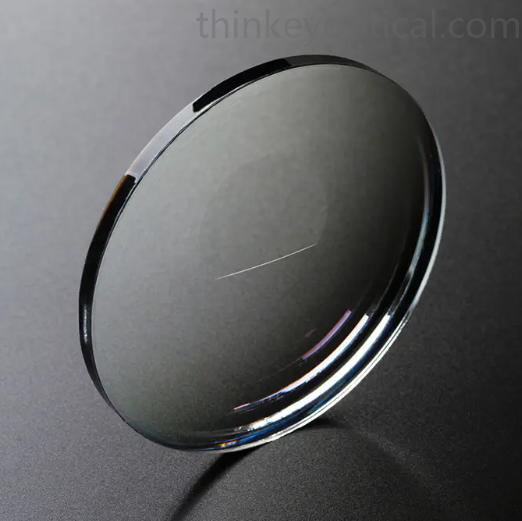
Modern eyewear requires optical products that can be adapted to different visual requirements, frame structures, and user preferences. In this environment, Prescription Lenses depend on careful material selection, accurate processing, surface treatment, and quality inspection. For international buyers and eyewear businesses, understanding these manufacturing factors provides a practical foundation for evaluating optical products and building consistent product lines.
The production of customized optical lenses begins with material selection. Optical resin is widely used in contemporary eyewear because it offers useful processing flexibility and can support a variety of lens designs. Other optical materials may also be selected according to the intended application. Each material behaves differently during forming, cutting, polishing, coating, and edging, so manufacturers need to understand how the substrate responds at each stage.
Lens geometry is a central part of optical production. A lens must be processed according to its intended optical design while maintaining suitable surface quality and dimensional consistency. Production teams use controlled manufacturing procedures to shape and finish the lens. Accurate processing is particularly important when lenses are prepared for specific frame configurations, because the relationship between lens geometry and frame structure affects final assembly.
Digital manufacturing technology has become increasingly relevant to modern optical production. Computer-controlled equipment can support repeatable processing and help manufacturers manage complex lens geometries. Digital information can also improve communication between product development teams and manufacturing departments. When production data is transferred accurately, it becomes easier to maintain consistency across different stages of the workflow.
Surface quality is another important consideration. Optical surfaces need to remain clean and consistent during polishing, handling, coating, and packaging. Small particles, scratches, or processing marks can affect the appearance of the finished product. Manufacturers therefore need suitable work areas, handling procedures, and inspection systems to identify surface problems before products leave the production facility.
Coating technology adds another layer to lens manufacturing. Depending on the intended product, manufacturers may apply treatments designed for reflection management, surface protection, easier cleaning, or other optical functions. The coating process must be compatible with the underlying material and controlled carefully to maintain consistency. Surface preparation, application conditions, curing, and inspection all influence the quality of the finished treatment.
Quality assurance should be integrated throughout the manufacturing workflow. Incoming materials can be inspected before production, while intermediate checks can identify problems during shaping and surface processing. Final inspection may evaluate optical appearance, dimensions, surface condition, coating integrity, and other agreed requirements. A systematic approach helps manufacturers identify process variations rather than relying only on final product inspection.
Customization also requires effective communication between buyers and manufacturers. Optical products may involve detailed information concerning lens design, frame compatibility, coating selection, packaging, labeling, and product identification. Clear documentation helps reduce misunderstandings and allows production teams to confirm requirements before processing begins. For international customers, organized communication is especially valuable when different product combinations are being developed at the same time.
Packaging and handling deserve attention as well. Finished optical products can be vulnerable to scratches and surface contamination if they are handled or stored incorrectly. Appropriate protective materials, clear product identification, and organized packing procedures can reduce unnecessary damage during transportation. Good packaging practices also make inventory management easier for distributors and retailers after products arrive.
Manufacturing flexibility can be useful for businesses serving different markets. Optical companies may need to develop products for various frame designs, customer groups, or regional preferences. A structured production system can make it easier to evaluate new requirements while maintaining existing quality procedures. Flexibility should be supported by technical review rather than by making unsupported production commitments.
Long-term product consistency depends on more than individual samples. Buyers should consider manufacturing processes, inspection methods, communication systems, material control, and the ability to maintain agreed standards across repeat orders. Reviewing these areas before establishing a long-term relationship can help businesses develop clearer expectations and reduce avoidable production issues.
As optical technology continues to develop, Prescription Lenses remain closely connected with material science, digital manufacturing, surface engineering, and quality management. Thinkey Optical Co.,Ltd provides information about optical products and manufacturing capabilities through https://www.thinkeyoptical.com, giving international businesses a reference point when evaluating potential production partnerships and developing customized eyewear programs.

 English
 Arabic
 French
 Spanish
 Portuguese
 Deutsch
 Turkish
 Dutch
 Italiano
 Romaian
 Portuguese (Brazil)
 Greek
