


Nante Portable Distribution Box Field Deployment Guide
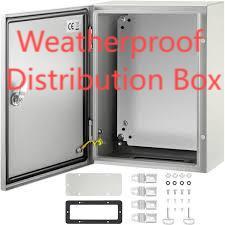
On busy sites, safety-conscious teams often place a Portable Distribution Box centrally to shorten cable runs and centralize protection devices, and they also position a Portable Distribution Box near high-use zones to minimize extension-cord hazards and speed equipment swaps. Careful selection, correct configuration, and disciplined commissioning of these mobile power units keep crews safe and projects on schedule.
Temporary power distribution units appear on construction sites, outdoor events, film sets, and emergency-response scenes. Though portable by design, these units must deliver dependable electrical protection under dust, vibration, moisture, and heavy handling. A pragmatic approach to capacity planning, mechanical robustness, wiring layout, and maintenance significantly reduces downtime and safety incidents. The following sections walk through the practical considerations that field teams and procurement agents should evaluate when specifying and using mobile distribution equipment.
Assessing capacity, phases, and protection strategies
Begin with a clear inventory of intended loads. Note continuous currents, expected simultaneous demand, and motor inrush characteristics for tools or pumps. Decide whether single-phase or three-phase distribution is required, then size feeders and main protective devices with a safety margin. Coordinate downstream breakers with upstream protection so faults isolate locally; this prevents site-wide blackouts. Include residual-current devices where regulations or task profiles demand additional human protection.
Administrative factors also matter: event sites often require lockable panels and clear labeling for public safety, while long-term rental fleets should favor modular designs to ease repairs and spare-part logistics.
Mechanical design, portability, and weatherproofing
Portability often forces a compromise between durability and weight. Choose cases made from impact-resistant polymer or light-gauge metals with internal bracing to resist deformation during transport. Ergonomic features — handles, lift points, integrated cable storage, and stackable footprints — reduce manual handling risk and speed deployment. For outdoor work, elevated internal compartments and sealed cable glands help keep dust and moisture away from terminal blocks and control wiring. Consider rubberized feet or shock mounts for units exposed to vehicle traffic or vibration.
Ingress protection ratings inform suitability: IP44 may be adequate for brief outdoor use, while IP65 or higher is preferable for frequent wet conditions. UV-stable materials resist sun degradation over long deployments.
Electrical layout, labeling, and operator ergonomics
A clean internal arrangement reduces connection errors. Separate power and control wiring, secure internal loomings, and use terminal blocks sized for the conductor ranges you plan to use. Place commonly accessed breakers and outlets on the front panel at ergonomic heights and provide a durable single-line diagram on the door so operators can quickly identify supply and load branches.
Label each outlet and breaker with rated current and intended use to prevent accidental overloads. Color-coded phase markers and a prominent earth symbol for the protective conductor point make inspections and troubleshooting faster and safer.
Nante Modular Options and Compatibility
Modularity simplifies field repairs. Favor units that accept replaceable outlet modules and standardized breaker mounts so technicians can swap faulty parts quickly without replacing entire assemblies. Look for captive fasteners, lockable breaker handles, reinforced glands, and visible indicators for power and fault conditions. Before procurement, request datasheets showing short-circuit withstand, protection-device characteristic curves, and terminal torque specifications. Clear manufacturer guidance reduces variability in field practice and shortens commissioning times.
Buy from suppliers who publish replacement parts lists and offer clear maintenance instructions; this typically reduces total cost of ownership for rental fleets and in-house equipment stores.
Commissioning, testing, and routine maintenance
Commissioning should include insulation resistance tests, earth continuity verification, and RCD operation checks. Set breakers according to coordination studies and capture baseline thermal images of terminal blocks under nominal load; these baselines enable meaningful comparisons during later inspections.
Establish a periodic maintenance routine: visual checks for gasket condition, gland tightness, and corrosion; scheduled retorque of terminals to manufacturer-specified values; and functional testing of protection devices. Log each unit’s commissioning details, inspection results, and any replacements. A simple maintenance log improves fleet reliability and supports warranty claims.
Troubleshooting common field issues
Intermittent power often stems from loose terminations or damaged cables. For such faults, isolate the affected branch and test with a known-good supply to identify defective equipment. Overheating usually indicates high-resistance joints—de-energize the unit, retorque, and replace thermally damaged parts. Nuisance trips can be caused by motor inrush or uncoordinated protection settings; consider soft-start devices or revised breaker curves where appropriate. If water ingress is suspected, take the unit out of service and inspect seals and glands before re-energizing.
Fleet management and lifecycle planning
Standardizing on a narrow set of compatible models simplifies spares stocking, training, and repairs. Keep critical consumables—gaskets, glands, common breakers—on hand to reduce mean time to repair. Track hours of operation and maintenance history to establish realistic replacement cycles; modular designs allow targeted component refreshes without full-unit replacement, saving time and budget.
Mobile power assets are essential but often overlooked pieces of site infrastructure. Applying disciplined selection criteria, ergonomic principles, commissioning tests, and preventative maintenance practices will keep crews safe and projects running smoothly. For specific models, technical specifications, and ordering information, visit the product page: https://www.nante.com/product/

 English
 Arabic
 French
 Spanish
 Portuguese
 Turkish
 Dutch
Dutch
 Italiano
 Russian
 Romaian
 Portuguese (Brazil)
 Greek
Greek
