


High-Strength Materials for Industrial Pipeline Valves
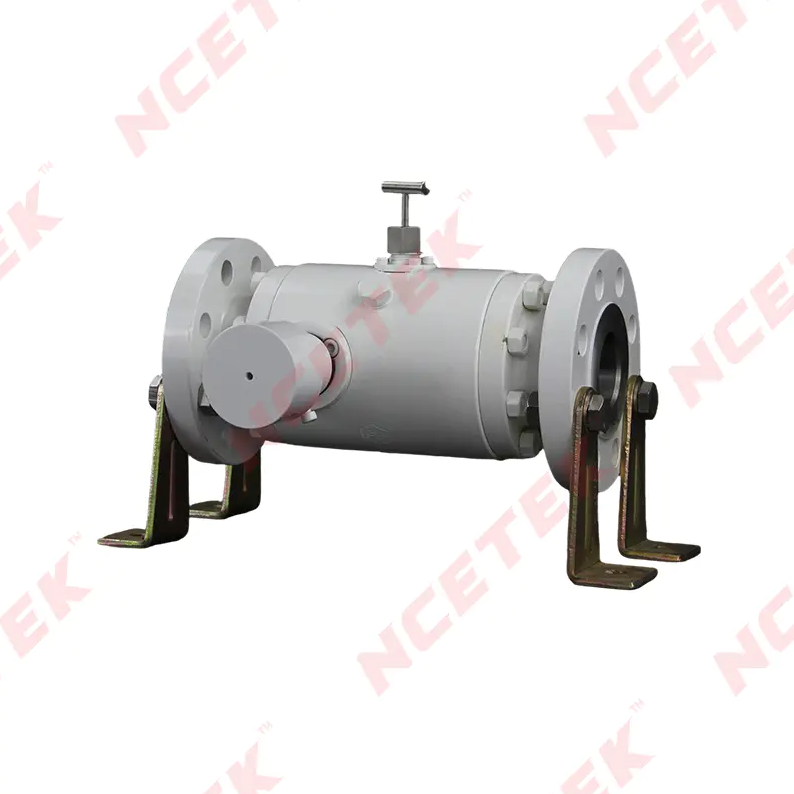
In demanding pipeline systems, valve construction must account for pressure conditions, mechanical loads, operating cycles, and the characteristics of the transported medium. A Forged Steel Trunnion Mounted Ball Valve combines a forged body structure with a supported ball mechanism to provide an engineering solution for applications where controlled isolation and dependable operation are important. Its design is particularly relevant to oil and gas infrastructure, petrochemical facilities, power systems, industrial processing, and other pipeline environments where valve construction must be matched carefully with service requirements.
Forging is an important manufacturing approach for valve components because it can provide a dense and mechanically robust material structure. Compared with conventional casting processes, forging shapes the metal through controlled deformation, allowing manufacturers to develop components with characteristics suited to demanding mechanical service. Material selection remains essential, since carbon steel, stainless steel, and alloy steel may be considered according to temperature, corrosion exposure, pressure conditions, and process media.
The trunnion-mounted configuration provides another important structural feature. Instead of allowing the ball to rely primarily on the valve seats for support, a trunnion mechanism supports the ball at fixed points within the valve body. This arrangement can help distribute mechanical loads and reduce the force required to rotate the ball. Lower operating torque can be useful when the valve is integrated with manual gear systems, pneumatic actuators, electric actuators, or other control mechanisms.
Manufacturing accuracy has a direct influence on valve performance. Forged valve bodies require controlled machining of internal passages, connection surfaces, stem interfaces, and other critical areas. Dimensional consistency helps ensure that assembled components interact correctly. Machining must therefore be coordinated with forging tolerances and subsequent finishing operations rather than treated as an isolated production stage.
Sealing design is equally important. The interaction between the ball and seats determines how effectively the valve can isolate the pipeline when closed. Seat materials should be selected according to temperature, chemical compatibility, pressure conditions, and expected operating cycles. In some applications, soft sealing materials may be appropriate, while other services may require metal-seated configurations because of temperature or process conditions. The selection should always be based on the actual operating environment rather than on a general assumption about valve type.
Stem and actuator integration also deserves attention during engineering. The stem transfers rotational movement from the operating mechanism to the ball, so alignment and mechanical strength are important. For automated systems, the actuator should be selected according to operating torque, control requirements, available power, installation conditions, and expected operating frequency. Proper integration can support consistent opening and closing operations while simplifying maintenance planning.
Pipeline installation conditions can further affect valve selection. Above-ground systems may prioritize accessibility for inspection and maintenance, while underground or space-restricted installations can require different stem arrangements and operating considerations. Connection types, orientation, surrounding equipment, and available maintenance clearance should be evaluated before installation to reduce difficulties during future servicing.
Quality control is normally distributed across several stages of production. Raw materials can be checked before processing, while forged components may undergo dimensional inspection and material verification. Machined parts require additional checks for critical dimensions and surface conditions. After assembly, functional testing and pressure-related inspection can help identify problems associated with sealing, body integrity, or operating mechanisms.
Maintenance planning should consider the entire valve assembly rather than focusing only on the body. Seats, stem components, actuators, fasteners, and sealing elements may experience different service conditions. Establishing inspection intervals based on operating environment and system importance can help maintenance teams identify changes before they interfere with normal pipeline operation. Documentation of inspection results can also improve long-term equipment management.
For manufacturers, producing specialized valves requires coordination between material engineering, forging, machining, assembly, testing, and quality management. A reliable manufacturing process is not defined by one operation alone. Instead, consistency across the complete production chain helps create valves that correspond more closely with specified application requirements.
For engineers and procurement teams, evaluating a Forged Steel Trunnion Mounted Ball Valve should therefore involve more than comparing basic valve dimensions. Material compatibility, structural configuration, sealing method, connection design, actuator requirements, installation conditions, inspection procedures, and maintenance expectations should all be considered together. More information about industrial ball valve solutions and related equipment can be explored through https://www.ncevalve.com/product/ when reviewing options for different pipeline and process applications.

 English
 Arabic
 French
 Spanish
 Portuguese
 Deutsch
 Dutch
Dutch
 Italiano
 Russian
 Romaian
 Portuguese (Brazil)
 Greek
Greek
