


Advanced Technology for Pressure-Based Operations
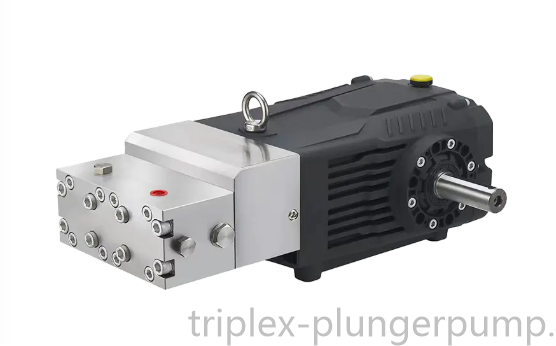
Industrial facilities depend on equipment that can perform consistently under demanding working conditions. When a process requires controlled movement of liquid through a system, equipment selection becomes closely connected with pressure, flow, temperature, fluid characteristics, operating frequency, and installation conditions. A Plunger Pump can be used in situations where controlled displacement and elevated pressure are important, but its suitability should always be considered in relation to the complete process rather than a single operating value.
The basic operating principle involves a reciprocating plunger moving within a chamber while valves regulate the direction of liquid movement. As the plunger travels through its operating cycle, liquid is drawn into the chamber and subsequently discharged. This repeated action creates controlled fluid displacement. The actual behavior of the equipment depends on its mechanical design, operating speed, chamber dimensions, valve arrangement, and the conditions created by the surrounding system.
Pressure requirements should be established before equipment is selected. Different industrial processes can have very different requirements even when they involve similar liquids. Some operations may need stable pressure for cleaning, while others may require controlled delivery for a manufacturing or treatment process. Flow demand also needs to be considered because pressure and flow work together within the complete system. Selecting equipment without considering both can create an unsuitable operating condition.
The characteristics of the liquid are equally important. Water-based applications may present different requirements from processes involving cleaning solutions or other industrial fluids. Temperature, chemical composition, suspended particles, and exposure duration can affect the materials used in the equipment. Components that come into contact with the liquid should therefore be selected with the operating environment in mind. Material compatibility can help reduce unnecessary deterioration and support more predictable service.
Sealing components deserve particular attention because reciprocating movement creates repeated mechanical contact. Seals and packing need to maintain fluid containment while allowing the plunger to move through its operating cycle. Their condition can be influenced by pressure, temperature, lubrication, alignment, fluid cleanliness, and operating frequency. Regular inspection can help operators identify leakage or wear and address potential problems before they influence other parts of the system.
In industrial cleaning applications, the equipment may be connected to a system designed to deliver water under controlled pressure. Machinery, equipment surfaces, production areas, and other industrial components can require regular cleaning as part of normal facility operations. Cleaning effectiveness does not depend on pressure alone. Water volume, nozzle design, spray distance, temperature, and the type of material being removed all affect the process. The equipment should therefore be matched with the entire cleaning arrangement.
Water-related industrial processes can also require controlled liquid movement. Depending on the facility, pressurized liquid may support flushing, circulation, filtration-related activities, or other stages of a larger process. In these applications, the relationship between the equipment and connected valves, filters, piping, control devices, and monitoring instruments should be considered during system planning.
Maintenance planning is another essential part of equipment management. Regular checks may cover valves, seals, packing, lubrication points, connections, pressure indicators, and drive components. Operators can also pay attention to changes in noise, vibration, temperature, leakage, or operating behavior. Such observations can provide useful information about changing equipment conditions. Maintenance intervals should be established according to actual use and relevant manufacturer recommendations.
Installation quality can influence how the equipment performs after commissioning. Secure mounting and proper alignment can help reduce unnecessary mechanical stress. Inlet piping should provide appropriate liquid supply conditions without avoidable restrictions, while discharge connections should be designed according to the expected working conditions. Adequate maintenance access is also useful because inspection and servicing become easier when important components can be reached safely.
Energy use should be considered during system planning as well. Equipment that is poorly matched to actual demand can result in unnecessary energy consumption or mechanical stress. Appropriate sizing, suitable operating conditions, efficient piping, and regular maintenance can help maintain a more balanced relationship between energy input and useful output. System improvements can often involve several components rather than relying on the equipment itself.
For industrial buyers, the selection process should begin with a clear understanding of the intended application. Fluid properties, pressure, flow requirements, operating frequency, environmental conditions, installation arrangements, and maintenance capabilities should all be reviewed before procurement. A Plunger Pump becomes most suitable when its characteristics correspond with the requirements of the complete system. Companies researching equipment for industrial fluid applications can find further information at https://www.triplex-plungerpump.com/product/pumps/ and review available solutions according to their specific operating needs.

 English
 Arabic
 Spanish
 Portuguese
 Deutsch
 Turkish
 Dutch
Dutch
 Italiano
 Russian
 Romaian
 Portuguese (Brazil)
 Greek
Greek
