


How Nearby Excavation and Heavy Construction Can Cause Structural Damage to Older Queensland Homes
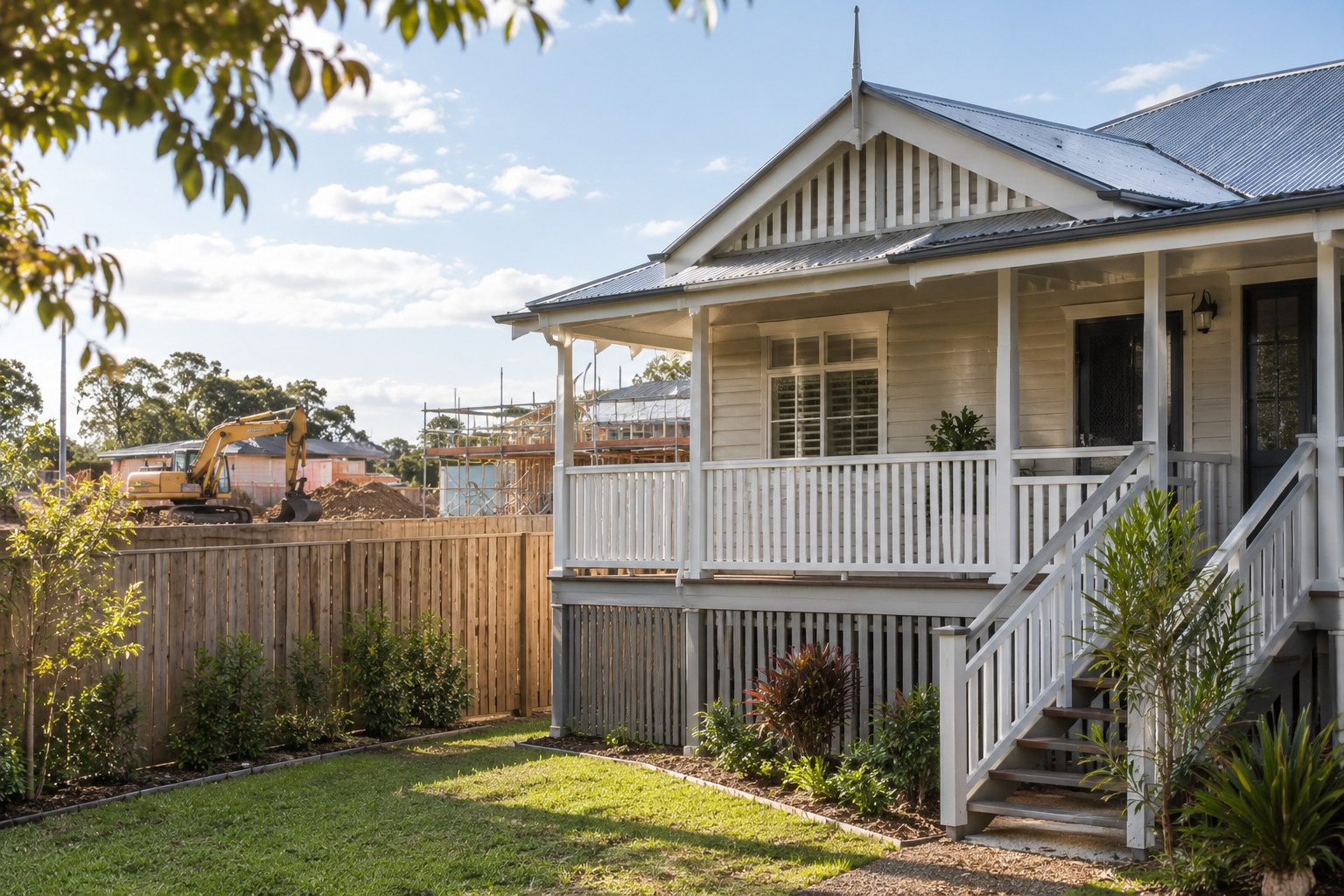
Queensland has no shortage of character homes. Timber-stump Queenslanders, post-war brick cottages, and older weatherboard houses make up a huge portion of the state's housing stock, particularly in established suburbs where infill development has picked up over the last decade. These homes have generally held up well over the years, weathering storms, humidity, and decades of settling into the ground beneath them.
What a lot of these older homes weren't built to handle, though, is what happens when a large excavator starts digging a few metres from the boundary fence, or when piling work begins for a new development next door. It's a scenario playing out more and more often as vacant blocks get subdivided and older suburbs fill in with townhouses and units, and it's worth understanding exactly why older homes are more exposed to this kind of risk, and what can be done about it.
Why Older Homes Respond Differently to Ground Disturbance
Modern homes are typically built on engineered slabs or footings designed with a reasonably good understanding of the soil conditions on site. Older Queensland homes, particularly anything built before the 1980s, were constructed under very different standards, if any formal soil assessment was done at all.
Many older homes sit on timber stumps or shallow footings that were never designed with today's construction techniques in mind. These foundations can be more sensitive to changes in the surrounding soil, and that's exactly what heavy construction work nearby tends to cause.
Excavation changes the way water moves through the ground. Piling and compaction work sends vibration through the soil, sometimes for a surprising distance. Large machinery working close to a boundary can also alter groundwater levels temporarily or permanently, especially if the site involves basement work or significant depth. None of this is usually a problem for a modern slab built to current standards, but an older stump home or a house with shallow strip footings can respond to these changes in ways that show up as movement, cracking, or doors and windows that suddenly don't sit quite right.
The Soil Factor Queensland Homeowners Often Overlook
A lot of Queensland's older suburbs sit on reactive clay soils, the kind that expand when wet and shrink when dry. These soils already put more stress on a home's foundations than sandier or more stable ground types. Add nearby excavation into the mix, and you've got a situation where the soil is being disturbed at the same time it's already prone to movement.
This combination is part of why homes close to major excavation projects sometimes develop problems that wouldn't be expected from vibration alone. The construction work disrupts the soil's natural moisture balance around the site, and a home built decades ago on shallow footings, sitting on reactive clay, simply doesn't have the same resilience a modern engineered slab does.
What This Damage Actually Looks Like
Homeowners often picture dramatic cracks appearing overnight, but in reality, the signs tend to be more gradual and easy to dismiss individually. Some of the common indicators include:
Hairline cracks appearing in internal or external walls, particularly around window and door frames. Doors or windows that used to open and close easily suddenly sticking or not sitting flush. Small gaps appearing between skirting boards and flooring. Slight separation where a driveway or path meets the house. Uneven or "bouncy" spots in timber flooring on stumped homes.
Individually, any one of these could be put down to normal ageing or a hot, dry summer. Together, and appearing within a few months of construction starting next door, they're worth paying much closer attention to.
The Timing Problem
One of the trickiest parts of all this is that the damage doesn't always show up while the construction work is actually happening. Ground movement and settling can be a slow process, and it's not unusual for cracking or other issues to appear weeks or even months after the heavy work next door has finished. By that point, it's much harder to connect the dots, and even harder to prove.
This is where the timing of any documentation becomes so important. If you own an older home and you know significant excavation or construction is about to start nearby, getting a proper, dated record of your home's existing condition before the work begins gives you something concrete to refer back to if problems do appear later. Waiting until you've already noticed a crack means you're working from memory rather than evidence, which puts you in a much weaker position.
What Owners of Older Homes Can Actually Do
If you own an older Queensland home and construction is planned nearby, a few practical steps go a long way.
Start by getting familiar with your own home before anything changes. Walk through it properly, inside and out, and take note of any existing cracking, uneven flooring, or doors that already don't close well. It's surprising how much of this gets forgotten once a project next door has been running for a few months and you're trying to remember what was there before.
From there, it's worth having a proper record made by someone independent, rather than relying purely on your own phone photos. A formal, dated report of your home's condition, sometimes called a dilapidation report, is specifically designed for this situation. It's a standard precaution for homes near major construction, and for older properties in particular, it's often the difference between having solid grounds for a conversation with the builder or developer, and simply hoping they take your word for it.
Beyond the construction risk specifically, older homes also benefit from a broader health check every so often, covering things like general structural condition and pest activity, since issues like termites can compound existing vulnerabilities in older timber and stump construction. Readers wanting to understand this process in more depth can find some useful background on the Informed Building Inspections website, which covers how these kinds of reports are typically carried out.
The Bigger Picture
None of this is meant to suggest that construction next door is something to dread every time it happens. Most projects proceed without causing any lasting damage to neighbouring homes at all, older ones included. But older Queensland homes do carry a different level of risk than a newly built house on an engineered slab, simply because of how and when they were built, and the soil types common across so much of the state.
If you own one of these homes and you're watching a construction project take shape next door, a little preparation beforehand costs very little and can save a great deal of stress later. Knowing what your home looked like before the work started is the single most useful thing you can have on hand if anything does go wrong.

 English
 Arabic
 French
 Spanish
 Portuguese
 Deutsch
 Turkish
 Dutch
Dutch
 Russian
 Romaian
 Portuguese (Brazil)
 Greek
Greek
