


Mechanical Engineering in Crop Treatment Equipment
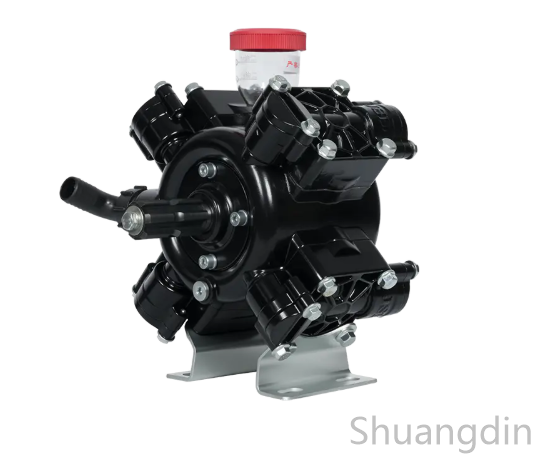
Agricultural fluid-transfer systems must move liquids through multiple stages while remaining compatible with the surrounding equipment. A spray pump used in agriculture provides an important mechanical connection between liquid storage and spray application, and diaphragm technology offers a design in which membrane movement creates fluid displacement while valves manage directional flow. Material selection plays an equally important role in this architecture.
The diaphragm acts as a flexible barrier inside the pumping chamber. Its movement changes the available chamber volume and produces the alternating actions required for fluid intake and discharge. Because it separates the liquid from the drive mechanism, the membrane needs to combine mechanical flexibility with suitable resistance to the working environment.
Material engineering begins with understanding the conditions in which the diaphragm operates. Agricultural liquids may have different chemical characteristics, and the membrane can also encounter repeated mechanical deformation. Engineers can therefore examine flexibility, chemical compatibility, fatigue resistance, and environmental stability when evaluating potential materials.
Other components along the fluid pathway require similar attention. Valves regulate liquid movement, while seals maintain controlled boundaries between adjacent components. Internal chamber surfaces and connectors may also come into contact with the working liquid. Treating these parts as one material system can help manufacturers identify compatibility issues before they affect the complete equipment design.
Valve technology converts diaphragm movement into directional fluid transfer. As the chamber changes volume, pressure conditions shift and influence the opening and closing behavior of the valves. Reliable interaction between valve components and their seating surfaces helps maintain the intended sequence. Material characteristics and manufacturing consistency both influence this process.
The housing provides mechanical support and defines the internal arrangement of the pump. Its material must suit the environment around the equipment, while internal areas may require additional consideration because of direct liquid exposure. Agricultural machinery commonly operates outdoors, making resistance to moisture, dust, soil, and cleaning activity relevant to housing design.
Manufacturing technology determines how accurately these engineering decisions are reflected in finished components. Diaphragms need controlled forming, valves require consistent geometry, and housing components must provide suitable interfaces for assembly. Sealing surfaces also need appropriate manufacturing quality. A consistent production process helps maintain the relationship between individual components.
The wider fluid system should be considered at the same time. Tanks, filters, hoses, valves, and spray assemblies form a continuous pathway through which the agricultural liquid travels. The pump must integrate with each stage. Fluid connections, filtration arrangements, and component accessibility can all influence the practical operation and maintenance of the machine.
Filtration is particularly useful as a supporting consideration because particles can affect valves and internal passages. Integrating filtration into the fluid pathway can help protect sensitive components while providing a location for inspection and cleaning. The design should balance fluid management with practical maintenance access.
Maintenance requirements also influence material selection. Agricultural spraying equipment may be flushed after operation, and cleaning procedures can expose components to additional chemical conditions. Materials that are suitable for normal fluid contact should also be considered in relation to expected cleaning practices. This broader evaluation can help create equipment that is practical to operate and maintain.
Electronic control systems are increasingly integrated into agricultural machinery. Sensors and controllers can coordinate application functions, but the physical transfer of liquid still depends on the mechanical pumping system. Consistent membrane movement and valve response therefore remain important even when spraying operations are increasingly automated.
For manufacturers developing crop-care machinery, the relationship between material compatibility, diaphragm construction, valve control, sealing technology, housing design, and manufacturing consistency provides a comprehensive foundation for fluid-system development. A spray pump used in agriculture can be engineered as part of this complete system, while SHUANG DIN Co Ltd offers further information about its agricultural diaphragm pump solutions at https://www.agriculturaldiaphragmpump.com/about/.

 English
 Arabic
 French
 Spanish
 Portuguese
 Deutsch
 Turkish
 Dutch
Dutch
 Italiano
 Russian
 Romaian
 Greek
Greek
