


AI-Native Learning Infrastructure: How to Build Learning Experiences Around Real Business Needs
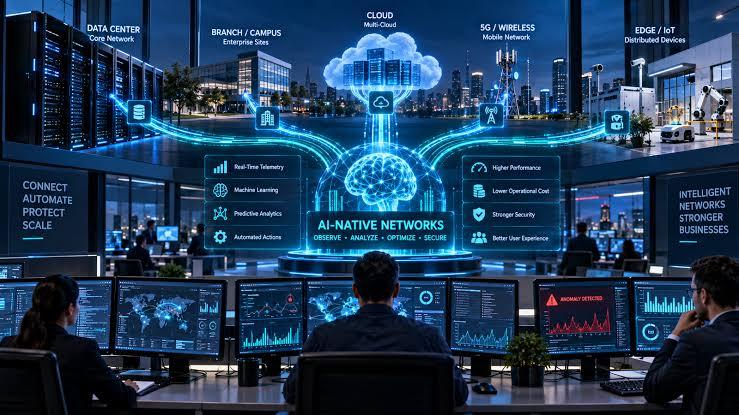
Modern workplace learning is changing quickly. Employees no longer expect training to be limited to long courses, static presentations, and end-of-course quizzes. They want information that is useful, accessible, and connected to the work they actually do.
This shift is creating a need for AI-Native Learning Infrastructure—an approach that connects knowledge, content creation, learning delivery, assessment, and analytics within a more unified environment.
Instead of treating AI as a simple tool for generating training content, organizations can use it as part of the underlying learning system.
From Training Content to Learning Experiences
Traditional eLearning often starts with a course outline. Subject-matter experts provide information, instructional designers organize it, and the final course is published through an LMS.
That process can work, but it may become slow when organizations need to create learning for many teams, roles, products, and business processes.
AI-native learning changes the starting point.
Organizations can begin with their existing knowledge and business requirements, then build learning experiences around specific outcomes.
For example, instead of creating a long course about customer service, a company could create separate experiences for:
-
Handling difficult customer conversations
-
Learning a new support process
-
Understanding product changes
-
Practicing escalation decisions
-
Testing knowledge of company policies
This makes learning more closely connected to real workplace situations.
Why Context Matters for AI in Learning
AI can generate explanations, questions, examples, and learning activities very quickly. However, speed alone does not make an AI-generated learning experience useful.
Enterprise learning requires context.
Employees need information that reflects their organization's terminology, policies, processes, and approved knowledge. This is why an AI-native learning environment needs a reliable foundation of organizational information.
A connected knowledge base or Source of Truth can help AI-supported learning remain grounded in the information an organization has chosen to use.
This approach can also make it easier for learning teams to manage changes. When business information evolves, the learning environment can be updated around that knowledge instead of relying entirely on manually rebuilding every course.
Understanding Mexty
Mexty is designed around this connected approach to learning.
Rather than focusing only on course authoring, Mexty combines capabilities for creating interactive learning experiences, delivering them, evaluating learners, managing knowledge, and analyzing learning activity.
This gives L&D teams a broader environment for building learning programs.
The platform also supports AI Agents, knowledge bases, interactive activities, courses, evaluations, learning paths, and other tools that can be used across different learning workflows.
Build Learning Around Roles
One of the practical advantages of modern learning infrastructure is the ability to think beyond generic training.
Different employees can require different information, even when they work for the same organization.
A sales representative may need product knowledge and customer scenarios. A manager may need leadership and decision-making training. A technical employee may need detailed procedures and troubleshooting exercises.
Instead of giving everyone the same learning journey, organizations can design experiences around specific roles and responsibilities.
This can make training more relevant without requiring L&D teams to manually create completely separate systems for every department.
Make Learning More Active
Another opportunity is replacing passive information consumption with active practice.
Employees are more likely to engage with learning when they have opportunities to make decisions, answer questions, explore scenarios, and apply concepts.
AI-supported learning experiences can include:
-
Interactive scenarios
-
Simulated conversations
-
Role-based questions
-
Knowledge checks
-
Practical exercises
-
Decision-making activities
-
Personalized explanations
The purpose is not simply to make training more entertaining. The goal is to create opportunities for employees to practice the knowledge they are expected to use.
Connect Assessment to Learning
Assessment should not exist only at the end of a course.
In a connected learning environment, assessments can become part of the learning process itself.
For example, an employee might answer a scenario-based question and receive an explanation based on the organization's approved knowledge. The result can then help identify areas where additional practice is needed.
This creates a more useful relationship between learning and assessment:
Learn → Practice → Assess → Identify Gaps → Improve
Instead of simply recording whether someone completed a course, organizations can gain a clearer view of how learners interact with the material.
Use AI Agents for Learning Workflows
AI Agents can extend this model by helping with repeatable learning tasks and workflows.
Rather than asking AI to perform one isolated action, organizations can create structured processes around specific needs.
For example, an AI-supported workflow might help learners find relevant information, work through a scenario, or interact with organizational knowledge.
For L&D teams, this can also reduce some repetitive work involved in preparing and managing learning experiences.
The important part is keeping these workflows connected to the organization's knowledge, permissions, and governance requirements.
Learning Should Connect With Measurement
A modern learning infrastructure also needs visibility.
L&D teams need to understand what employees are learning, where difficulties appear, and whether learning activities are being used.
Analytics can provide information that helps teams review learning experiences and make improvements.
This creates a feedback loop:
Create → Deliver → Measure → Improve
Over time, this can help organizations move away from the idea that a training course is finished forever once it has been published.
Security and Governance Still Matter
Enterprise AI learning cannot focus only on functionality.
Organizations also need to consider how their information is handled, who can access learning resources, and how AI interacts with internal knowledge.
Privacy, access controls, governance, and responsible AI practices therefore become important parts of the infrastructure.
An AI-native learning strategy should give organizations ways to use AI while maintaining appropriate control over sensitive business information and learning resources.
A More Connected Future for Workplace Learning
The next stage of workplace learning is not simply about producing more courses.
It is about connecting organizational knowledge with learning experiences that employees can actually use.
With AI-Native Learning Infrastructure, organizations can bring together content creation, interactive learning, assessment, knowledge management, AI-supported workflows, and analytics in a more connected model.
For L&D teams, this creates an opportunity to spend less time managing disconnected learning processes and more time improving how employees learn and apply knowledge.
The result is a learning environment designed not only to deliver information, but to evolve alongside the people, knowledge, and business processes it supports.

 English
 Arabic
 French
 Spanish
 Deutsch
 Turkish
 Dutch
Dutch
 Italiano
 Russian
 Romaian
 Portuguese (Brazil)
 Greek
Greek
