


Difficult Veins? 7 Ways to Make a Blood Draw Easier
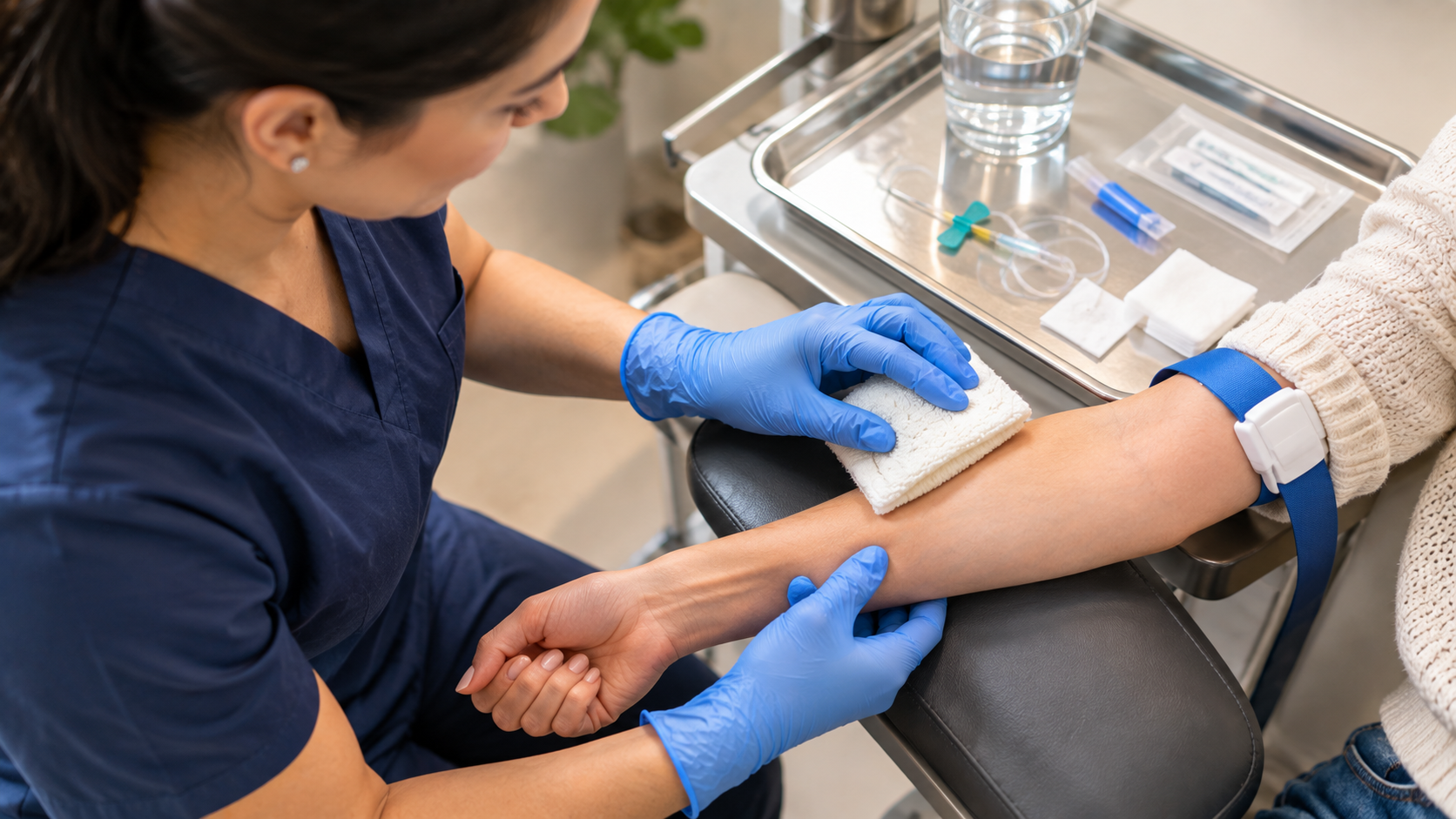
If you've ever had a phlebotomist dig around looking for a vein, or heard the words "this might take a few tries," you know that stress. Difficult veins are more common than most people realize. You can't easily change the anatomy you were born with. But there are several things you can do before and during a blood draw that make finding a vein significantly easier.
These seven tips reflect what clinical experience and patient feedback consistently show works. If you're preparing for blood work as part of a health monitoring plan, THRYVE Wellness Medical's guide to understanding your lab results is worth reading. It explains what the most common markers mean and why they matter.
1. Hydrate Aggressively Starting the Day Before
Dehydration is the most common reason veins are difficult to find. When you're dehydrated, your blood volume drops, your veins constrict, and the vessels that are normally visible just beneath the skin become flat and hard to locate. Even mild dehydration makes a meaningful clinical difference, and most people don't drink nearly enough water on a normal day.
Start increasing your water intake the afternoon before your draw. Aim for at least 16 ounces extra beyond your usual daily intake. The morning of the draw, drink another 16 to 24 ounces of water two to three hours before you go. Avoid coffee and alcohol, both of which have dehydrating effects that work against you here. Tea without caffeine is fine. Plain water is best.
2. Apply Warmth to Your Arm Before You Go In
Heat causes veins to dilate. When a vein dilates, it expands and becomes more visible and more accessible. You can do this at home before your appointment. Many collection sites also have warm packs available in their waiting area.
Wrap a warm towel or a heating pad around your inner forearm for 10 to 15 minutes before the draw. If you're already at the collection site, ask for a warm compress or a heated cloth. Many phlebotomy departments have these on hand specifically for this reason. Some people also find that running warm water over their arm in the bathroom before their draw is helpful. Two to three minutes under warm running water is enough to make a difference you can feel.
3. Stay Warm on Your Way There
Veins don't just respond to local heat. Cold temperatures cause peripheral vasoconstriction across your whole body. Your arm veins shrink along with everything else when you're cold, and it takes time for them to recover after you warm up.
Dress warmly, keep your coat on until you're called, and use the warm compress technique above. If you arrive cold from a winter commute or an overly air-conditioned car, your veins will be noticeably harder to access. Warming up first makes a real difference.
4. Tell the Phlebotomist About Your Difficult Veins Before They Start
This sounds obvious, but many people don't say anything until after the first attempt has already failed. If you have a history of difficult veins, say so at check-in or the moment you sit down in the draw chair. Give the phlebotomist specific information: which arm tends to work better, whether your veins roll, whether your inner elbow is easier than your forearm, or whether your hand has historically been the most reliable site.
THRYVE Wellness Medical's Biomarker Testing service coordinates directly with collection facilities to flag patients who have documented vein access challenges. When a phlebotomist knows this upfront, they approach the draw differently from the start. They don't discover the difficulty mid-attempt.
5. Ask for a Butterfly Needle
A butterfly needle, also called a winged infusion set, is a smaller and more flexible needle designed for smaller or more fragile veins. Standard-gauge needles work well for routine draws from easy veins. They're not ideal for every patient. Many phlebotomists will automatically reach for a butterfly needle when a patient has flagged vein difficulty, but if yours doesn't, you can ask.
Some patients also do better with a different insertion angle. If previous draws have involved needle adjustment after insertion, a butterfly needle handles that much more easily.
6. Pump Your Fist
Making a fist and releasing it repeatedly brings blood to the surface of your forearm veins. Do this for 30 to 60 seconds before the draw. This mild voluntary muscle activity increases local circulation and makes veins stand out more. Don't clench too hard. Gentle pumping works better than a tight sustained grip.
Keep your hand relaxed between pumps. After the phlebotomist has selected their entry point and cleaned the site, they may ask you to make one steady fist and hold it. Follow their lead from that point on. Don't squeeze harder than they ask. A relaxed, consistent fist is more useful than a tight one.
7. Try the Hand or Wrist as an Alternative
When the antecubital fossa (the inner elbow area) isn't cooperating, hand and wrist veins are often more accessible. This isn't a phlebotomist's first choice because hand veins are smaller and slightly more uncomfortable to access. But it's a reliable backup when the standard site isn't working.
If a phlebotomist has made two unsuccessful attempts at your inner elbow, it's completely reasonable to ask about the hand as an alternative. Most experienced phlebotomists are fully comfortable drawing from the hand and will tell you honestly if they aren't.
When Difficult Draws Become a Consistent Pattern
If you consistently need multiple attempts at every blood draw, it's worth discussing with a provider. In some cases, chronic dehydration or medication effects can be addressed directly. In others, the most practical solution is ensuring you always see an experienced phlebotomist rather than a trainee. Being consistent with all the preparation strategies above makes a compounding difference over time.
For patients who need frequent testing as part of their health management, THRYVE Wellness Medical's membership program provides regular biomarker monitoring with provider support built in. Over time, your collection record travels with your care. The clinical team knows your vein history and your testing history, so each draw starts with the right context rather than treating you like a new patient every time.
Frequently Asked Questions
Why are my veins so hard to find?
Common reasons include dehydration, cold temperatures, and small or deep vein placement. Rolling veins and vein damage from previous medical procedures also play a role. Most of these are at least partially addressable with preparation.
Does drinking water really help with blood draws?
Yes, meaningfully. Adequate hydration increases blood volume and vein diameter, making veins easier to locate and access. Even 24 hours of better hydration before a draw can make a visible, measurable difference to a phlebotomist who sees both types of patients daily.
What if the phlebotomist can't find a vein after multiple tries?
Most labs have a policy of stopping after two or three failed attempts. At that point, they'll either bring in a more experienced phlebotomist or reschedule your draw. You have the right to ask for a different phlebotomist or a supervisor if you're not comfortable.
Is a hand draw more painful than an arm draw?
Often slightly, yes. Hand veins are smaller and closer to tendons and nerves. But for patients where the arm draw is consistently failing, a successful hand draw is far less distressing overall than multiple failed arm attempts.
Should I tell the phlebotomist about my difficult veins before each draw?
Every time. Even if it's in your record, speaking up at the start ensures they begin with the right approach. It also means they're less likely to discover the difficulty after they've already started.
Key Takeaways
Hydration starting the day before is the single most impactful preparation for difficult veins. Warmth dilates veins and makes them more accessible. Arriving warm matters as much as applying local heat. Telling the phlebotomist about your vein history before they start changes their entire approach. A butterfly needle is appropriate and worth requesting for small or fragile veins. Fist pumping brings blood to the surface of your forearm. Hand or wrist veins are a legitimate alternative when the inner elbow consistently fails.
The Bottom Line
Difficult veins are frustrating, but they don't have to mean a stressful blood draw every time. Most of the strategies that make the biggest difference are things you control before you even arrive at the collection site. The combination of solid hydration, local warmth, clear communication with your phlebotomist, and the right needle choice turns a routinely difficult experience into a manageable one. Consistency with these habits compounds. Each draw can be better than the last.

 English
 French
 Spanish
 Portuguese
 Deutsch
 Turkish
 Dutch
Dutch
 Italiano
 Russian
 Romaian
 Portuguese (Brazil)
 Greek
Greek
