


Can One Rubber Accelerator Work With Different Rubbers
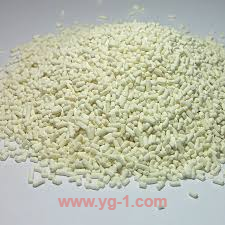
Rubber manufacturing involves a wide range of polymer materials, and each one can behave differently during mixing, shaping, and vulcanization. Natural rubber has characteristics that differ from SBR, NBR, BR, IIR, and EPDM, while latex systems introduce another set of processing considerations. A rubber accelerator participates in the curing system and can influence the way crosslinking develops under heat. Because of this, manufacturers often need to consider whether a selected material can function across several formulations instead of assuming that one recipe will suit every rubber type. At DongHai Chemical, understanding the relationship between accelerator chemistry and polymer selection is an important part of developing practical rubber additive solutions.
The possibility of using one accelerator across several rubber materials depends largely on its chemical family and the formulation surrounding it. Certain accelerator grades have established applications in both natural and synthetic rubber compounds, while others are selected for more specific processing conditions. The fact that a product can be used with different polymers does not necessarily mean that identical quantities or curing schedules will produce the same result.
Natural rubber provides a useful starting point when examining this issue. Its molecular structure and response to sulfur curing allow various conventional accelerator systems to be used during compound development. Synthetic rubbers, however, can have different levels of polarity, unsaturation, heat resistance, and interaction with compounding ingredients. These characteristics influence how a curing package behaves once the compound enters the vulcanization stage.
SBR and BR are widely encountered in rubber formulations where elasticity, resilience, abrasion behavior, or dynamic performance may be important. NBR has a different chemical profile because its formulation is associated with applications requiring resistance to oils and fuels. EPDM is commonly selected for products exposed to weathering, heat, moisture, or outdoor conditions. Since these materials do not respond identically to processing conditions, accelerator selection needs to take the individual polymer into account.
The surrounding ingredients are equally important. Sulfur, zinc oxide, stearic acid, carbon black, silica, processing oils, antioxidants, retarders, and other additives can interact with the curing system. Changing one part of a formulation may alter scorch behavior, cure development, or final physical properties. As a result, transferring an existing formulation from one polymer to another requires testing rather than simply replacing the rubber base while keeping every other ingredient unchanged.
Different accelerator families are associated with different curing characteristics. Thiazoles, sulfenamides, thiurams, dithiocarbamates, guanidines, and related chemical groups can occupy different positions within rubber curing systems. Some are used as primary accelerators, while others may serve as secondary components or support faster curing. The selection depends on the desired balance between processing safety and vulcanization response.
Scorch safety is especially relevant when compounds must remain stable during mixing and shaping before entering the curing stage. An accelerator that reacts too quickly under a particular processing condition may shorten the available processing window, while a system with slower development may require a different production schedule. Compounders therefore examine cure characteristics together with equipment, temperature, mixing sequence, and molding conditions.
The final product also affects the selection process. A rubber seal, hose, belt, tire component, cable accessory, shoe sole, or molded industrial part can have very different performance requirements. Some products may place greater emphasis on elasticity, while others require resistance to compression, aging, heat, chemicals, or repeated deformation. The curing system has to support the properties expected from the finished article.
Latex applications require additional attention because the processing environment differs from many dry rubber compounds. Materials used in dipped products, gloves, elastic articles, and other latex goods need to remain compatible with the dispersion system. Certain accelerator grades are therefore associated with latex processing, and their selection can involve considerations that would not necessarily apply to a conventional molded rubber compound.
For manufacturers working with several polymer families, product documentation is a useful starting point. Information concerning chemical classification, applicable materials, physical form, storage conditions, and typical applications allows technical teams to narrow their initial choices. Laboratory evaluation can then examine curing behavior and physical properties under the actual formulation conditions used by the manufacturer.
Another practical consideration is raw material management. A factory producing several types of rubber products may prefer a manageable selection of curing chemicals rather than maintaining a large number of unrelated materials. When one grade has applications across several formulations, it may offer flexibility in purchasing and inventory planning. Even so, each formulation should still be evaluated individually because processing conditions and compound composition can change the outcome.
Technical communication between the chemical supplier and compound developer can also influence the selection process. A supplier with a broad portfolio can provide access to different accelerator families when a formulation requires adjustment. This can be useful during product development, especially when a manufacturer needs to compare curing characteristics or adapt a compound for another polymer.
DongHai Chemical provides a range of rubber chemicals for manufacturers involved in different rubber applications. Its product information allows buyers and technical teams to review individual grades according to their chemical characteristics and intended uses. The wider portfolio also includes other types of rubber additives, giving compound developers an opportunity to examine related materials as part of a complete formulation strategy.
For a manufacturer considering one grade for several rubber systems, the most useful approach is to compare the polymer characteristics, curing method, processing temperature, accelerator family, activator package, and required finished-product properties before conducting production trials. This provides a clearer basis for determining whether a material can be transferred between formulations without creating unwanted changes in processing or performance.
Manufacturers seeking suitable Rubber Accelerator products can view DongHai Chemical's range at https://www.yg-1.com/ and review the available technical information according to their own polymer systems, curing processes, and application requirements, while the company's broader rubber chemical portfolio provides additional options for compound development and material sourcing.

 Arabic
 French
 Spanish
 Portuguese
 Deutsch
 Turkish
 Dutch
Dutch
 Italiano
 Russian
 Romaian
 Portuguese (Brazil)
 Greek
Greek
