


Which Factors Matter When Buying PVD Coating Equipment
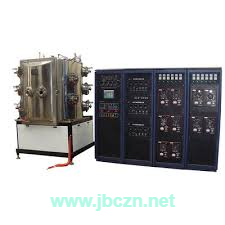
Tool manufacturers, job coating shops, and machining companies often reach a point where outsourcing no longer fits their schedule or their margins. They begin to look at bringing coating work in house, and the search for PVD tool coating equipment follows. The market offers many configurations, from compact batch systems to large multi-chamber lines, and each carries different capabilities. Choosing well requires matching the machine to the work rather than chasing the lowest price or the largest chamber. jbczn supplies coating equipment and understands the questions buyers raise during this stage. So how does a factory decide which system fits its production?
The starting point is the substrate. Tools made from carbide, high-speed steel, and ceramic behave differently inside a coating chamber, and they require different pre-treatment steps and temperature ranges. A factory that coats mostly carbide inserts has different needs from one that also handles large milling cutters or forming dies. Listing the tool types and sizes first narrows the field of suitable machines.
Coating method comes next. Arc evaporation produces dense, adherent films and suits many cutting applications, while magnetron sputtering offers smooth coatings with fine control over composition. Some systems combine both methods in one chamber, which allows a factory to run different coating types without purchasing separate machines. The choice depends on the coatings the factory intends to offer and the surface finish its customers expect.
Chamber size and loading configuration shape throughput. A small vertical chamber suits batches of drills and taps, while a horizontal system with multiple rotating fixtures handles longer tools and larger loads. Factories should calculate their daily and weekly volume, then check whether a candidate machine can meet that demand within a realistic cycle time. A chamber that looks impressive but runs half empty wastes energy and floor space.
Coating uniformity affects the quality of the finished tool. Substrates positioned near the chamber walls may receive a different layer thickness than those near the center, and rotating fixtures help even out the distribution. A factory should ask how the system handles three-dimensional parts and whether the supplier can provide sample coating results on the factory's own tools.
Pumping speed and vacuum performance determine cycle time and film purity. A system with adequate pumps reaches the required vacuum level quickly and holds it during deposition. Contamination from residual gas can weaken the coating and cause defects, so the vacuum section deserves careful review rather than a glance at the specification sheet.
Control and automation influence daily operation. A modern system logs process parameters, stores recipes, and alerts operators when readings drift outside the set range. These features help a factory maintain consistency across shifts and make it easier to trace defects when they appear. Manual systems cost less upfront but demand more skill from the operator.
Service and spare parts matter over the life of the machine. A supplier who stocks common components, offers remote diagnostics, and can send a technician when needed keeps downtime short. Factories should ask about response times, training for operators, and the availability of consumables such as targets and cathodes.
For a factory preparing a purchase, several practical steps reduce risk. Define the tool types, sizes, and target coatings first. Ask for sample coating trials on real production tools. Compare cycle times under realistic loading conditions. Review the vacuum system and the control software. Discuss installation, training, and after-sales support before signing. A PVD tool coating equipment system matched to the actual workload delivers steady output for years, while one chosen on price alone often becomes a bottleneck. GOLD BLINGKING INTELLIGENT TECHNOLOGY (ZHE JIANG) CO., LTD. develops and produces vacuum coating equipment and operates a vacuum engineering research center. Its product range covers various vacuum deposition systems, and the equipment listings appear at https://www.jbczn.net, where factories can review configurations and reach the team with technical questions about PVD tool coating equipment.

 English
 Arabic
 French
 Spanish
 Portuguese
 Deutsch
 Turkish
 Dutch
Dutch
 Italiano
 Russian
 Romaian
 Greek
Greek
