


Pilot Training in India: A Student Guide for 2026
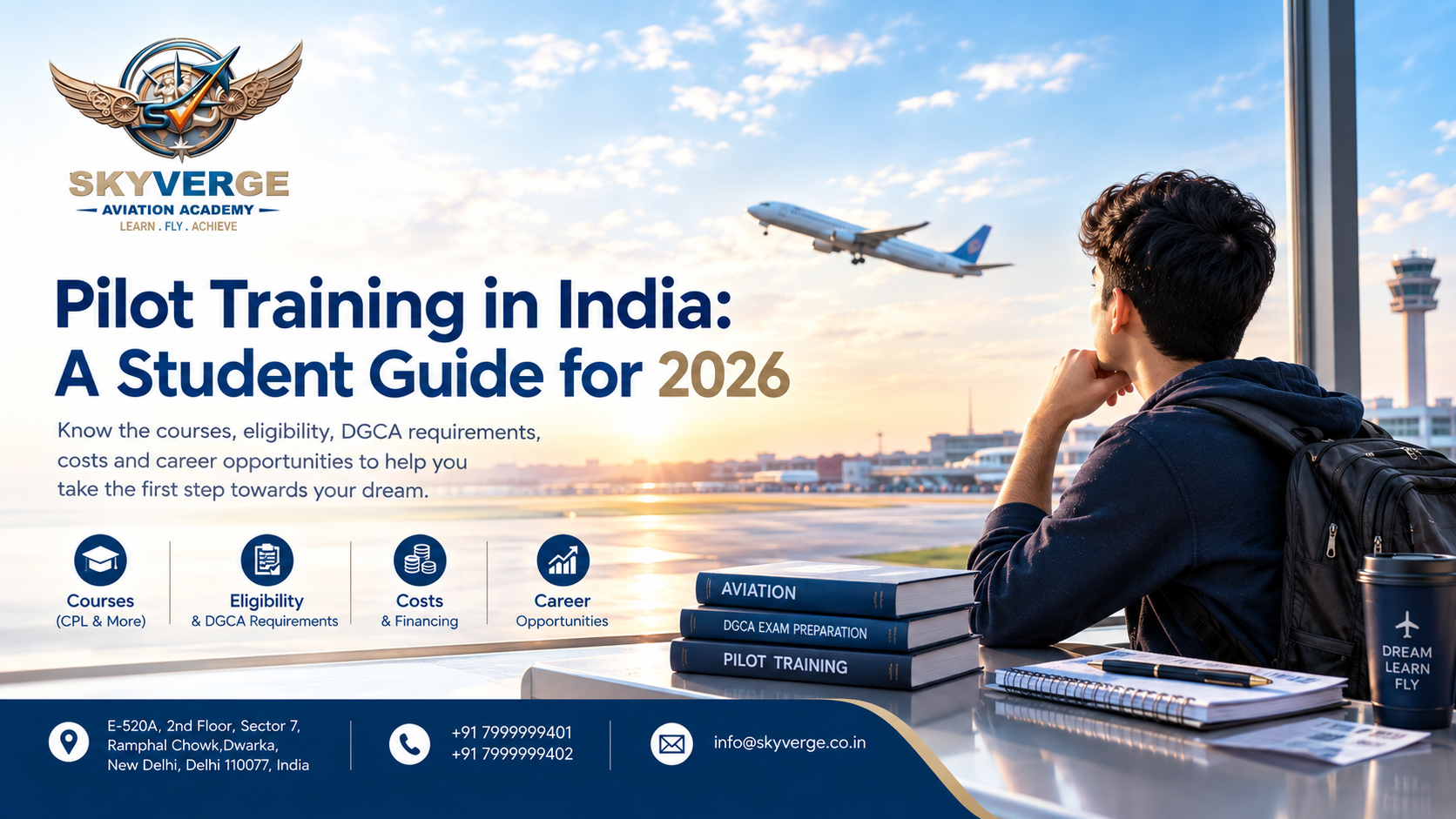
For many students, becoming a pilot is more than simply choosing a career. It means preparing for a demanding professional journey that combines classroom learning, aviation examinations, medical requirements and practical flight training. Students who start planning early can understand the process better and avoid many common mistakes.
In 2026, students have access to more information than ever, but that information can also become confusing. Different institutes may provide different fee estimates, training timelines and explanations of the licensing process. This is why students should understand the complete pathway before making an important decision.
SkyVerge Aviation Academy helps aspiring aviation students understand the ground-training side of their journey and prepare themselves for the academic requirements associated with pilot training.
Where Should an Aspiring Pilot Begin?
The first step is to understand your eligibility. Students planning a professional flight-crew career should check their educational qualifications, medical requirements and the applicable DGCA process before committing to training.
For flight-crew candidates other than PPL applicants, the DGCA Pariksha portal states that candidates generally need 10+2 with Physics and Mathematics from a recognised board or an equivalent qualification. Students should always check the latest DGCA requirements because procedures and instructions can be updated.
After confirming eligibility, students can start planning their ground preparation, examination requirements and flying-training pathway.
A sensible approach looks something like this:
- Check your educational eligibility.
- Understand the applicable medical requirements.
- Learn about the DGCA examination process.
- Understand the Computer Number and documentation process.
- Select suitable ground training.
- Research appropriate flying-training options.
- Prepare a realistic financial plan.
- Keep track of current DGCA updates.
Following these steps can give students a clearer picture of what lies ahead.
Choosing the Best Pilot Training Institute in India
Students frequently search for the Best pilot training institute in India when they begin their research. However, selecting an institute requires more than comparing advertisements.
A student should look at the training environment, faculty support, course structure, examination preparation, transparency of information and the way an institute communicates with students.
It is also useful to ask specific questions before enrolling:
- What subjects will the course cover?
- How does the institute prepare students for DGCA examinations?
- What study material will students receive?
- Who will guide students when they face academic difficulties?
- What expenses are included in the quoted fee?
- Which expenses are separate?
- How does the institute support students throughout their preparation?
At SkyVerge Aviation Academy, students can focus on developing their aviation knowledge through structured ground preparation while understanding the larger requirements of their pilot-training journey.
Students should also avoid choosing an institute simply because someone calls it the "best". A suitable training environment should match the student's academic needs, preparation style and career plans.
A Conversation Between a Student and a Counsellor
Student: I have always wanted to become a commercial pilot, but the entire process seems complicated.
Counsellor: It can seem complicated when you look at everything at once. Start by breaking the journey into smaller stages. First check your eligibility, then understand the medical and DGCA examination requirements, and after that plan your ground and flight training.
Student: Should I choose a flying school immediately?
Counsellor: I would suggest researching your options carefully first. You should understand what each training programme includes and what expenses you may have to pay separately.
Student: I am particularly worried about the cost.
Counsellor: That is an important concern. Don't compare only the advertised course price. Ask for a complete breakdown and understand what happens if you require additional training.
Student: What about DGCA examinations? They seem difficult.
Counsellor: They require consistent preparation. You should study the concepts properly instead of waiting until the last few weeks before the examination.
Student: So ground classes are important even before I start flying?
Counsellor: Ground knowledge forms an important part of pilot preparation. Understanding aviation theory helps you build a stronger foundation for your future training.
Student: What should I do first?
Counsellor: Start by understanding your eligibility and requirements, then make a step-by-step plan. Don't rush into an expensive decision simply because another student has already joined a programme.
Understanding Pilot Training Cost in India
The Pilot training cost in India is one of the biggest concerns for students and parents.
However, students should understand that there is no single amount that applies to every pilot. The final expense can vary depending on the training organisation, flying hours, aircraft, location, accommodation, examination-related expenses and whether a student requires additional training.
A student should therefore request a detailed cost breakdown before joining a programme.
The overall financial plan may involve areas such as:
- Ground training
- Flight training
- Instructor-related charges
- Aircraft-related charges
- DGCA examination expenses
- Medical examinations
- Licensing and documentation
- Accommodation
- Food and transportation
- Additional flying hours
- Other administrative or training expenses
The quoted amount should always be examined carefully.
For example, two institutes may advertise different prices, but the cheaper quotation may not include the same components as the more expensive one. A student who compares only the headline figure may therefore misunderstand the actual financial commitment.
Parents and students should ask the institute to explain the complete fee structure in writing. They should also ask whether additional flying hours could create extra expenses.
Financial planning becomes much easier when students understand these details before starting training.
Why Students Should Take Ground Preparation Seriously
Flying an aircraft requires practical skills, but professional pilots also need strong theoretical knowledge.
This is where DGCA ground school becomes important.
Ground training introduces students to the theoretical areas they need during their aviation education and examination preparation. Depending on the applicable licence and examination requirements, students may study subjects involving aviation regulations, navigation, meteorology, technical knowledge and other relevant areas.
Students should not treat ground classes as a formality.
Instead, they should use them to understand how different aviation concepts work together. A student who builds strong fundamentals can approach later stages of training with greater confidence.
The DGCA Pariksha portal provides information relating to flight-crew examinations, including examination-related instructions, syllabi and other resources. Students should regularly check official updates rather than relying only on old preparation material.
SkyVerge Aviation Academy provides students with a structured environment for aviation-focused ground preparation and helps them understand the academic side of their pilot-training plans.
Five Questions Students Commonly Ask
1. Can I start pilot training after Class 12?
Students can begin planning their pilot-training journey after Class 12 if they meet the applicable educational and other regulatory requirements. Candidates should verify their individual eligibility before enrolling.
For flight-crew candidates other than PPL applicants, Physics and Mathematics at the 10+2 level are generally required under the DGCA Pariksha guidance.
2. Is ground training compulsory?
The exact requirements depend on the licence and applicable regulations, but theoretical knowledge forms an important part of professional pilot preparation. Students should understand the examination and training requirements relevant to their intended licence.
3. How much money should I keep aside for pilot training?
Students should not plan their finances around a single advertised number. They should consider training charges along with examinations, medical requirements, accommodation, travel and possible additional flying hours.
A detailed quotation from the training organisation can help students build a more realistic budget.
4. How do I know whether a training institute is suitable for me?
Compare institutes based on their course structure, faculty, student support, training environment, examination preparation and fee transparency. Speak with counsellors and ask specific questions instead of relying entirely on advertisements.
5. Can I complete my training within a fixed period?
Training timelines can vary. Weather, aircraft availability, scheduling, examination progress, individual performance and other operational factors can affect the duration.
Students should therefore be careful about treating an advertised completion period as a guaranteed timeline.
A Common Mistake Students Make
One mistake students often make is starting their pilot-training research with the price instead of the requirements.
A student may see a low fee and immediately assume that the programme offers better value. However, the student may later discover that certain expenses were not included in the original quotation.
Another common mistake involves ignoring documentation.
Students should enter their personal and educational details carefully when completing DGCA-related applications. The Pariksha system uses candidate information for examination-related processes, so students should make sure that their details match their official documents.
Students should also avoid creating unnecessary duplicate profiles or submitting inconsistent information.
A third mistake involves studying only when examinations are close. Aviation subjects require regular preparation. Students should establish a study routine from the beginning instead of attempting to cover the entire syllabus at the last moment.
How Students Can Prepare Better in 2026
Students preparing for pilot training should develop habits that support long-term learning.
Maintain a Regular Study Schedule
Don't depend entirely on last-minute preparation. Divide your subjects into manageable sections and revise them regularly.
Keep Your Documents Organised
Maintain copies of your academic certificates, identity documents, medical records and other important paperwork. Check spellings, dates and personal details before submitting applications.
Follow Official Updates
DGCA requirements and examination instructions can change. Students should check official DGCA and Pariksha updates instead of relying on information posted several years ago.
Understand Before Memorising
Aviation involves technical concepts. Try to understand why a procedure works rather than memorising isolated answers.
Discuss Your Concerns Early
If you are confused about eligibility, examinations, subjects or training costs, speak with a qualified counsellor before making a major decision.
Building the Right Mindset for Pilot Training
Aviation training requires discipline and patience. Students should prepare themselves for both academic and practical challenges.
You may not understand every subject immediately. You may need additional practice in certain areas. You may also need more flying hours than another student. These situations do not automatically mean that you have chosen the wrong career path.
Instead, students should focus on consistent improvement.
The most useful approach is to understand what you need to accomplish at every stage and keep your preparation organised.
SkyVerge Aviation Academy encourages aspiring aviation students to approach their education with realistic expectations and a clear understanding of the preparation involved.
Final Thoughts
Choosing a pilot-training pathway is a major decision, so students should gather information before committing their time and money.
When researching the Best pilot training institute in India, look at training quality, student support, academic preparation and transparency instead of relying only on promotional claims.
When planning the Pilot training cost in India, consider the complete expense rather than one advertised course figure.
And when beginning DGCA ground school, focus on developing a strong understanding of aviation subjects and maintaining consistent study habits.
The aviation industry demands preparation, discipline and responsibility. Students who understand the requirements early can approach their pilot-training journey with greater clarity.
With proper guidance, organised preparation and a realistic plan, aspiring pilots can take each stage of their journey one step at a time. SkyVerge Aviation Academy supports students as they build the knowledge and preparation needed for their aviation ambitions.

 English
 French
 Spanish
 Portuguese
 Deutsch
 Turkish
 Dutch
Dutch
 Italiano
 Russian
 Romaian
 Portuguese (Brazil)
 Greek
Greek
