


Knee Pain While Climbing Stairs: Causes and Physiotherapy Treatment
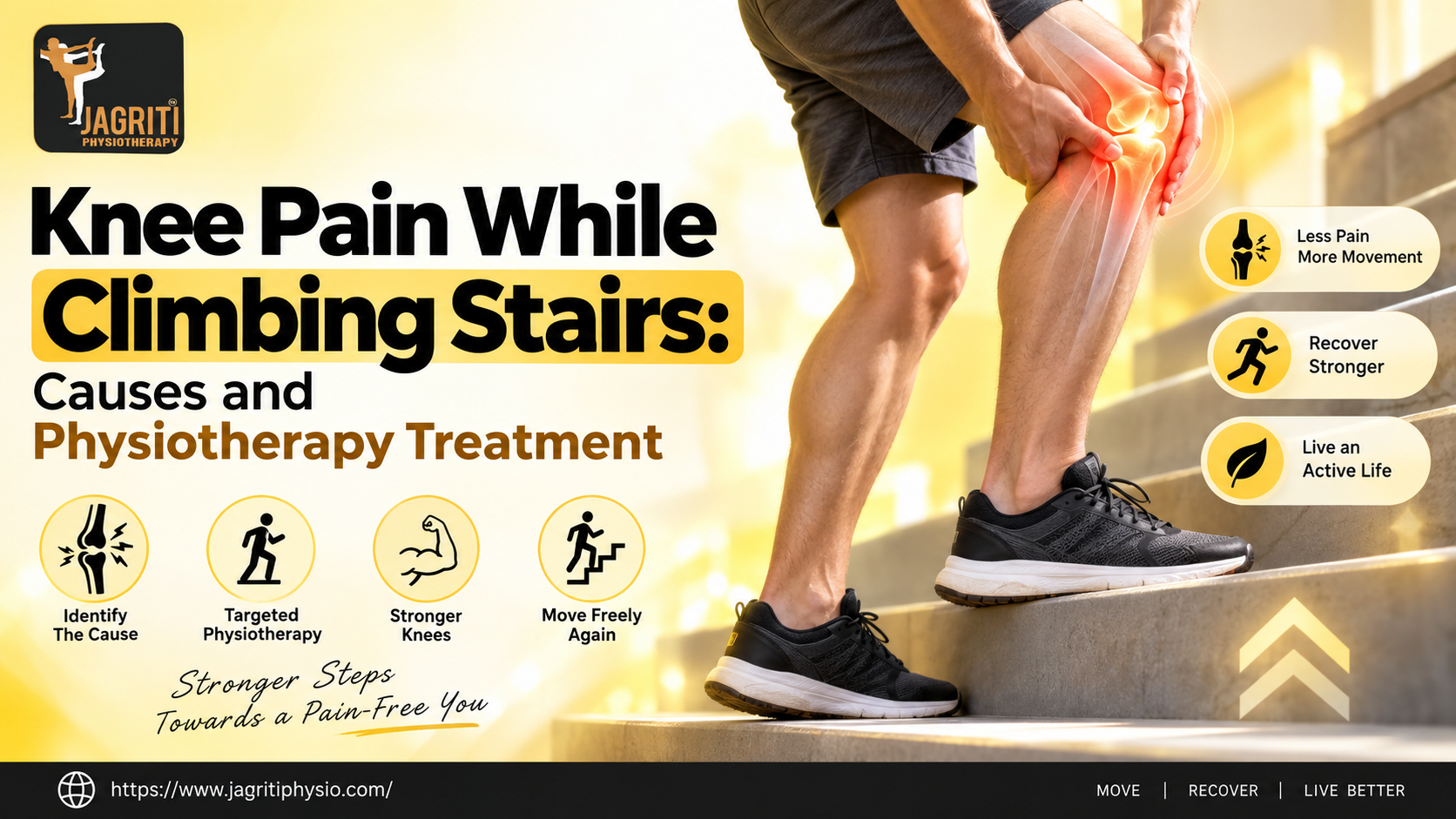
Knee pain while climbing stairs is a common problem that can affect people of different ages and activity levels. You may notice discomfort at the front of the knee, around the kneecap, or deeper inside the joint when going upstairs or downstairs.
In many cases, stair-related knee pain is linked to increased pressure on the knee joint, muscle weakness, overuse, or conditions affecting the kneecap and surrounding structures.
The good news is that many causes of knee pain can be managed effectively with the right assessment, activity modification, and physiotherapy.
Why Does My Knee Hurt When Climbing Stairs?
Climbing stairs requires your knee to bend while supporting your body weight. At the same time, the muscles around your thigh, hip, and knee work together to control movement.
If these muscles are weak, overloaded, or not working efficiently, greater stress may be placed on the knee.
Pain during stair climbing does not always mean that there is serious damage inside the joint. However, persistent or worsening pain should be assessed to identify the underlying cause.
Common Causes of Knee Pain While Climbing Stairs
1. Patellofemoral Pain
Patellofemoral pain is one of the common causes of pain around or behind the kneecap.
It may become noticeable during:
- Climbing or descending stairs
- Squatting
- Running
- Lunging
- Sitting with the knee bent for a long time
Changes in activity levels, weakness of the hip or thigh muscles, and increased stress around the kneecap can contribute to symptoms.
2. Knee Osteoarthritis
Knee osteoarthritis can cause pain, stiffness, reduced movement, and sometimes swelling.
People with osteoarthritis may experience more discomfort during weight-bearing activities such as walking, standing from a chair, or using stairs.
Age, previous knee injuries, body weight, genetics, and repetitive loading can influence the risk of developing knee osteoarthritis.
3. Muscle Weakness
The quadriceps muscles at the front of the thigh play an important role in controlling the knee while climbing stairs.
Weakness in the quadriceps, glutes, or other muscles supporting the lower limb can make stair climbing more demanding and may increase stress on the knee.
4. Overuse or Sudden Increase in Activity
Have you recently started running, exercising, playing a sport, or using stairs more frequently?
A sudden increase in physical activity can exceed the knee's current capacity to tolerate load. This may result in temporary irritation and pain.
Gradually increasing activity gives muscles, tendons, and joints time to adapt.
5. Meniscus or Previous Knee Injury
A previous ligament, cartilage, or meniscus injury may also contribute to knee symptoms.
Meniscus-related problems may sometimes involve pain, swelling, catching, or locking of the knee.
If pain started after a twisting injury, fall, or sports accident, professional assessment is advisable.
Can Physiotherapy Help Knee Pain While Climbing Stairs?
Yes. Physiotherapy can often help manage knee pain by identifying factors contributing to the symptoms and developing an individualized rehabilitation program.
Instead of focusing only on the painful area, a physiotherapist may assess the knee as well as your hip strength, ankle mobility, balance, walking pattern, flexibility, and movement during activities such as squatting or climbing stairs.
Treatment depends on the cause of the pain and your individual condition.
How Physiotherapy May Help
Strengthening Exercises
Strengthening the muscles supporting the knee is an important part of rehabilitation.
Exercises may target the:
- Quadriceps
- Hamstrings
- Gluteal muscles
- Calf muscles
- Hip stabilizers
Improving muscle strength can help support the knee and improve control during everyday activities.
Movement and Technique Training
A physiotherapist may examine how your knee, hip, and ankle move when you walk, squat, or use stairs.
Movement retraining may help improve control and reduce unnecessary stress on irritated structures.
Flexibility and Mobility Exercises
Restricted movement in the knee, hip, or ankle can affect how forces are distributed through the leg.
Appropriate mobility and stretching exercises may therefore form part of treatment.
Activity Modification
Complete rest is not always necessary for knee pain.
Instead, your physiotherapist may recommend temporarily reducing activities that significantly aggravate symptoms while gradually rebuilding your tolerance through controlled exercise.
Gradual Return to Activity
For runners, athletes, gym users, or active individuals, rehabilitation should also focus on safely returning to normal activities.
The goal is not only to reduce pain but also to restore strength, confidence, and function.
What Can You Do at Home?
If your knee pain is mild, you can initially try reducing activities that repeatedly trigger the symptoms.
Avoid suddenly increasing running, jumping, squatting, or stair-based workouts.
Gentle movement within a comfortable range is usually preferable to prolonged inactivity. A physiotherapist can recommend exercises appropriate for your specific condition rather than relying on a generic exercise program.
When Should You See a Physiotherapist?
Consider consulting a physiotherapist if:
- Knee pain continues for several weeks
- Pain repeatedly occurs while using stairs
- The knee feels weak or unstable
- Your movement or daily activities are becoming limited
- You are returning to sport after an injury
- Pain keeps returning despite rest
Seek medical attention more urgently if the knee becomes severely swollen, changes shape, cannot bear weight, locks, repeatedly gives way, or becomes hot and red along with fever or feeling unwell.
Final Thoughts
Knee pain while climbing stairs can occur for several reasons, including patellofemoral pain, muscle weakness, osteoarthritis, overuse, or previous injury.
Because different conditions can produce similar symptoms, identifying the cause is more useful than simply trying to suppress the pain.
Physiotherapy focuses on restoring strength, mobility, movement control, and gradually improving the knee's ability to handle everyday activities.
If knee pain is affecting your mobility, exercise, work, or daily routine, a professional physiotherapy assessment can help determine an appropriate rehabilitation plan.
For people looking for physiotherapy support in Jaipur, Jagriti Physiotherapy provides assessment and rehabilitation for knee pain, sports injuries, orthopedic conditions, and movement-related problems.
Frequently Asked Questions
Why does my knee hurt when I go upstairs but not while walking?
Stair climbing requires greater knee bending and muscle effort than level walking. Conditions such as patellofemoral pain, muscle weakness, or joint irritation may therefore become more noticeable on stairs.
Is climbing stairs bad for knee pain?
Not necessarily. Whether stairs should be temporarily reduced depends on the cause and severity of your symptoms. Gradual exposure and strengthening may eventually improve your ability to use stairs comfortably.
What exercises are best for knee pain while climbing stairs?
Exercises often focus on the quadriceps, glutes, hips, and lower-leg muscles. The appropriate exercises and intensity depend on the cause of your knee pain, so an individualized assessment is preferable.
Can knee pain improve without surgery?
Many common causes of knee pain are managed conservatively through exercise, physiotherapy, activity modification, and other appropriate treatments. Surgery is not automatically required simply because the knee hurts during stair climbing.

 Arabic
 French
 Spanish
 Portuguese
 Deutsch
 Turkish
 Dutch
Dutch
 Italiano
 Russian
 Romaian
 Portuguese (Brazil)
 Greek
Greek
