


Coffee Lab Sample Preparation Kit by Coffee Pro Direct
Introduction:
Professional coffee evaluation starts with properly prepared samples. A coffee lab sample preparation kit brings together the essential tools required to weigh, inspect, roast, grind, and prepare coffee samples for controlled analysis. For Vietnamese producers, exporters, importers, laboratories, and specialty roasters, a well-designed kit can make sample handling more organized and repeatable. The Specialty Coffee Association currently lists sample preparation and tasting mechanics as SCA-102 within its coffee standards, alongside descriptive, affective, and extrinsic assessment standards. Coffee Pro Direct provides professional coffee equipment solutions that can support businesses building reliable laboratory and quality-control workflows.
What Is a Coffee Lab Sample Preparation Kit?
A coffee lab sample preparation kit is a collection of tools used to prepare green or roasted coffee samples for physical examination, roasting, grinding, cupping, and sensory evaluation. The exact contents depend on the laboratory's purpose, but a professional setup may include precision scales, sample trays, grinders, sample roasters, moisture meters, sieves, cupping bowls, spoons, kettles, timers, thermometers, and storage containers. SCA Premier Training Campus requirements similarly identify grinders, scales, bowls, kettles, stopwatches, sizing screens, moisture meters, density meters, and grading mats as relevant equipment for professional coffee education and evaluation facilities.
Why Sample Preparation Matters in Coffee Quality Testing
Coffee analysis becomes more useful when samples are prepared consistently. Differences in sample weight, grind size, roasting conditions, water quantity, or timing can introduce unnecessary variation into sensory results. A professional preparation kit helps laboratory staff establish repeatable procedures and maintain clear sample identification. SCA guidance states that professional cuppers should be able to prepare green coffee samples, including grinding and brewing, and understand whether samples have been correctly prepared according to their chosen technique. For Vietnamese coffee businesses, consistent preparation can make comparisons between farms, lots, suppliers, and processing methods more meaningful.
Essential Components of a Professional Sample Preparation Kit
A complete coffee lab sample preparation kit should be designed around the laboratory's testing sequence. Basic components may include a precision scale, green coffee trays, sample containers, sieves, moisture measurement equipment, grinder, sample roaster, cupping bowls, spoons, kettle, timer, thermometer, and documentation tools. More advanced laboratories may add density meters, roast-color analyzers, refractometers, water-testing equipment, aroma references, and digital data systems. SCA's current facility requirements show how different tools work together across sensory, green coffee, and roasting activities. The best kit is therefore a coordinated workflow rather than simply a collection of individual products.
Precision Scales for Accurate Sample Weighing
Accurate weighing is one of the first steps in professional sample preparation. A laboratory may need to measure green coffee before physical analysis or roasting, roasted coffee before grinding, and water during sensory preparation. A suitable scale should provide appropriate resolution, stable readings, a clear display, and enough capacity for its intended application. SCA materials distinguish between scales used for roasting and those used for cupping, with different capacity and resolution requirements in its training-campus equipment documentation. Coffee Pro Direct can help coffee businesses select weighing equipment according to sample volume, workflow, and laboratory requirements.
Sample Trays and Containers for Organization
Sample trays and containers provide a simple but important method of keeping coffee lots organized. Each sample should have a clear identification system that can connect the physical beans with laboratory records. Labels may include origin, farm, producer, lot number, processing method, harvest information, supplier, arrival date, and sample code. Small trays are useful for separating green coffee during visual inspection, while airtight or appropriate sample containers can help maintain sample identity during preparation. Good organization becomes especially important when laboratories evaluate many Vietnamese coffee samples during purchasing seasons or quality-control programs.
Green Coffee Sieves and Sizing Screens
Sizing screens are useful when the laboratory needs to examine the physical distribution of green coffee beans. Beans can be separated by size using screens with standardized openings, helping quality teams document the characteristics of a sample. SCA Premier Training Campus requirements include sizing screens among green coffee tools used in professional training environments. A sample preparation kit intended for green coffee analysis should therefore consider whether screen analysis is part of the laboratory's objectives. Durable screens, clean working surfaces, and consistent recording methods help make physical testing more organized.
Moisture Measurement Before Sample Roasting
Moisture analysis can be an important part of green coffee assessment. A moisture meter allows laboratory staff to record a measurable characteristic of a sample before roasting or storage decisions are made. SCA's current Q Grader preparation guidance identifies moisture-content measurement and sieves among equipment that can be used when practicing physical assessment of green coffee. Moisture information can also be recorded alongside origin, density, screen size, defects, and processing details. When selecting a moisture meter, laboratories should consider calibration, measurement range, repeatability, ease of use, and suitability for their intended coffee samples.
Density Testing for Detailed Green Coffee Analysis
Some laboratories require more detailed physical information and may include density measurement within their sample preparation workflow. Density can help distinguish samples and add another measurable characteristic to a green coffee record. SCA's Premier Training Campus requirements include a density meter alongside moisture meters, sizing screens, and grading mats for green coffee evaluation. Density data should not be considered in isolation; it becomes more useful when combined with moisture, screen distribution, processing information, sample roasting, and sensory results. Advanced laboratories can use these measurements to create more complete sample profiles.
Sample Roaster for Controlled Coffee Preparation
A sample roaster is a key component when a laboratory needs to evaluate how green coffee performs during roasting. Small samples can be roasted under controlled conditions before purchasing larger quantities or developing commercial roast profiles. A suitable sample roaster should provide reliable temperature control, consistent bean movement, appropriate heat application, rapid cooling, and practical observation or monitoring. SCA facility requirements identify professional sample roasters as part of green coffee evaluation and recommend separating sample roasting from cupping areas. This makes sample roasting an important bridge between physical green coffee analysis and sensory evaluation.
Temperature Monitoring During Sample Roasting
Temperature data helps laboratory staff understand how a sample behaves during roasting. A sample preparation kit may therefore include temperature probes, digital monitoring, roast logs, or a roasting system with integrated measurement. Operators can document charge conditions, temperature development, roast time, first crack observations, endpoint, and cooling. Consistent recording allows different samples to be compared more systematically. SCA's Q Grader preparation guidance also discusses identifying appropriately prepared cupping roasts and differentiating coffees roasted too light, too dark, too fast, or too slowly. Good temperature monitoring supports more controlled sample preparation.
Coffee Grinders for Laboratory Sample Preparation
After roasting, coffee samples must be ground consistently before cupping or brewing. A laboratory grinder should produce a repeatable particle distribution and allow operators to maintain consistent settings. Grinder cleanliness is equally important because retained particles from one sample can affect the next sample. The preparation kit should therefore include cleaning brushes, appropriate maintenance tools, and a documented grinding procedure. A laboratory evaluating Vietnamese Robusta and Arabica may need to process numerous samples in one session, making grinder consistency particularly important. Good sample preparation reduces unnecessary differences and allows sensory teams to focus on the characteristics of the coffees being evaluated.
Cupping Bowls and Sample Preparation Vessels
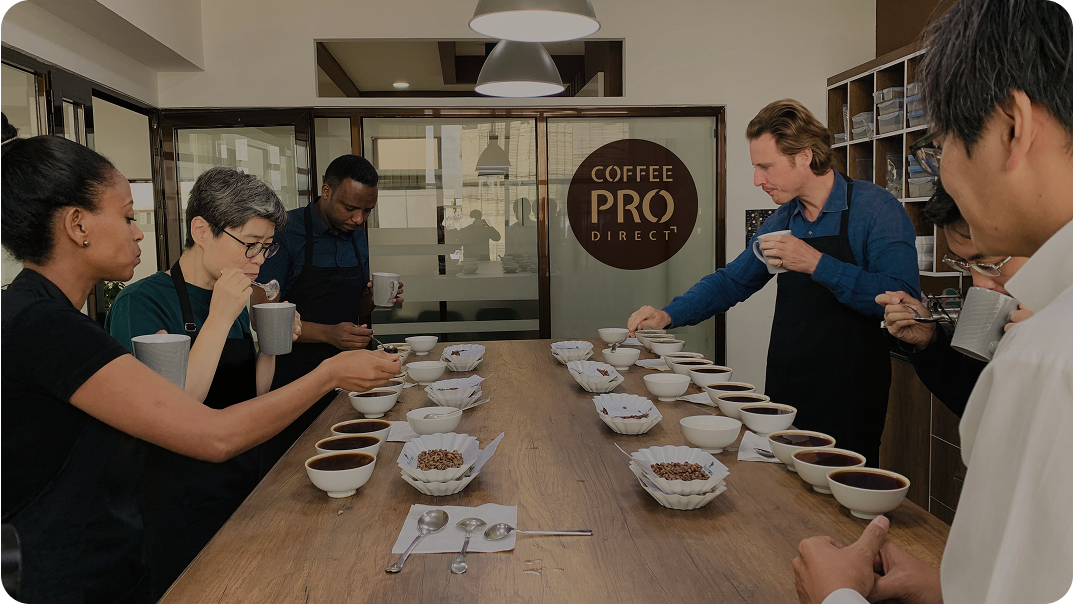
Cupping bowls are essential when roasted samples are prepared for sensory evaluation. Ideally, comparable samples should be prepared using consistent vessels and quantities so that differences in equipment do not introduce additional variation. SCA facility requirements include cupping bowls as part of professional sensory and roasting environments. The number of bowls required depends on the number of samples and tasters participating in the session. A commercial laboratory should maintain enough clean bowls to handle multiple samples while keeping used equipment separate from prepared samples.
Cupping Spoons and Sensory Tools
A suitable cupping spoon is another small but necessary component of a professional sample preparation kit. Spoons allow tasters to mix, collect, and taste coffee during sensory evaluation. Each spoon should be clean, durable, and easy to sanitize between sessions. SCA training-campus requirements include cupping spoons among the equipment used for sensory training. Laboratories may also use sample labels, trays, thermometers, timers, water vessels, and sensory forms. While these items may appear simple, having them organized and available helps prevent interruptions during structured coffee evaluation.
Water and Temperature Control
Water is an important part of coffee sample preparation because it becomes the medium through which many sensory characteristics are experienced. A laboratory should use consistent water and maintain appropriate preparation conditions. SCA facility requirements specify water quality requirements for professional sensory environments. Temperature should also be controlled according to the selected preparation method. A sample preparation kit may therefore include a suitable kettle, thermometer, water containers, and scale. Businesses should document their water source and preparation procedure so comparable sessions can be repeated under similar conditions.

Timers for Consistent Sample Preparation
Timing can influence how coffee samples are prepared and evaluated. A professional kit should include a stopwatch or digital timer for coordinating sample preparation and sensory stages. SCA's training-campus requirements include a stopwatch among cupping equipment and timers among roasting support equipment. A timer can be integrated into a digital scale or used as a separate device. The important consideration is not the type of timer but the consistency of the procedure. Laboratory staff should establish clear timing points and apply them consistently during comparable evaluations.
Coffee Lab Sample Preparation for Vietnamese Robusta
Vietnam is one of the world's major Robusta-producing origins, making professional sample preparation particularly relevant to local exporters, producers, processors, and roasters. A laboratory may need to compare Robusta from different farms, regions, processing stations, or harvest periods. Physical inspection, moisture measurement, sizing, sample roasting, grinding, and cupping can provide different layers of information. The coffee lab sample preparation kit should therefore be flexible enough to support both physical and sensory testing. Coffee Pro Direct can help businesses build equipment workflows that accommodate the needs of Vietnamese coffee producers and commercial quality-control teams.
Preparing Vietnamese Arabica Samples
Vietnamese Arabica can also benefit from controlled sample preparation, particularly when businesses are evaluating specialty-oriented lots. Differences in variety, elevation, processing, drying, and storage can influence coffee characteristics. A consistent preparation procedure allows laboratories to compare these samples under defined conditions. The kit may include precision weighing equipment, sample trays, a small roaster, grinder, bowls, spoons, kettle, and documentation tools. Combining these tools with physical measurements creates a more complete picture of the coffee. Sensory results can then be considered alongside objective sample information rather than being treated as an isolated observation.
Connecting Physical Analysis With Sensory Evaluation
A professional laboratory should connect physical testing with sensory analysis whenever the workflow requires it. SCA's Coffee Value Assessment framework separates physical, descriptive, affective, and extrinsic perspectives, giving professionals different ways to document information about coffee. This means a sample can have a physical record containing moisture, size, and defects alongside descriptive sensory observations and other information about its origin or processing. A well-designed preparation kit helps maintain the sample's identity through each stage, allowing laboratory teams to connect measurements and observations more effectively.
Coffee Value Assessment and Modern Sample Preparation
The Specialty Coffee Association officially adopted three Coffee Value Assessment standards in 2024: SCA-102 for sample preparation and tasting mechanics, SCA-103 for descriptive assessment, and SCA-104 for affective assessment. These standards superseded the 2004 Cupping Protocol and Form. For laboratories updating their procedures, this development provides a current framework for thinking about coffee evaluation. A coffee lab sample preparation kit does not determine coffee value, but it can provide the practical tools needed to prepare samples consistently before trained evaluators conduct the relevant assessments.
Sample Preparation for Coffee Purchasing
Coffee buyers can use a professional sample preparation kit to evaluate potential lots before purchasing larger volumes. A sample may be physically inspected, measured, roasted, ground, and cupped before purchasing decisions are finalized. Consistent equipment helps buyers compare samples using a similar procedure rather than changing preparation methods from one coffee to another. This is particularly useful for Vietnamese exporters and buyers handling multiple suppliers. A clear sample record can include physical characteristics, roast information, sensory observations, supplier details, and purchasing notes. Such documentation can make communication between purchasing and quality-control departments more efficient.
Sample Preparation for Coffee Quality Control
Quality-control laboratories require repeatable processes because their purpose is often to identify differences between batches or verify that coffee meets internal specifications. A sample preparation kit can support incoming green coffee checks, production testing, roast evaluation, and finished-product assessment. The equipment should be arranged according to workflow so technicians can move from weighing and inspection to roasting, grinding, and cupping without unnecessary handling. SCA guidance emphasizes consistent preparation skills and repeatable descriptive assessment among professional cuppers. Standardized procedures make the resulting information easier to compare and communicate.
Sample Preparation for Specialty Coffee Roasters
Specialty roasters often use sample preparation equipment when sourcing new coffees or developing roast profiles. A small green coffee sample can be tested before the roaster commits production capacity to a larger lot. The sample can be roasted, measured, ground, and evaluated, then the results can guide further profile development. Roast-color measurement can also be included when a laboratory wants an objective reference for roast development. SCA's roasting requirements include sample roasters, color measurement devices, moisture meters, cupping bowls, roast logs, and scales as support equipment.
Cleaning and Maintaining the Sample Preparation Kit
Regular cleaning is essential for maintaining reliable laboratory results. Grinders should be cleaned to reduce retained coffee, bowls and spoons should be washed thoroughly, trays should remain free from contamination, and screens should be checked for damage or residue. Moisture meters and scales should be maintained according to manufacturer instructions. Sample roasters require routine cleaning of chaff collectors, cooling systems, roasting chambers, and exhaust pathways. A maintenance checklist can help staff identify when equipment requires inspection or calibration. Clean equipment also creates a more professional working environment and reduces the risk of transferring unwanted material between samples.
Choosing a Complete Coffee Lab Sample Preparation Kit
When selecting a coffee lab sample preparation kit, businesses should first identify the tests they perform most frequently. A basic setup may require scales, trays, sample containers, grinder, bowls, spoons, kettle, timer, and basic physical-analysis tools. A more advanced laboratory may add moisture meters, density meters, sizing screens, sample roasters, roast-color measurement, and digital data recording. Consider sample volume, accuracy, durability, maintenance, available workspace, operator training, and future expansion. A well-designed kit should make the laboratory workflow easier rather than adding equipment that is rarely used.
Why Coffee Pro Direct Supports Professional Sample Preparation
Coffee Pro Direct provides professional coffee equipment solutions for businesses working with roasting, green coffee analysis, laboratory testing, quality control, and sensory evaluation. For Vietnamese producers, exporters, roasters, and specialty coffee businesses, a carefully selected coffee lab sample preparation kit can connect physical inspection with roasting and cupping. Choosing compatible tools for weighing, measuring, roasting, grinding, and sensory preparation helps establish a more organized workflow. By considering current laboratory requirements and future business needs together, companies can develop sample preparation systems that support consistency, traceability, and professional coffee evaluation.
Conclusion
A professional coffee lab sample preparation kit gives coffee businesses the tools required to prepare samples accurately and consistently before analysis. From precision scales and sizing screens to moisture meters, sample roasters, grinders, cupping bowls, spoons, kettles, and timers, each component contributes to a controlled workflow. For Vietnam's diverse Robusta and Arabica sector, reliable preparation can support purchasing, quality control, roasting development, and sensory evaluation. Coffee Pro Direct provides professional coffee equipment solutions that can help laboratories and coffee businesses build organized, scalable, and repeatable sample preparation workflows.
FAQs
What is a coffee lab sample preparation kit?
A coffee lab sample preparation kit is a collection of equipment used to prepare green and roasted coffee samples for physical testing, sample roasting, grinding, cupping, and sensory evaluation.
What equipment should a sample preparation kit include?
A professional kit may include precision scales, sample trays, containers, grinders, cupping bowls, spoons, kettles, timers, sieves, moisture meters, and sample roasters. Advanced laboratories may also require density and roast-color measurement equipment.
Why is sample preparation important for coffee testing?
Consistent sample preparation reduces unnecessary variation. It helps laboratories compare coffees using controlled quantities, roasting conditions, grinding procedures, water preparation, and timing.
Can the same kit be used for Robusta and Arabica?
Yes. The same basic preparation equipment can be used for both coffee types, although roasting profiles, physical characteristics, and sensory procedures may need to be adapted to the specific samples.
Does a coffee laboratory need a sample roaster?
A sample roaster is useful when the laboratory needs to evaluate green coffee through controlled roasting before sensory testing or purchasing decisions.
What does SCA recommend for professional coffee sample preparation?
Current SCA resources identify equipment such as grinders, scales, bowls, kettles, stopwatches, sizing screens, moisture meters, density meters, grading mats, sample roasters, and roast logs within professional training and evaluation environments.
How should coffee laboratory equipment be maintained?
Equipment should be cleaned regularly and maintained according to manufacturer instructions. Scales and measurement instruments should be checked or calibrated as appropriate, while grinders, screens, sample roasters, bowls, and other tools should be kept clean between samples.
Can Coffee Pro Direct provide coffee laboratory equipment?
Coffee Pro Direct provides professional coffee equipment solutions for laboratory analysis, sample preparation, roasting, quality control, and sensory evaluation, helping coffee businesses develop equipment workflows around their specific operational requirements.

 English
 Arabic
 French
 Spanish
 Portuguese
 Deutsch
 Turkish
 Dutch
Dutch
 Italiano
 Russian
 Romaian
 Portuguese (Brazil)
