


10 Real Estate Tokenization Use Cases That Could Gain Attention Across Property Markets in 2027
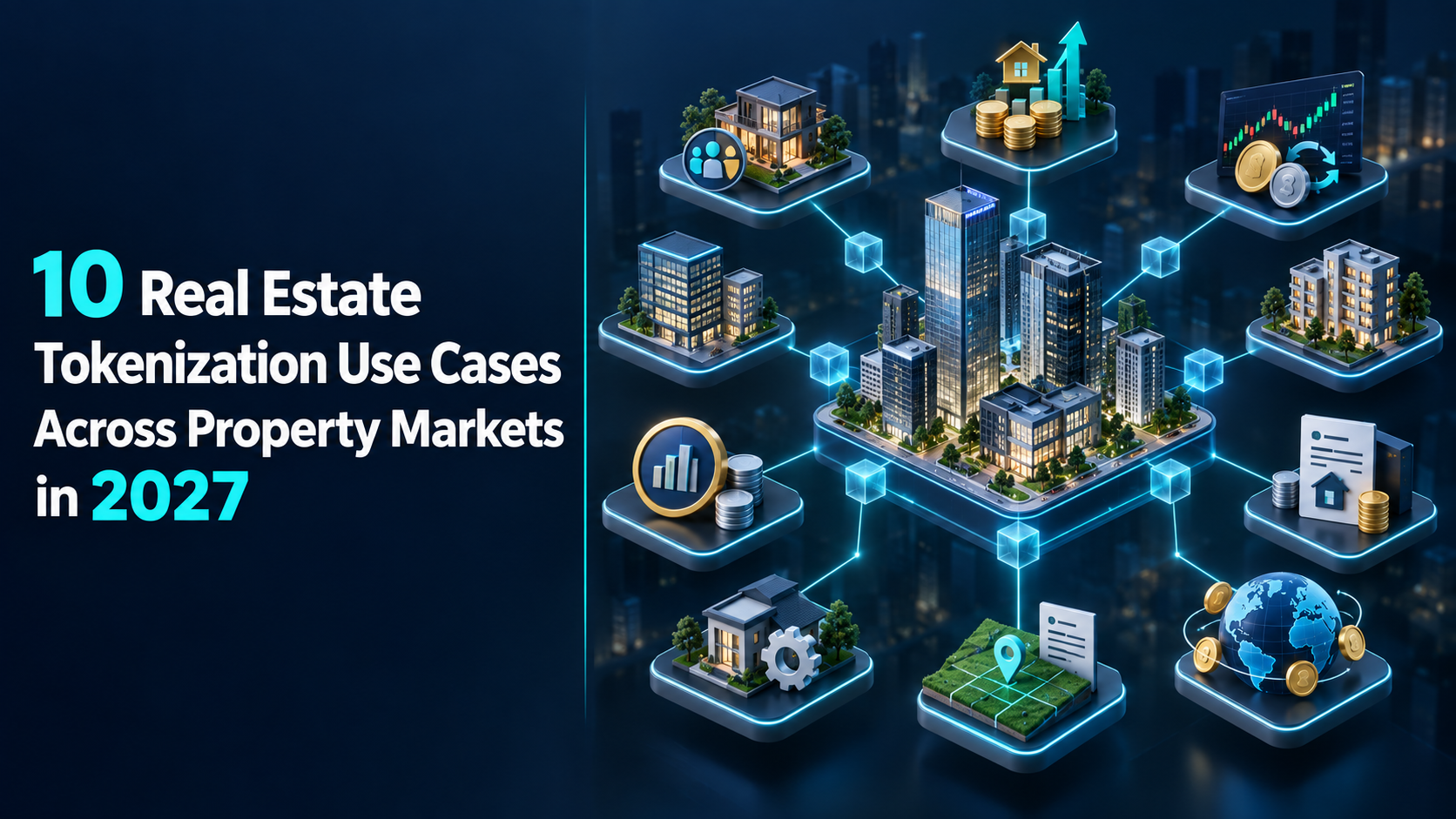
Real estate markets are entering a period where digital ownership models, blockchain infrastructure, and token-based investment structures are receiving more attention. Real estate tokenization refers to representing rights or interests connected to property through digital tokens recorded on a blockchain. Depending on the legal structure, these tokens may represent ownership interests, economic rights, debt claims, fund interests, or other contractual rights.
In 2027, the discussion around real estate tokenization could move beyond basic fractional ownership. Property developers, investment firms, asset managers, lenders, and technology providers may examine token-based systems for property financing, income distribution, secondary transactions, fund administration, and investor access. The actual use of these systems will still depend on local property laws, securities regulations, tax rules, investor requirements, and the legal structure of each offering.
For businesses considering this market, understanding practical applications can help when evaluating a real estate tokenization development project. The following ten use cases represent areas that could receive attention across different property markets in 2027.
1. Fractional Access to Income-Producing Properties
Fractional property ownership remains one of the most discussed applications of real estate tokenization. Instead of requiring one investor to purchase an entire property, a project can represent economic interests through multiple digital tokens.
For example, an office building, hotel, apartment complex, or retail property could be placed within an appropriate legal structure. Investors could purchase tokens representing a defined interest in that structure. Rental income or other eligible proceeds could then be distributed according to the rights attached to those tokens.
This model could be relevant to investors who want exposure to property markets without purchasing an entire building. It may also allow property sponsors to reach a wider investor base, subject to applicable regulations.
A real estate tokenization company working on such a project would typically need to consider legal structuring, investor verification, token issuance, wallet management, payment processing, ownership records, and distribution mechanisms.
2. Property Development Financing
Property developers often need substantial capital before a project starts generating revenue. Token-based financing could become another option for raising funds for eligible development projects.
A developer could establish a legal structure around a residential, commercial, hospitality, or mixed-use project and issue digital tokens linked to defined investment rights. Depending on the offering structure, investors could receive interest payments, a share of project income, or another contractual return.
This approach could attract attention in markets where developers are seeking alternatives to traditional financing. However, token issuance does not remove the need for financial due diligence. Project feasibility, construction risk, repayment terms, investor protections, and regulatory requirements would remain important.
A real estate asset tokenization company may therefore work with developers to connect the token system with financial documentation and project-level reporting.
3. Tokenized Real Estate Investment Funds
Real estate investment funds could also become an important area for tokenization. Fund managers may use blockchain-based records to represent investor interests in portfolios containing multiple properties.
Rather than creating a token around a single building, a fund could hold several properties across different locations or asset categories. Investors would receive digital representations of their interests in the fund, subject to the fund's legal and regulatory framework.
This model could be useful for portfolios containing office buildings, residential properties, warehouses, hotels, or other commercial assets. It may also simplify certain administrative activities by maintaining digital records of investor positions and transactions.
For firms evaluating real estate tokenization platform development, fund management features could therefore become relevant. Investor onboarding, subscription records, distributions, reporting, and transfer restrictions may all need to work together within the platform.
4. Tokenized Rental Income Rights
Another possible application involves representing rights to rental income rather than direct property ownership.
Suppose an investor participates in a property through a contractual arrangement that provides access to a defined portion of rental revenue. A token could represent that contractual interest, provided the structure complies with applicable law.
This model could appeal to investors who are primarily interested in cash flows rather than property management responsibilities. Property owners could potentially use such structures to raise capital while retaining control over certain aspects of the underlying asset.
For a real estate token development project, the system would need rules that determine who receives distributions, when payments occur, and how investor records are maintained. Smart contracts may automate certain calculations, but legal agreements would still govern the underlying rights.
5. Tokenized Commercial Property Portfolios
Large property owners often manage portfolios containing multiple buildings. Tokenization could be applied at the portfolio level instead of being restricted to individual assets.
For example, a portfolio might contain several warehouses located in different cities. Digital tokens could represent interests in the portfolio, allowing investors to participate in a group of properties rather than one individual building.
This could create a different investment structure from single-property tokenization. Portfolio composition, valuation methods, income allocation, asset replacement, and investor rights would all need to be defined.
In 2027, portfolio-based models could receive attention from asset managers looking for digital approaches to managing property investment products.
6. Tokenized Real Estate Debt
Real estate tokenization does not have to focus exclusively on equity ownership. Debt instruments connected to property could also be represented digitally.
A property owner or developer may raise financing through a loan, note, or another debt arrangement. Digital tokens could represent claims associated with that financing structure, subject to securities and financial regulations.
For investors, tokenized property debt could provide exposure to real estate lending without requiring direct property ownership. For issuers, the model could provide another mechanism for organizing investor records and payment schedules.
A real estate tokenization development company working on such a system may need features for maturity dates, interest calculations, repayment schedules, collateral information, investor restrictions, and payment history.
7. Secondary Trading of Eligible Property Interests
One reason businesses continue to examine tokenization is the possibility of creating regulated secondary markets for eligible property interests.
Traditional real estate investments can involve lengthy transaction processes. If a token represents a legally transferable investment interest, a compliant secondary marketplace could allow eligible investors to trade those interests under defined conditions.
This does not mean that every tokenized property would become freely tradable. Transfer restrictions, investor eligibility, jurisdictional rules, holding periods, compliance checks, and marketplace regulations may apply.
Real estate tokenization platform development could therefore include features for investor verification, transaction monitoring, transfer restrictions, order management, settlement, and transaction records.
8. Tokenization of Hospitality Properties
Hotels, serviced apartments, resorts, and other hospitality assets could become another area of interest.
Hospitality properties generate revenue through room bookings, food and beverage services, events, and other activities. A token-based investment model could represent an interest in the property, operating entity, revenue stream, or financing arrangement.
Investors may receive distributions based on the financial performance of the relevant structure. The model could also allow operators to raise capital for acquisitions, renovations, or expansion.
However, hospitality assets carry operating risks that differ from residential or office properties. Occupancy rates, seasonal demand, operating expenses, local tourism conditions, and management performance can influence returns.
A real estate tokenization platform development company would need to account for these operational factors when designing reporting and distribution functions.
9. Tokenized Real Estate Collateral
Property is widely used as collateral in lending. Tokenization could provide a digital representation of certain property-related rights that can be referenced within lending systems.
For example, a financing platform could connect property records, valuation information, borrower information, and digital ownership or interest records within a structured system. Lenders could use these records as part of their due diligence and monitoring processes.
This application requires particular care because a digital token does not automatically create legal ownership or enforceable collateral rights. The relationship between the token, legal title, security interest, and relevant property records must be established under applicable law.
In 2027, this area could attract attention from lenders, fintech companies, property funds, and financial institutions examining blockchain-based property infrastructure.
10. Tokenized Real Estate Funds for Cross-Border Investors
Cross-border property investment is another area where tokenization may receive interest. Investors often face different legal, tax, currency, compliance, and administrative requirements when participating in overseas property markets.
A tokenized fund or investment structure could provide a digital method for recording investor interests while incorporating jurisdiction-specific compliance procedures.
For instance, a fund focused on commercial properties across several countries could issue digital interests to eligible investors. The platform could maintain records concerning investor identity, jurisdiction, transaction history, distributions, and transfer restrictions.
This use case could become particularly relevant as property investment products become more digitally managed. However, international tokenization requires careful attention to the laws of every jurisdiction involved.
What Businesses May Need Before Launching a Tokenized Property Model
Businesses considering real estate tokenization should begin with the legal and financial structure rather than the token itself. The token should represent a clearly defined right or interest, and the relationship between the digital record and the underlying property structure should be documented.
Technology requirements will depend on the chosen model. A platform may require investor onboarding, identity verification, wallet support, token issuance, smart contracts, payment processing, property data, investor dashboards, reporting, distribution management, compliance controls, and transaction records.
Businesses should also consider who the intended investors are. A platform designed for institutional investors may require different reporting, governance, custody, and compliance functions from one designed for individual investors.
The selection of a technology provider also requires careful evaluation. Companies comparing the Best real estate tokenization companies or Top real estate tokenization companies should examine previous project experience, blockchain expertise, security practices, compliance support, platform architecture, smart contract capabilities, and post-launch support rather than relying only on marketing claims.
How Real Estate Tokenization Could Develop in 2027
The market in 2027 may place greater attention on practical property applications rather than token issuance alone. Businesses may increasingly examine how digital property interests can connect with investor management, payments, compliance, reporting, lending, and secondary transactions.
This could create demand for real estate tokenization development services that cover the complete technology stack. Depending on the project, a real estate tokenization company may work on smart contracts, investor interfaces, asset management systems, compliance modules, wallets, marketplaces, and administrative dashboards.
A successful project will also depend on factors outside technology. Property valuation, legal ownership, taxation, investor protection, regulatory permissions, financial reporting, and market demand can all influence whether a tokenized property model is practical.
Conclusion
Real estate tokenization could gain attention across property markets in 2027 through applications such as fractional investment, development financing, tokenized funds, rental income rights, commercial property portfolios, real estate debt, secondary trading, hospitality assets, collateral management, and cross-border investment products. Each model comes with different legal, financial, technical, and operational requirements, so businesses need to define the underlying property rights and investor structure before selecting a blockchain system or token model. As the market develops, real estate tokenization development may increasingly focus on practical financial and property-management applications rather than token issuance alone. Businesses evaluating these opportunities can work with a real estate asset tokenization company or real estate tokenization development company to plan the technology around their intended property model. Blockchain App Factory provides Real estate tokenization development services.
FAQs
1. What is real estate tokenization?
Real estate tokenization is the process of representing ownership interests, investment rights, income rights, debt claims, or other property-related interests through digital tokens recorded on a blockchain.
2. What are the main real estate tokenization use cases for 2027?
Potential applications include fractional property investment, property development financing, tokenized funds, rental income rights, commercial property portfolios, real estate debt, secondary trading, hospitality assets, property collateral, and cross-border investment structures.
3. Can tokenized real estate be traded?
It can potentially be traded when the underlying legal structure and applicable regulations permit transfers. Investor eligibility, securities rules, holding restrictions, and marketplace requirements may apply.
4. Does a real estate token always represent direct property ownership?
No. A token may represent direct ownership, an interest in a legal entity that owns property, a debt claim, rental income rights, fund interests, or another contractual arrangement. The exact rights depend on the legal structure.
5. What does real estate tokenization platform development involve?
It can include investor onboarding, identity verification, token issuance, smart contracts, wallet integration, payment functions, investor dashboards, compliance features, reporting, distributions, asset management, and marketplace functions.
6. Why are businesses considering real estate token development?
Businesses may consider real estate token development to create digital investment products, organize investor interests, support fractional investment models, manage property-related financial products, or develop regulated marketplaces for eligible investment interests.
7. What should businesses consider before starting a tokenization project?
Businesses should examine property ownership, legal structure, securities regulations, taxation, investor eligibility, custody, payment systems, smart contracts, data security, reporting requirements, and the jurisdictions where the investment product will be offered.

 English
 Arabic
 French
 Spanish
 Deutsch
 Turkish
 Dutch
Dutch
 Italiano
 Russian
 Romaian
 Portuguese (Brazil)
 Greek
Greek
