


When Cabinet Finishing Can Transform an Older Kitchen
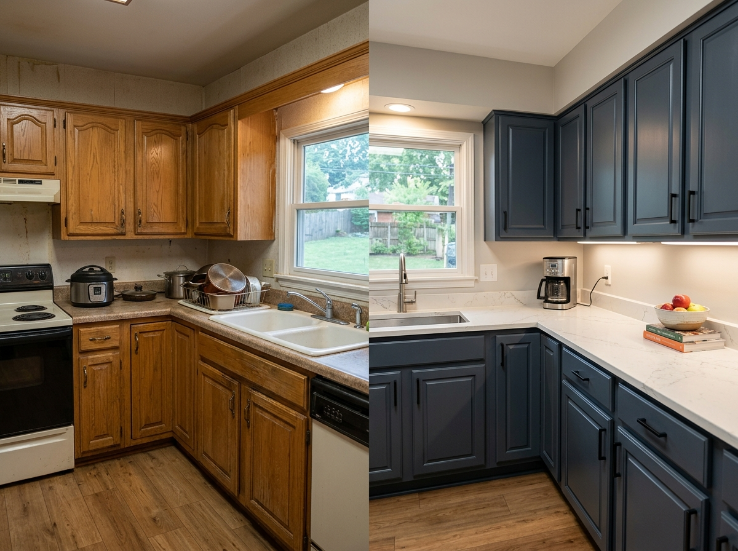
Kitchen cabinets can remain structurally useful for many years, but their visible finish may show wear much sooner. Frequent cleaning, cooking residue, moisture, sunlight, and repeated contact can gradually leave cabinet surfaces looking dull, scratched, or outdated.
When the cabinet structure is still strong, updating the finish can provide a noticeable change without requiring the entire storage system to be removed. The process can also give homeowners an opportunity to rethink color, surface condition, hardware, and the overall relationship between the cabinets and the rest of the kitchen.
Start by Evaluating the Existing Cabinets
Before choosing a new finish, inspect the current cabinets carefully. Check the doors, drawer fronts, frames, and exposed edges for peeling, scratches, discoloration, swelling, or other signs of wear.
The condition of the material underneath the existing finish is especially important. Cosmetic problems may be suitable for a finishing project, while significant water damage or structural deterioration may require a more extensive solution. Understanding the starting point helps prevent homeowners from expecting a surface treatment to solve deeper cabinet problems.
Cleaning and Preparation Come First
A cabinet surface can look clean while still carrying grease, dust, and residue from years of kitchen use. Those contaminants can affect how a new finish adheres and how smooth the final result looks.
Proper preparation may involve deep cleaning, surface repair, smoothing, and other steps appropriate for the existing material. Rushing through preparation can make even a high-quality finish look uneven. The final appearance depends not only on the coating itself but also on how carefully the underlying surface has been prepared.
Consider Whether the Current Color Still Works
Color can change the entire mood of a kitchen. A finish that once felt modern may now make the space seem darker or less coordinated with the countertop, floor, or appliances.
When choosing a new direction, consider the room as a complete visual system. Think about natural light, wall color, backsplash materials, hardware, and nearby rooms. A cabinet finish should fit the broader design rather than being chosen only because it looks attractive in isolation.
Know When Professional Finishing Is Worth Considering
Homeowners looking at cabinet finishing in Yorba Linda may be dealing with worn surfaces, dated colors, or cabinets that need a more consistent appearance.
Professional finishing can be helpful when the kitchen contains many doors, drawer fronts, and fixed surfaces that all need to match. Consistency is difficult to achieve when different surfaces are prepared or coated differently. Professional work can also provide a more structured process for handling preparation, application, and finishing across the entire kitchen.
Do Not Skip Repairs Before Finishing
A new finish cannot reliably hide every underlying defect. Loose edges, dents, cracks, damaged corners, and unstable materials should be addressed before the finishing stage.
Repairing these issues first can create a smoother foundation and reduce the chance that defects will remain visible afterward. This is particularly important on cabinet doors and drawer fronts because light often hits these surfaces from different angles, making uneven areas easy to notice.
Think About Moisture-Prone Areas
Cabinets near sinks, dishwashers, and other moisture sources may experience more wear than cabinets in drier areas. Water splashes and repeated cleaning can affect finishes over time.
Inspect these locations carefully before beginning a finishing project. If moisture has caused swelling or material damage, the problem may be more serious than surface wear. Finishing should only be considered after the underlying condition has been addressed.
Consider Hardware During the Update
New cabinet finishes can look incomplete when paired with heavily worn or outdated hardware. Knobs, pulls, hinges, and other visible components contribute to the overall appearance of the kitchen.
Hardware should be selected after the finish direction is clear. Consider how its size, shape, and color work with the cabinet style and other metal finishes in the room. Consistent placement is also important because even attractive hardware can look awkward when installed unevenly.
Keep the Cabinet Style in Balance With the Home
A cabinet finish should fit the architectural character of the property. A very modern treatment may feel disconnected in a traditionally styled home, while an ornate finish may feel heavy in a simple contemporary space.
This does not mean homeowners need to avoid contrast. Accent colors, different hardware, or selected cabinet features can create visual interest when they have a clear relationship with the rest of the room. The main goal is to make the kitchen feel cohesive rather than visually fragmented.
Think About Cleaning and Maintenance
Every cabinet finish has practical care requirements. Cooking creates grease and residue, while frequently touched doors can collect fingerprints and oils from hands.
Before selecting a finish, think about how often the cabinets are cleaned and which products are commonly used. Avoid assuming that every household cleaner is safe for every coating. Following the care recommendations for the chosen finish can help protect the surface and maintain its appearance over time.
Decide Whether Finishing or Refacing Fits Better
Finishing and refacing can address different needs. A homeowner who mainly wants to change or refresh the existing surface may have different priorities from someone who wants a broader exterior cabinet update.
The condition of the doors, the existing cabinet material, the desired design change, and the expected longevity of the project all matter. There is no single option that suits every kitchen, so the decision should be based on the actual condition and goals of the space.
Prepare for the Work Area
Cabinet finishing requires a clean, organized work environment. Remove dishes, food, cookware, and other items from affected storage areas before the project begins.
Countertops, floors, appliances, and nearby surfaces may also need protection. When cabinet doors or drawer fronts are removed, keeping each component organized can help with proper placement later. Preparation reduces confusion and protects the rest of the kitchen while finishing work is underway.
Look at the Result as a Whole
After the finish is updated, step back and examine how the cabinets interact with the rest of the room. A new color can sometimes reveal that older hardware, lighting, or surrounding finishes now feel out of balance.
This does not mean every surrounding feature needs to be replaced. Simple changes such as updated hardware or improved lighting may be enough to bring the new cabinet finish into better harmony with the room. A complete visual assessment can help identify which details matter most.
Know When a Larger Project Is Needed
Some cabinets have reached a point where finishing alone is not enough. Structural damage, major layout problems, poor storage, or severely deteriorated materials may require a more extensive remodeling solution.
The key is to separate surface appearance from underlying condition. A beautiful new finish cannot correct a cabinet box that is no longer stable or a layout that creates daily frustration. An honest assessment at the beginning can help homeowners avoid investing in a surface treatment that does not address the actual problem.
Final Thoughts
Cabinet finishing can be an effective way to refresh a kitchen when the existing cabinet structure remains useful and the main concern is the visible condition of the surfaces. Careful preparation, suitable materials, thoughtful color selection, and attention to hardware can all contribute to a more complete result.
The process is closely connected to surface finishing, a broad term for treatments applied to improve the appearance or performance of a material. Understanding that finishing is more than simply adding a new color helps homeowners appreciate why preparation and surface condition matter so much.

 Arabic
 French
 Spanish
 Portuguese
 Deutsch
 Turkish
 Dutch
Dutch
 Italiano
 Russian
 Romaian
 Portuguese (Brazil)
 Greek
Greek
