


The Unfailing Lifeline: An In-Depth Look at Mission Critical Communication
Defining the Bedrock of Public Safety and Industrial Operations
In moments of crisis, when lives are on the line and seconds count, standard communication methods are not enough. This is the domain of the Mission Critical Communication industry, a specialized sector dedicated to providing ultra-reliable, secure, and instantaneous connectivity for first responders and essential industries. Unlike consumer-grade networks that can become congested or fail during emergencies, these systems are purpose-built for resilience and availability. The core principles are unwavering reliability, robust security to prevent eavesdropping or disruption, and the prioritization of essential voice and data traffic. From police officers coordinating a response to utility workers restoring power after a storm, this industry provides the vital lifeline that enables coordinated, effective action in the most demanding environments imaginable. It is the invisible infrastructure that underpins societal safety and the continuity of critical services.
The Core Components of a Mission-Critical Ecosystem
A mission-critical communication system is a complex ecosystem composed of three primary layers. First is the hardware, which includes ruggedized, purpose-built devices like handheld two-way radios, vehicle-mounted terminals, and increasingly, specialized smartphones designed to withstand harsh conditions. The second layer is the network infrastructure itself. This traditionally consists of private Land Mobile Radio (LMR) networks with dedicated towers and frequencies, but is now evolving to include private and public 4G/5G broadband networks. The final, and increasingly important, layer is the software. This includes sophisticated command-and-control applications, dispatch consoles that provide a unified view of operations, geographic information systems (GIS) for real-time location tracking, and data analytics platforms. These components work in harmony to ensure that vital information—whether a voice call, a video stream, or a location ping—is delivered instantly and reliably to the right people at the right time.
Public Safety: The Primary and Most Demanding User Base
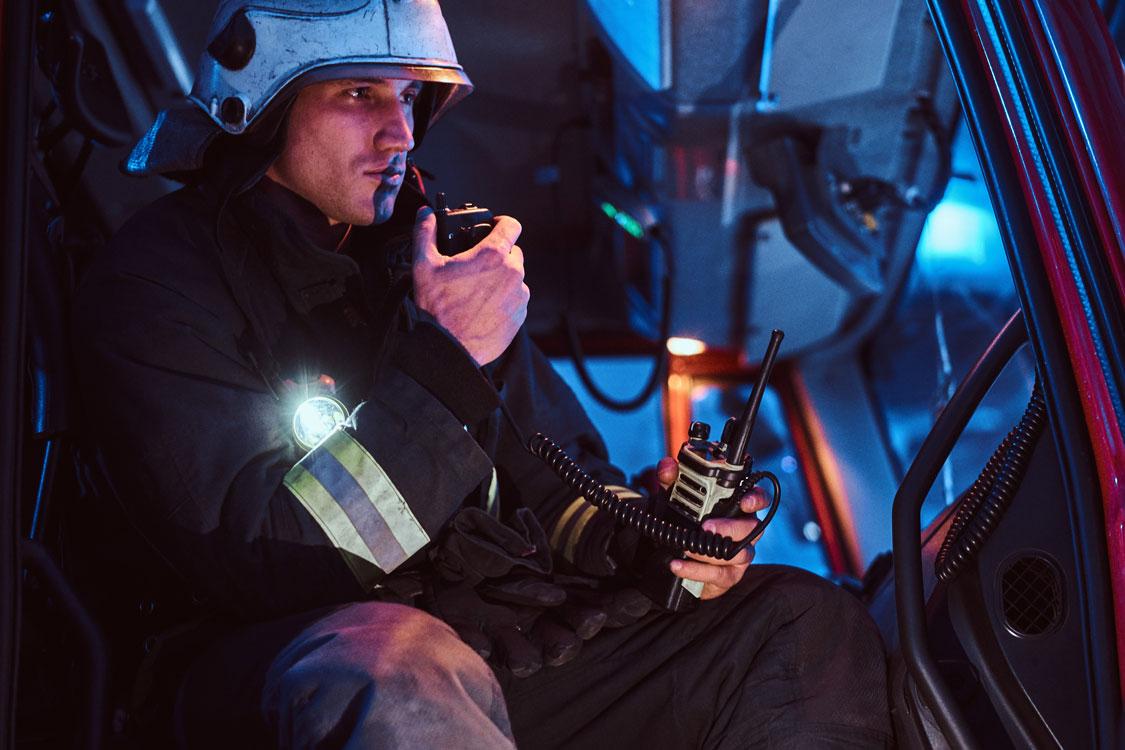
The most prominent users of mission-critical communication are public safety agencies. Police departments, fire brigades, and emergency medical services (EMS) operate in high-stakes environments where communication failure is not an option. Their needs are unique: they require instantaneous push-to-talk (PTT) capabilities that allow for one-to-many group calls, ensuring entire teams are simultaneously informed. The network must provide clear audio in noisy environments and have extensive coverage, reaching into buildings and remote areas. Security is paramount to protect sensitive operational details from being intercepted. For these first responders, their radio is more than a tool; it is their primary connection to backup, a source of critical information from dispatch, and a safety lifeline in dangerous situations. The entire mission-critical industry was essentially born from the specialized requirements of this essential user group, shaping its development for decades.
The Expanding Commercial Frontier for Critical Communications
While public safety remains the cornerstone, the principles of mission-critical communication are being increasingly adopted by a wide range of commercial sectors. Utility companies rely on these systems to coordinate field crews during power outages and to ensure worker safety in remote locations. The transportation industry—including railways, airports, and shipping ports—uses them for operational efficiency and to manage security and emergency response. In heavy industries like mining, oil, and gas, reliable communication is a legal and practical requirement for protecting workers in hazardous environments. These commercial users are drawn to the same core benefits that public safety agencies depend on: unparalleled reliability, robust security, and advanced features like group calling and location tracking, which are vital for maintaining safe and efficient operations.
The Ultimate Value: A Lifeline in a World of Uncertainty
The fundamental value proposition of mission-Tcritical communication is its role as an unfailing lifeline. In the chaos of a natural disaster, a major industrial accident, or a public security threat, the ability for response teams to communicate and coordinate is the single most important factor in a successful outcome. The consequences of failure are severe, ranging from inefficient response and property damage to injury and loss of life. These systems are engineered with multiple layers of redundancy and security to function when all else fails. They provide a trusted, closed loop of information that enables clear command, situational awareness, and decisive action. In a world where uncertainty is a constant, the investment in mission-critical communication is an investment in resilience, safety, and the ability to manage crises effectively, making it an indispensable asset for any modern society.
➤ In-Depth Market Studies by Market Research Future:
China Enterprise Collaboration Market

 English
 French
 Spanish
 Portuguese
 Deutsch
 Turkish
 Dutch
Dutch
 Italiano
 Russian
 Romaian
 Portuguese (Brazil)
 Greek
Greek
