


How Do Hospital Laundry Systems Work?
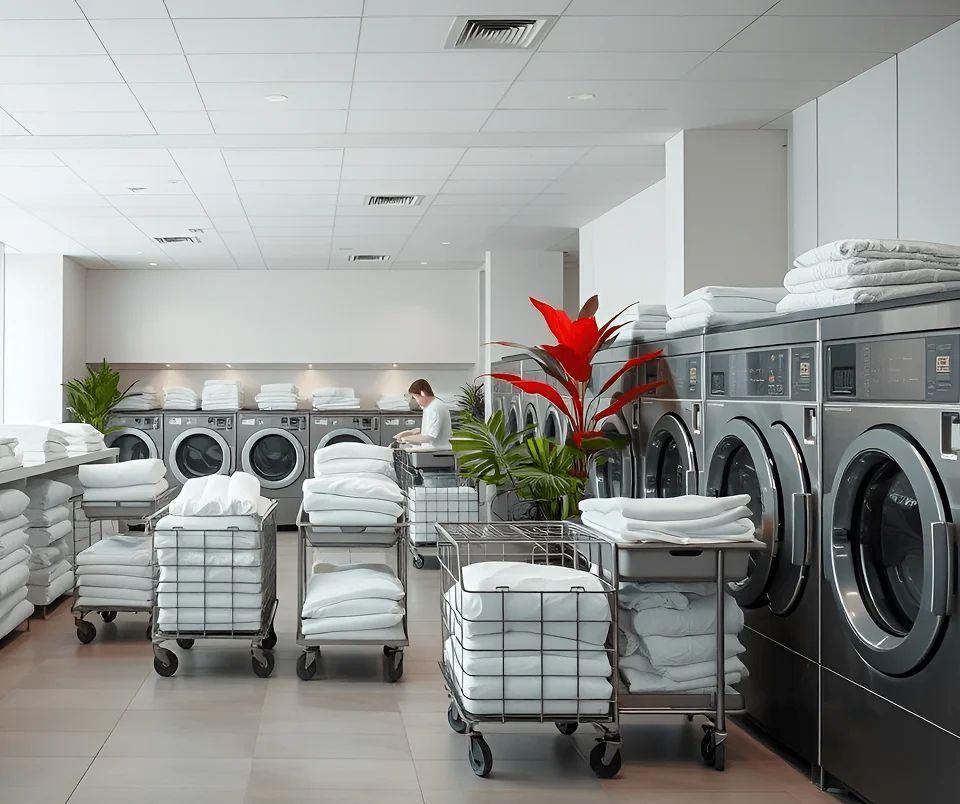
A hospital laundry system is a specialized, high-capacity workflow designed to collect, sort, wash, disinfect, dry, iron, fold, and dispatch linens and textiles under strict hygiene and infection-control standards. For healthcare facilities in India, the right hospital laundry system balances throughput, compliance, and lifecycle cost while minimizing cross-contamination risks. Choosing the correct washer extractor brand is central to this balance, because it dictates wash quality, chemical and water consumption, and long-term reliability. This article explains how hospital laundry systems work end to end, what makes a washer extractor suitable for healthcare, and how to evaluate brands with real-world criteria. It also addresses a common question: Which brand of washer extractor is best for a hospital laundry in India? By the end, you will have a clear framework to select equipment that supports patient safety, operational efficiency, and predictable budgets—especially when partnering with an experienced provider like Supershine Laundry.
The end-to-end hospital laundry workflow
A hospital laundry system is more than machines; it is a controlled process that moves soiled and clean textiles through distinct zones to prevent recontamination.
-
Collection and segregation: Soiled linen is bagged at the point of use, often in color-coded, leak-proof bags. Infectious items may go into dedicated red bags or soluble bags, depending on protocol.
-
Transport to laundry: Closed trolleys move soiled linen to the dirty side of the laundry, keeping clean and dirty flows separate.
-
Sorting and weighing: Linen is sorted by fabric type, soil level, and department. Weighing ensures correct load sizes for consistent wash results.
-
Washing and disinfection: Washer extractors run validated cycles with appropriate detergents, alkalis, bleaches, and thermal or chemical disinfection steps.
-
Extraction and drying: High G-force extraction reduces moisture, cutting dryer energy and time. Dryers finish remaining moisture removal.
-
Finishing: Flatwork ironers, folder-crossfolders, and steam-air finishers press and fold sheets, table linen, and gowns.
-
Clean storage and dispatch: Clean linen is stored in a protected area and dispatched via clean trolleys to wards, OTs, and other departments.
This separation of dirty and clean sides, plus documented wash formulas, is what makes a hospital laundry system compliant and safe.
Why the washer extractor is the heart of the system
The washer extractor determines wash quality, infection control, and operating cost. In a hospital laundry system, it must deliver consistent temperature, chemistry, and mechanical action while handling heavy, variable loads.
Key capabilities to look for:
-
Thermal and chemical disinfection: Ability to reach and hold target temperatures or use approved chemical disinfection when heat-sensitive fabrics are washed.
-
High extraction (G-force): Reduces dryer load and energy, shortens cycle times, and improves linen life.
-
Robust construction: Stainless steel cylinders, heavy-duty bearings, and industrial motors for 24/7 operation.
-
Programmable formulas: Multiple recipes for OT linen, patient gowns, mops, kitchen linen, and staff uniforms.
-
Water and energy efficiency: Low liquor ratio, heat recovery options, and variable-frequency drives (VFDs) to cut utility bills.
Supershine Laundry helps hospitals specify washer extractors that match their daily kilogram load, fabric mix, and utility constraints, ensuring the hospital laundry system performs reliably year after year.
Which brand of washer extractor is best for a hospital laundry in India?
This is the question many purchase managers ask: Which brand of washer extractor is best for a hospital laundry in India? There is no single “best” brand for every hospital. The right choice depends on capacity needs, service network, total cost of ownership, and the ability to support validated disinfection cycles.
In India, leading international and domestic brands offer strong options. The decision should be driven by:
-
Local service and spares: Downtime in a hospital laundry system is costly. A brand with quick-response technicians and available parts in your region is essential.
-
Validated healthcare cycles: The controller should support temperature/chemical disinfection profiles aligned with hospital policies.
-
Build quality and warranty: Heavy-duty frames, corrosion-resistant components, and clear warranty terms reduce lifecycle risk.
-
Integration readiness: Compatibility with boiler/steam, hot water generation, water treatment, and effluent guidelines.
Supershine Laundry works with hospitals to evaluate brands against these criteria rather than marketing claims, focusing on what will keep the hospital laundry system running safely and efficiently.
Selection factors that matter more than brand names
Instead of chasing brand hype, evaluate washer extractors against practical, measurable factors.
-
Capacity and mix: Match machine size (e.g., 25–100 kg) to peak loads and linen types. Overloading reduces wash quality; underloading wastes utilities.
-
Liquor ratio: Lower liquor ratios use less water and chemicals while maintaining cleaning performance.
-
Extraction G-force: Higher G-force means less residual moisture, shorter drying, and better linen life.
-
Control system: Intuitive interfaces, recipe lockouts, and data logging support compliance and training.
-
Utilities fit: Confirm steam/hot water requirements, electrical load, and drainage. Plan for water softening if hardness is high.
-
After-sales support: Service SLAs, preventive maintenance schedules, and operator training are critical for uptime.
Supershine Laundry provides technical consultations to align these factors with your facility’s workflow, ensuring the hospital laundry system is sized and specified correctly from day one.
How Supershine Laundry supports hospital projects
Supershine Laundry specializes in commercial and industrial laundry equipment for healthcare, hospitality, and institutional clients. For hospitals, the team typically:
-
Conducts a load study and workflow review.
-
Recommends washer extractors, dryers, ironers, and folding systems that fit the space and throughput.
-
Assists with utility planning, including steam, hot water, and drainage.
-
Provides installation, commissioning, and operator training.
-
Offers preventive maintenance plans to sustain performance.
This end-to-end approach reduces the risk of mismatched equipment and helps the hospital laundry system meet hygiene and productivity targets without unnecessary capital spend.
Practical tips to lower operating costs
-
Optimize load sizes: Run machines near rated capacity for best water and energy efficiency.
-
Standardize formulas: Use consistent recipes per linen type to reduce chemical waste and re-washes.
-
Maintain extraction: Regularly check drain pumps and bearings to keep G-force at design levels.
-
Recover heat: Where feasible, use heat recovery from drain water or dryer exhaust.
-
Train operators: Proper loading, sorting, and formula selection prevent errors that drive up costs.
Supershine Laundry can audit existing setups and suggest adjustments that improve efficiency without compromising infection control.
Conclusion
A well-designed hospital laundry system protects patients, supports staff, and controls costs by combining the right process, zoning, and equipment. The washer extractor is the core of this system, and the “best” brand is the one that meets your hospital’s capacity, compliance, and service needs—not just the most advertised name. By focusing on disinfection capability, extraction performance, build quality, and local support, you can make a confident decision. If you are evaluating options, ask again: Which brand of washer extractor is best for a hospital laundry in India? Use the criteria above, and involve a specialist like Supershine Laundry to validate your choices. With the right partner and equipment, your hospital laundry system will deliver consistent, safe, and cost-effective results.
FAQs
1) What capacity washer extractor do most hospitals need?
It depends on bed count, linen change frequency, and in-house vs. outsourced laundry. Many mid-size hospitals use multiple 25–50 kg machines; larger facilities add 75–100 kg units. A proper load study prevents over- or under-sizing.
2) Can washer extractors disinfect linen without very high temperatures?
Yes. Chemical disinfection cycles using approved agents can be used for heat-sensitive fabrics, provided the formula, contact time, and dosing are validated per hospital policy.
3) How important is extraction G-force in a hospital laundry system?
Very important. Higher G-force reduces moisture in linen after washing, which cuts dryer time, energy use, and wear on fabrics—directly lowering operating costs.
4) What after-sales support should hospitals expect?
Clear SLAs for breakdown response, scheduled preventive maintenance, ready access to spares, and operator training. This minimizes downtime and keeps wash quality consistent.
5) Should hospitals automate folding and ironing?
For high-volume bed sheets and table linen, flatwork ironers with folder-crossfolders improve throughput and finish quality. For smaller volumes, semi-automatic finishing may be more cost-effective. Supershine Laundry can help size finishing lines to match your actual demand.

 English
 Arabic
 French
 Spanish
 Portuguese
 Deutsch
 Turkish
 Dutch
Dutch
 Italiano
 Romaian
 Portuguese (Brazil)
 Greek
Greek
