


What Should Buyers Check in Lightweight Non-Stick Cookware?
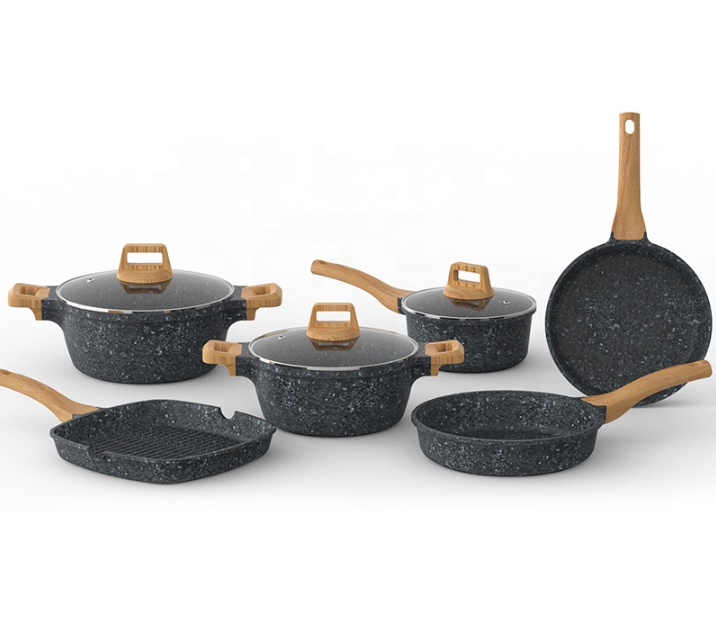
Cookware purchasing for retail, wholesale, hospitality, and private-label programs involves more than comparing the appearance of a pan. Buyers need to consider materials, construction, coating, handles, sizes, packaging, customization, and the intended market. Lightweight non-stick cookware is especially interesting for buyers looking to combine convenient handling with a modern cooking experience.
A useful starting point is the cookware product collection, where buyers can review different cookware categories and product structures before discussing specifications for a project.
What Does Lightweight Mean in Cookware Design?
The term lightweight describes the overall weight of the cookware, but it should not be treated as a simple measurement of wall thickness. Two pans with similar dimensions can have different weights because of differences in aluminum thickness, forming process, base construction, handle materials, and accessories.
Aluminum is commonly used for lightweight cookware because it offers relatively low density together with good thermal conductivity. This makes it suitable for cookware that needs to respond quickly to changes in stove temperature.
For buyers, the important point is to evaluate the complete structure. A lightweight product should still have a stable base, suitable sidewall strength, secure handle attachment, and a cooking surface designed for its intended application.
Why Is the Coating Important?
The non-stick coating is directly related to food release and cleaning convenience. Different projects may require different coating systems depending on the target market, cooking application, appearance, temperature requirements, and regulatory considerations.
Some cookware programs use ceramic coatings, while other designs can use PTFE-based non-stick systems. Product specifications should clearly identify the selected coating and its applicable care instructions rather than treating every non-stick surface as identical. The coating can also be customized as part of a cookware development project.
A buyer evaluating a cookware supplier may therefore ask about coating layers, surface treatment, applicable standards, testing documents, and production consistency. These details can be more useful than judging a sample solely by its appearance.
How Does Construction Affect Product Positioning?
Pressed aluminum, forged aluminum, and die-cast aluminum can create different product characteristics. Each manufacturing method provides different possibilities for body shape, thickness, surface structure, and product styling.
Forged aluminum, for example, can provide a structured cookware body while retaining the handling advantages associated with aluminum. This makes it suitable for frying pans and other cookware designed for frequent kitchen use.
For a buyer developing a product line, the construction method should match the planned price range, product positioning, cooking application, and expected market requirements.
What About Handles and Accessories?
A cookware body is only part of the product. Handles, lids, rivets, screws, and other accessories can affect both appearance and usability.
An ergonomic handle can provide a more comfortable grip during lifting and pouring. Different handle materials can also create different visual styles for a cookware collection. Lids may be made with different materials and shapes depending on the desired product configuration.
For private-label programs, these elements can become part of the customization process. Buyers may discuss cookware dimensions, handle styles, lid configurations, logos, and packaging with the manufacturing team.
Can Lightweight Non-Stick Cookware Support OEM Projects?
Yes, the concept can fit a range of OEM and private-label cookware projects. A buyer may begin with an existing cookware structure and modify selected details, or develop a more customized configuration according to market requirements.
Potential customization areas include:
-
Cookware material
-
Pan and pot dimensions
-
Coating type
-
Coating color
-
Handle design
-
Lid configuration
-
Logo placement
-
Packaging style
-
Product combinations
-
Accessories
This flexibility allows distributors to create product collections with a consistent visual identity while adjusting specifications for different sales channels.
What Quality Points Should Buyers Discuss?
A purchasing checklist can help reduce uncertainty during product development. Buyers may ask about raw material inspection, body thickness, forming processes, coating application, handle attachment, surface inspection, packaging, and finished-product testing.
Testing and certification documents can also be relevant for different markets. Product requirements vary by destination, so buyers should communicate the target market and applicable standards during the early stages of a project.
The manufacturer's production capabilities can also influence the development process. A cookware factory with material, coating, size, accessory, logo, and packaging customization capabilities can coordinate several product elements through one development process.
A Practical Product Direction for Buyers
Lightweight non-stick cookware can serve as a flexible product concept for modern retail and wholesale programs. Its appeal comes from combining manageable weight with a non-stick cooking surface, while aluminum construction provides a practical foundation for different cookware shapes and sizes.
For buyers, the focus should remain on the complete product rather than weight alone. Material selection, body construction, coating, handle design, accessories, testing, packaging, and customization all contribute to the final product.
A clear specification list also makes communication easier between buyers and manufacturers. By defining the intended cookware type, size range, coating, handle, logo, packaging, and target market at an early stage, buyers can move from a general product concept toward a more clearly defined cookware program.

 English
 Arabic
 French
 Spanish
 Portuguese
 Deutsch
 Turkish
 Dutch
Dutch
 Italiano
 Russian
 Romaian
 Greek
Greek
