


What Percentage of New Restaurants Fail? Statistics, Causes & Insights
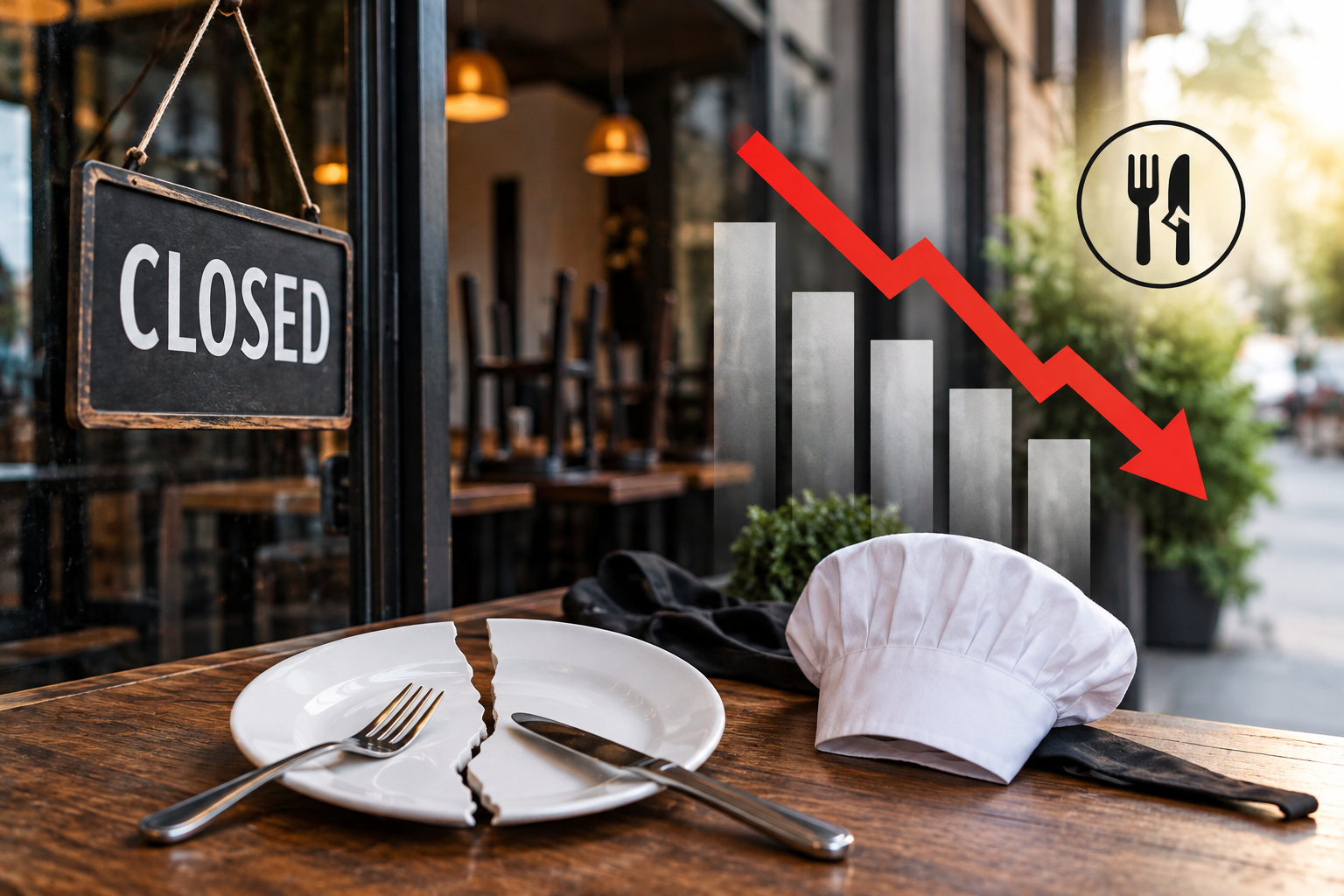
Questions about restaurant failure rates are common because opening a restaurant requires significant financial and operational commitment. There is no single percentage that accurately describes every new restaurant because results vary by market, concept, ownership experience, capitalization, location, pricing, and economic conditions. A useful analysis therefore looks beyond a single headline number and examines the factors that influence whether a new operation survives and becomes sustainable.
For readers researching what percentage of new restaurants fail, the most useful approach is to connect the search topic with practical restaurant decisions.
Why Restaurant Failure Statistics Are Difficult to Interpret
Restaurant failure statistics are often repeated without explaining how failure is defined. A business may close permanently, change ownership, rebrand, relocate, or convert into a different concept.
A study may also examine a particular city, period, restaurant type, or group of establishments. These differences make it risky to treat one percentage as a universal rule for every new restaurant.
What Percentage of New Restaurants Fail?
The honest answer is that the percentage depends on the dataset and definition being used.
Widely repeated claims about restaurants failing within a particular period should be checked against the original study rather than treated as a fixed industry law. Operators can get more value from statistics by asking what population was studied, when the data was collected, and what counted as failure.
Why New Restaurants Struggle
Common challenges include inadequate startup capital, weak cash-flow planning, poor location selection, inconsistent food quality, high labor costs, uncontrolled food costs, inefficient menus, weak marketing, and underestimating the time needed to build repeat business.
Some concepts also open with unrealistic sales assumptions. When revenue falls short, fixed expenses can quickly put pressure on cash reserves.
Capital and Cash Flow
A restaurant can be busy and still experience financial stress. Sales must cover food, labor, rent, utilities, insurance, technology, repairs, marketing, taxes, debt service, and other costs.
Startup budgets should include working capital for the period before the business reaches stable operating performance. Cash-flow forecasting should also include slower days, seasonal changes, maintenance, and unexpected expenses.
Location and Market Fit
A good restaurant concept must fit its market. Demographics, nearby businesses, traffic, parking, visibility, delivery demand, competition, and customer spending patterns all matter.
A concept may perform well in one neighborhood and poorly in another. Market research should therefore be completed before signing a long lease or making major equipment purchases.
Menu and Operations
Menus influence both customer demand and operating complexity. A menu with too many ingredients can create waste and increase inventory requirements.
A menu that is too narrow may not generate sufficient demand. Operators should examine preparation time, equipment capacity, ingredient overlap, portion control, and contribution margins before finalizing the menu.
How Restaurant Owners Can Reduce Risk
Owners can reduce avoidable risk by preparing realistic financial projections, validating demand, testing menu items, building operating procedures, training staff, monitoring key metrics, and maintaining adequate cash reserves.
Regular review is important because a restaurant's assumptions change after opening. Actual sales and costs should replace estimates as soon as reliable operating data becomes available.
Final Takeaway
There is no universal failure percentage that predicts the outcome of every new restaurant.
The more useful approach is to understand why businesses close and build systems around those risks. Financial planning, market research, location analysis, menu engineering, operational discipline, and ongoing measurement can provide a stronger foundation than relying on a single industry statistic.
A Practical Way to Apply This Information
If you are researching what percentage of new restaurants fail, start by documenting your current assumptions and then compare them with actual restaurant data. Define the objective, identify the relevant numbers, establish a review period, and record what changed. This turns general information into a repeatable management process.
For a new restaurant, the process can begin before opening. Build a basic operating model, estimate sales and costs, identify the biggest risks, and create a short list of metrics that will be reviewed every week or month. For an existing restaurant, use historical performance to establish a baseline and then test improvements one at a time.
It is also useful to separate leading indicators from lagging indicators. Sales and profit show what has already happened, while measures such as customer inquiries, reservations, staffing coverage, food waste, online conversion, or order accuracy can provide earlier signals. The right indicators depend on the concept and business model.
Questions Restaurant Owners Should Ask
· What assumption behind this topic is most important to our restaurant?
· Which data can we use to test that assumption?
· What costs, operational constraints, or customer behaviors could change the result?
· How often should management review the metric?
· What action will be taken if performance moves outside the expected range?
Conclusion
What Percentage of New Restaurants Fail? Statistics, Causes & Insights should be approached as a practical restaurant-management topic rather than as a single universal rule. Conditions differ between concepts, locations, service models, and stages of business development. The strongest approach is to understand the underlying principles, use reliable business data, and adapt the analysis to the restaurant being evaluated.
Tools and structured planning can make this process easier. Restaurant Site Finder provides resources designed around restaurant research, planning, analysis, and decision-making. Using the right information at the right stage can help restaurant owners turn broad questions into specific, measurable actions.
Additional Considerations
Restaurant decisions rarely depend on one variable. Sales, costs, customer demand, staffing, equipment, location, competition, and management systems interact. A change in one area can affect several others. For example, adding a menu item can increase sales while also increasing inventory complexity, prep labor, equipment use, and waste. That is why decisions should be evaluated from both revenue and operating perspectives.
Documentation is another important part of good restaurant management. When assumptions, formulas, definitions, and review periods are documented, different managers can interpret the same information consistently. This is especially valuable for growing businesses and restaurant groups where reporting needs to remain comparable across locations.
Finally, restaurant analysis should lead to action. If a metric is tracked but nobody is responsible for reviewing it or responding to changes, the information has limited practical value. Assign ownership, set review dates, and record decisions. Over time, this creates a feedback loop in which the restaurant learns from actual performance and improves its operating plan.
Another useful practice is to establish a clear baseline before making changes. Record the current sales pattern, major costs, customer behavior, staffing levels, and operational constraints. Once the baseline is documented, management can compare the result of a change with the previous period. This makes it easier to distinguish a genuine improvement from a temporary fluctuation caused by seasonality, promotions, weather, holidays, or unusual events.
Restaurant owners should also consider the relationship between customer experience and financial performance. A cost reduction that slows service or reduces product quality may create additional problems through refunds, poor reviews, lower repeat visits, or weaker demand. Effective management therefore looks for sustainable improvements that reduce waste and inefficiency without removing the elements customers value.
For growing restaurant businesses, standardization becomes increasingly important. Definitions for sales, labor, food cost, prime cost, customer counts, and other metrics should be consistent across periods and locations. Standard definitions make comparisons more meaningful and help management identify whether a result is caused by a local issue or a broader change in the business.
Finally, the best restaurant planning process is iterative. Initial projections are estimates, while actual operating data becomes available after launch. Owners should update forecasts, revise assumptions, and document lessons learned. This approach creates a practical feedback loop: plan, operate, measure, investigate, improve, and plan again. It is more useful than relying on a single statistic, formula, or benchmark without context.

 English
 Arabic
 French
 Spanish
 Portuguese
 Deutsch
 Turkish
 Dutch
Dutch
 Italiano
 Russian
 Romaian
 Portuguese (Brazil)
