


Embroidery Digitizing Services for Professional Designs
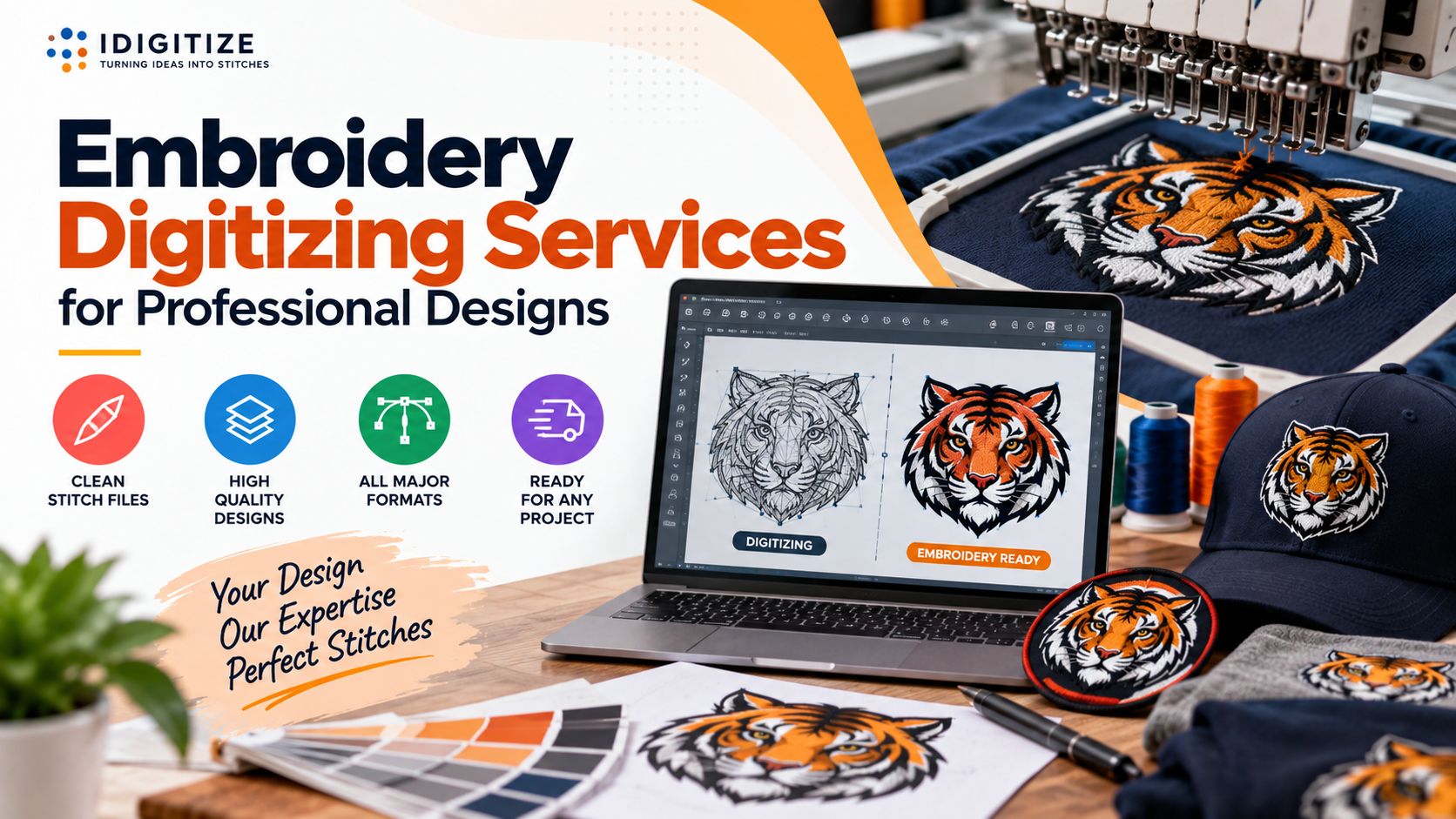
Professional embroidery begins with artwork that has been properly prepared for an embroidery machine. Our fast embroidery digitizing services turn logos, lettering, illustrations, and other artwork into machine readable stitch files. With professional embroidery digitizing services, we plan stitch types, density, direction, underlay, and sequencing according to the design and its intended embroidery application.
At iDigitize, we treat digitizing as a technical preparation process rather than a simple file conversion. An image tells you what a design should look like, while a digitized embroidery file tells the machine how that design should be stitched.
What Are Embroidery Digitizing Services?
Embroidery digitizing services convert artwork into digital stitch instructions for an embroidery machine. The digitizer recreates the design using embroidery stitches and determines how different parts of the artwork should be sewn.
This process can involve decisions about:
-
Stitch types
-
Stitch direction
-
Stitch density
-
Underlay
-
Stitch sequence
-
Start and stop points
-
Thread color changes
-
Small lettering
-
Fine design details
The goal is to prepare a machine readable file that reflects the original artwork while considering the practical requirements of embroidery.
Why Professional Designs Need Proper Digitizing
Artwork created for websites, printing, or social media cannot simply be sent to an embroidery machine. Digital images are built from pixels or vector shapes, while embroidery machines require stitch instructions.
A professional design may contain small lettering, thin outlines, overlapping shapes, gradients, or detailed elements. These features need to be interpreted for thread and fabric.
Good digitizing helps organize those elements into suitable stitches. It also considers how one section of the design interacts with another during the embroidery process.
That is why embroidery digitizing services are an important step between the original artwork and machine embroidery.
How We Prepare Professional Embroidery Designs
Every design has different requirements. We review the artwork and determine how its visual elements can be translated into stitches.
1. Review the Artwork
We start with the clearest artwork available. We examine lettering, shapes, outlines, colors, and small details.
A high quality JPG, PNG, PDF, or vector file can provide a useful reference. Clear source artwork reduces uncertainty about important design elements.
2. Consider Size and Placement
Embroidery size matters because thread has physical limitations. A detail that looks clear on a computer screen may become difficult to reproduce when embroidered at a very small size.
We therefore consider the intended dimensions and placement when planning the design.
3. Select Stitch Types
Different design elements may require different stitches.
Common choices include:
-
Satin stitches for lettering and narrow elements
-
Fill stitches for larger areas
-
Running stitches for lines and smaller details
Selecting appropriate stitch types helps translate the visual design into embroidery.
4. Plan Stitch Direction and Density
Stitch direction can influence the appearance and definition of embroidered shapes. Density determines how closely stitches are positioned.
These settings should be considered according to the artwork, fabric, size, and stitch type rather than applied identically to every design.
5. Organize the Stitch Sequence
The stitch sequence controls the order in which design elements are embroidered. We organize the sequence according to the structure of the artwork and the embroidery requirements.
Once the digitizing is complete, the design can be prepared in the required machine file format.
How Fabric Influences Embroidery Digitizing
Fabric is an important consideration because different materials respond differently to stitching.
For example, stretchy material behaves differently from a structured cap or a heavier jacket. Textured fabrics can also affect how fine details appear.
Depending on the project, digitizing decisions may involve adjustments to underlay, density, stitch type, or other elements.
Providing information about the intended garment or material gives us useful context before preparing the design.
Small Lettering and Fine Details Need Extra Attention
Small lettering is one of the areas where embroidery differs significantly from digital printing.
On a screen, tiny text can be represented with pixels. In embroidery, every letter must be formed with physical stitches and thread. If lettering is too small or complicated, details may become difficult to reproduce clearly.
The same principle applies to thin lines and highly detailed artwork.
Our embroidery digitizing services focus on translating the important visual elements into practical stitch instructions instead of assuming every pixel can be reproduced directly in thread.
Fast Digitizing and Professional File Preparation
Deadlines sometimes require artwork to be prepared quickly. Our fast embroidery digitizing services provide a relevant option when embroidery files are needed efficiently.
Clear project information is particularly useful when time matters. Before submitting your artwork, provide the required design size, intended product or fabric, machine format, and any important instructions.
Speed should not replace proper file preparation. Stitch types, sequence, density, and design details still need to be considered when creating a usable embroidery file.
Common Mistakes When Preparing Embroidery Designs
Several avoidable problems can affect embroidery file preparation.
Common mistakes include:
-
Sending unclear or very small artwork
-
Not providing the required embroidery dimensions
-
Ignoring the intended fabric
-
Using excessive stitch density
-
Overcomplicating small lettering
-
Using unsuitable stitch types
-
Poor stitch sequencing
-
Forgetting to confirm the machine format
Another common misunderstanding is treating embroidery digitizing as automatic image conversion. Changing a JPG or PNG into another file extension does not create proper stitch instructions.
Professional embroidery digitizing services require the artwork to be interpreted and prepared specifically for machine embroidery.
Which Embroidery File Format Should You Request?
The correct format depends on the embroidery machine or software being used.
Common embroidery formats include:
-
DST
-
PES
-
EXP
-
JEF
Other formats may also be required depending on the embroidery equipment.
If you are unsure which format to request, check your machine documentation or confirm the requirement with your embroidery provider. Choosing the correct format helps ensure that the finished digitized file fits your production workflow.
What Should You Send for Digitizing?
Providing complete information helps us understand your project before preparing the embroidery file.
Where possible, send:
-
The clearest version of your artwork
-
Required embroidery dimensions
-
Intended garment, fabric, or product
-
Required machine file format
-
Relevant thread color information
-
Any special design instructions
If your design contains very small text or unclear elements, an additional reference can also help explain how those details are intended to look.
Turn Your Artwork Into an Embroidery Ready Design
At IDigitize, our embroidery digitizing services prepare artwork for professional machine embroidery by considering stitches, design structure, density, sequence, fabric, and file requirements.
If you have a logo, lettering, illustration, or custom design that needs digitizing, send us your artwork along with the required size and project details. We can prepare a machine readable embroidery file suited to your intended application.
Frequently Asked Questions
What is professional embroidery digitizing?
Professional embroidery digitizing is the process of converting artwork into stitch instructions that an embroidery machine can read. It involves planning stitch types, density, direction, underlay, sequencing, and other details according to the artwork and intended embroidery application.
Can you digitize a JPG or PNG design?
Yes. JPG and PNG images can be used as source artwork. We use the image as a visual reference and recreate the design as embroidery stitches before preparing the required machine file.
Why do you need the embroidery size before digitizing?
Size affects how lettering, details, stitch types, and other design elements can be prepared. A design intended for a small chest logo may require different decisions from the same artwork prepared at a larger size.
Which embroidery format should I request?
The required format depends on your embroidery machine or software. DST, PES, EXP, and JEF are examples of embroidery file formats. We recommend confirming compatibility with your machine or embroidery provider before selecting the final format.
Can complex artwork be prepared for embroidery?
Complex artwork can often be adapted for embroidery, but some fine details may need careful interpretation because thread behaves differently from pixels or printed ink. Clear artwork, correct dimensions, and information about the intended fabric help us understand the project requirements.

 Arabic
 French
 Spanish
 Portuguese
 Deutsch
 Turkish
 Dutch
Dutch
 Italiano
 Russian
 Romaian
 Portuguese (Brazil)
 Greek
Greek
