


Europe Solar PV Energy Market Trends Shaping the Next Decade
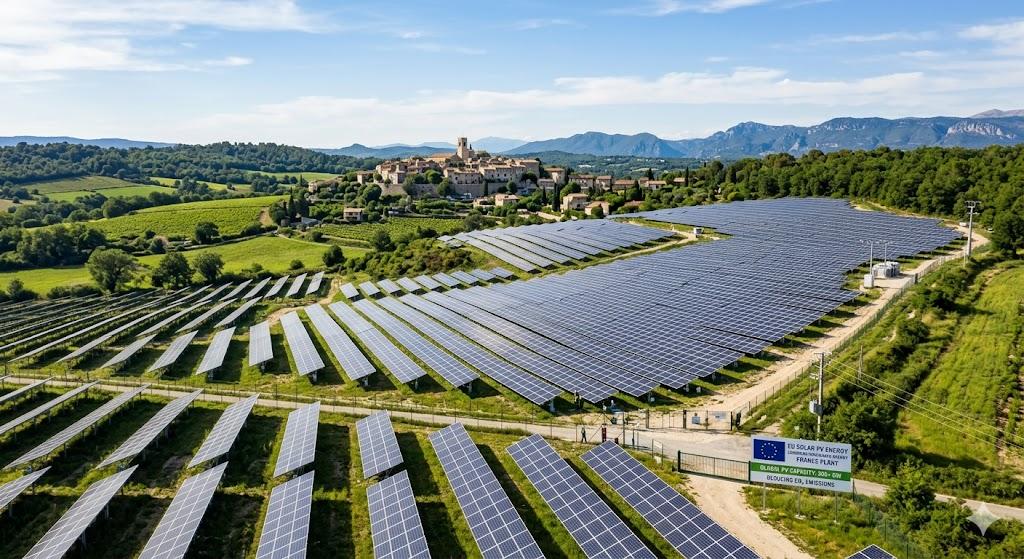
Europe Solar PV Energy Market: Growth Opportunities and Future Outlook
Europe’s solar power sector is entering a more mature phase. Capacity additions remain important, but project economics increasingly depend on where electricity is produced, how networks accommodate exports, and what price a photovoltaic asset actually captures. This shift is changing development priorities across residential rooftops, commercial installations, and utility-scale projects.
Solar PV remains central to Europe’s energy transition because it can be deployed across different scales, paired with storage, and integrated with existing buildings or land. Falling technology costs have improved project economics, while energy security objectives and decarbonization policies continue to support investment. However, the next stage requires stronger attention to grid readiness, revenue structures, and operational flexibility.
A major issue is price cannibalization. Solar generation is concentrated around daylight hours, and high photovoltaic penetration can create periods of abundant electricity when wholesale prices are low or even negative. As more capacity enters the same production window, the average market price can become a poor proxy for project revenue. Developers therefore need to evaluate captured prices by location, season, and operating profile rather than relying only on headline power prices.
Grid availability is another defining factor. Connection queues, substation limitations, reinforcement schedules, and export restrictions can delay projects even when equipment and financing are ready. A project with an attractive site may still face extended development timelines if network upgrades are uncertain. This makes grid mapping an increasingly important part of project screening and portfolio strategy.
The market is also becoming more segmented. Utility-scale solar offers substantial capacity growth, particularly in regions with strong irradiation and available land, but large projects can face congestion and merchant exposure. Commercial and industrial systems benefit from self-consumption because businesses can use generation behind the meter and reduce purchases during expensive periods. Residential solar remains relevant, although changes in incentives, export compensation, and household economics can influence installation rates.
Storage is becoming an important complement. Batteries can shift selected solar output toward higher-value hours, reduce exposure to negative prices, and help manage export constraints where regulations permit. Hybrid solar-plus-storage projects may therefore provide a more flexible revenue profile than standalone generation. Their economics depend on market rules, battery costs, dispatch opportunities, and connection arrangements.
Contract structures are receiving greater attention as well. Power purchase agreements can provide revenue visibility, but terms covering shaping, imbalance costs, volume risk, and termination can influence the actual level of protection. Public support mechanisms, including two-way contracts for difference in relevant markets, can also alter how developers and investors balance market exposure with revenue stability.
Technology innovation remains valuable, but its role is changing. High-efficiency modules, advanced inverters, digital monitoring, forecasting, and export-control systems can improve performance and compliance. The competitive advantage increasingly comes from combining hardware with strong engineering, grid knowledge, and commercial execution.
For investors, the central question is moving from how much solar Europe can install to how reliably projects can convert generation into cash flow. Detailed scenario analysis should consider connection timing, curtailment, captured prices, contract terms, operating costs, and financing conditions. These factors can separate apparently similar assets.
The Europe Solar PV Energy Market Growth outlook therefore centers on disciplined expansion. Europe is likely to keep adding photovoltaic capacity, but successful projects will increasingly be those designed around grid realities, flexible operations, credible offtake structures, and resilient revenue models. This evolution creates opportunities for developers, technology providers, financiers, and service companies that can address the practical constraints accompanying continued solar deployment.
As deployment broadens, data quality will matter more. Forecasting, transparent grid information, and consistent contract analysis can help market participants identify durable opportunities while reducing surprises during construction, commissioning, and long-term operations.

 English
 Arabic
 French
 Spanish
 Portuguese
 Deutsch
 Turkish
 Dutch
Dutch
 Italiano
 Russian
 Romaian
 Portuguese (Brazil)
