


How Does Gear Ratio Affect Zhanpeng Gear Motor Performance
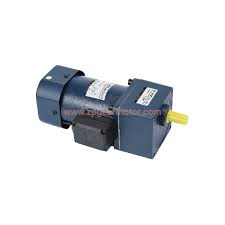
When a machine needs controlled movement within a limited installation area, choosing a suitable drive system requires careful consideration of speed, torque, load, motor power, installation position, and operating conditions. A Compact Gear Motor combines an electric motor with a reduction mechanism, allowing the rotational characteristics of the motor to be adapted to the requirements of the driven equipment. For machinery manufacturers and engineers, gear ratio is an important part of this process because it can influence the relationship between motor rotation, output speed, and available torque. Zhanpeng, represented through zpgearmotor, provides gear motor solutions for different mechanical applications, so how does gear ratio affect the actual performance of a Compact Gear Motor?
Understanding Gear Ratio
Gear ratio describes the relationship between the rotational speed of the motor and the rotational speed delivered by the gearbox output shaft. When a reduction mechanism uses a higher reduction ratio, the output shaft generally rotates at a slower speed than the motor shaft. At the same time, the reduction process can provide increased output torque within the operating limits of the motor and transmission system.
This relationship gives equipment designers a practical way to adapt motor rotation to different mechanical requirements. An electric motor may naturally operate at a rotational speed that does not match the movement required by a conveyor, feeder, roller, positioning system, lifting mechanism, or other machine component. Rather than changing the entire equipment structure, a suitable gearbox can modify the output characteristics.
For this reason, gear ratio should be considered together with the actual working conditions. A machine designed for controlled material movement may need steady output rotation, while a positioning mechanism can require a slower movement pattern with sufficient torque. The appropriate ratio depends on what the output shaft needs to accomplish rather than simply selecting a value based on motor size.
The Relationship Between Speed and Torque
One of the most important effects of gear ratio is the relationship between output speed and torque. Increasing the reduction ratio generally lowers the output speed while increasing the mechanical torque available at the output shaft, although actual performance depends on motor characteristics, transmission efficiency, load, and operating conditions.
This relationship can be useful in equipment where the motor itself rotates at a speed that is unsuitable for direct mechanical transmission. For example, a conveyor may need a controlled movement speed to transport products through a production process. A packaging mechanism may require coordinated roller movement, while a lifting structure may need controlled low-speed rotation and suitable torque for the connected load.
A lower reduction ratio can allow a higher output speed, which may be appropriate for mechanisms requiring quicker movement. A higher reduction ratio can support slower movement where torque demand is a significant design consideration. Neither configuration is suitable for every application, so the desired output speed and expected load should be established before selecting the gearbox.
The motor's rated performance also needs to be considered. Gear reduction does not create unlimited mechanical power. Transmission losses, motor capacity, thermal conditions, and operating cycles all influence the actual output available to the equipment.
Why Compact Machines Require Careful Selection
Compact equipment often has strict limitations on installation space. The motor and gearbox must fit within the available housing while still providing the required movement. This makes gearbox selection part of the mechanical design rather than a simple purchasing decision.
A smaller drive unit may be suitable for compact automation equipment, office machinery, household appliances, laboratory devices, or other equipment where internal space is limited. However, reducing physical size should not be separated from the required torque, speed, duty cycle, and load characteristics.
The orientation of the gearbox can also influence equipment layout. An inline arrangement can suit a machine where the motor and driven shaft follow a similar direction. A right-angle arrangement may be useful when the available space requires a different shaft orientation. These structural choices can influence how the drive unit is integrated into the finished machine.
Zhanpeng provides different gear motor configurations for various equipment requirements, allowing designers to consider mechanical structure together with transmission characteristics. This type of product selection can be useful when a machine has specific dimensional or installation limitations.
Matching Gear Ratio With the Application
Different applications require different combinations of speed and torque. A conveyor system may prioritize steady output movement, while a positioning mechanism may focus on controlled rotation and repeatable operation. Packaging equipment can require coordinated movement between rollers, feeders, cutting mechanisms, or other moving components.
Automation systems also place specific demands on motor selection. A compact machine may need a motor that fits within a narrow housing while delivering a defined output speed. Robotics can involve repeated movement and changes in operating direction. Medical and laboratory equipment may place attention on compact construction and controlled mechanical movement.
For each application, engineers should consider the load at the output shaft rather than looking only at the motor's unloaded rotation. Starting conditions are also important because a mechanism can require different torque characteristics when it begins moving compared with its normal operating state.
The duty cycle should also be reviewed. A motor operating intermittently may experience different thermal conditions from a motor running continuously. Ambient temperature, ventilation, vibration, and installation orientation can also influence the suitability of a particular configuration.
What Information Should Be Prepared?
Before discussing a gear motor with a supplier, equipment manufacturers can prepare several key pieces of information. Required output speed is one of the first specifications to identify. The expected load, required torque, available voltage, running time, installation dimensions, shaft arrangement, and control method should also be considered.
It is useful to specify whether the required speed refers to the motor shaft or the gearbox output shaft. These values can differ substantially depending on the selected reduction ratio. The expected operating load should also be described because actual output speed and torque can vary under different working conditions.
Installation details are equally important for compact machinery. Available mounting space, shaft direction, mounting holes, connector position, and surrounding components can affect the final configuration. Providing these details during the early design stage allows a supplier to understand the mechanical environment rather than evaluating the motor as an isolated component.
Application conditions should also be communicated. Temperature, humidity, dust, vibration, working frequency, and starting or stopping requirements can all influence product selection. A clear technical description gives the supplier useful information for discussing an appropriate configuration.
Zhanpeng Gear Motor Solutions
Zhanpeng focuses on gear motor products designed for different equipment and transmission requirements, with product information covering AC gear motors, DC gear motors, brushless gear motors, inline structures, right-angle structures, and compact drive applications. Its website gives machinery manufacturers a convenient place to review product categories and identify configurations that may correspond with different mechanical layouts.
For projects requiring a compact AC drive, the small AC gear motor range can be reviewed at https://www.zpgearmotor.com. When contacting Zhanpeng, manufacturers can provide the required output speed, load, torque, available voltage, installation dimensions, working cycle, and transmission direction so the technical team can understand the actual application. A Compact Gear Motor selected around these working conditions can form a practical part of automation equipment, conveying systems, packaging machinery, office devices, household equipment, and other space-conscious mechanical products, while zpgearmotor gives buyers a direct channel to explore suitable gear motor configurations with the Zhanpeng team.

 English
 French
 Spanish
 Portuguese
 Deutsch
 Turkish
 Dutch
Dutch
 Italiano
 Russian
 Romaian
 Portuguese (Brazil)
 Greek
Greek
