


Guanghe Baking Paper Improves Non-Stick Baking Results
In professional baking environments and modern home kitchens alike, Baking Paper plays an important role in improving cooking efficiency, maintaining food hygiene, and ensuring consistent baking results. Positioned between the baking tray and the food surface, it helps prevent sticking, distributes heat evenly, and simplifies cleanup while supporting a wide range of baking processes. As culinary practices continue to evolve, high-quality baking paper has become an essential material for both small-scale baking and large food production operations.
Fiber Structure and Base Paper Manufacturing
The performance of baking paper begins with the selection of cellulose fibers used in the base paper. Carefully processed wood pulp fibers are refined to create a uniform sheet with balanced strength and flexibility. The refining process increases fiber bonding, improving the paper’s resistance to tearing while maintaining enough flexibility to fit trays and molds easily.
During the papermaking stage, fiber dispersion and sheet formation are precisely controlled to achieve consistent thickness and density. Even fiber distribution ensures that the paper remains flat during heating and avoids weak points that could lead to tearing or deformation. Moisture management during drying is also important because excess moisture may cause curling or instability when exposed to high oven temperatures.
Manufacturers such as Zhejiang Guanghe New Materials Co., Ltd. focus on controlling these early-stage processes to produce base paper with reliable structural characteristics. Consistency in the base material is the foundation for achieving stable performance in later coating and finishing steps.
Silicone Coating Technology
A defining feature of modern baking paper is the application of a food-grade silicone coating. This coating creates a non-stick surface that allows baked goods to be removed easily from trays or pans without the need for additional oils or grease. The coating process typically involves evenly applying silicone to the paper surface and curing it at controlled temperatures.
Uniform coating distribution is essential. If the coating layer is uneven, certain areas may lose their non-stick properties or become overly saturated, which could affect heat transfer. Proper curing ensures the silicone bonds firmly with the paper fibers, maintaining stability even during repeated exposure to oven temperatures.
Silicone coating also contributes to grease resistance. During baking, fats released from dough or fillings are prevented from penetrating the paper, helping maintain a clean baking surface and protecting the tray beneath.
Heat Resistance and Temperature Stability
One of the most critical characteristics of baking paper is its ability to withstand high temperatures without losing structural integrity. Most baking processes occur between 160°C and 230°C, requiring paper that can maintain its strength and shape throughout the heating cycle.
Heat-resistant properties depend on both the fiber structure and the coating layer. The cellulose base must remain stable without burning quickly, while the silicone coating must resist degradation. Balanced porosity allows steam to escape gradually during baking, which can help maintain the desired texture of pastries, cookies, and bread.
In convection ovens, where air circulation is stronger, stable baking paper prevents the sheet from lifting or folding. This stability ensures that baked products maintain consistent contact with the baking surface and cook evenly.
Practical Handling and Usage Techniques
Using baking paper effectively can improve both efficiency and baking results. One of the most practical approaches is selecting sheet sizes that match the dimensions of baking trays. Properly fitted sheets reduce wrinkles and prevent movement during baking.
For round cake molds or irregular trays, bakers often fold or trim the paper to create a smooth lining. Pressing the sheet into the corners of the pan before adding batter helps keep the surface flat and stable. In professional bakeries, pre-cut sheets or roll dispensers are frequently used to streamline preparation.
Another useful technique is layering baking paper when handling sticky ingredients such as caramel or melted chocolate. Placing a sheet beneath and above delicate items can help protect the product during cooling or transport. In freezing applications, baking paper can separate layers of dough, preventing them from sticking together while maintaining product shape.
Culinary Applications Beyond Basic Baking
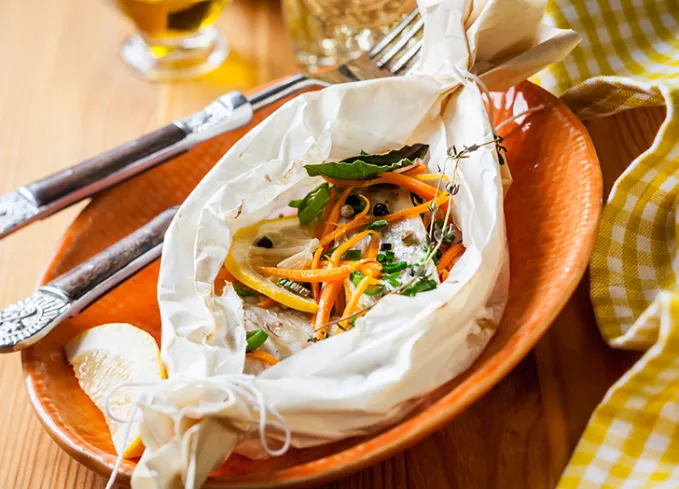
Although commonly associated with cookies and cakes, baking paper is used in many other culinary techniques. Roasting vegetables on lined trays helps prevent caramelized sugars from sticking to metal surfaces. Fish or poultry can be wrapped in paper for en papillote cooking, allowing ingredients to steam gently within a sealed paper pouch.
In confectionery production, baking paper provides a stable surface for cooling chocolate, sugar decorations, or candy mixtures. The grease-resistant coating prevents sugary liquids from soaking through the paper while maintaining a clean working environment.
Food preparation facilities and commercial bakeries also use baking paper during intermediate stages of production. It may be used to transport dough pieces between processing steps, protect trays during storage, or separate layers of baked goods before packaging.
Industrial Baking and Production Efficiency
In large-scale baking operations, consistency and efficiency are essential. Baking paper contributes to both by providing a uniform surface that reduces cleaning time between batches. Instead of scrubbing trays after every baking cycle, workers can replace the used sheet and prepare the next batch quickly.
Automated bakery systems often rely on standardized sheet sizes that fit conveyor ovens or baking racks. The paper must maintain strength and flexibility while passing through heating, cooling, and handling stages. Uniform sheet dimensions help maintain alignment on production lines, supporting consistent product quality.
The grease-resistant surface also helps preserve the condition of baking equipment. By reducing direct contact between food and metal trays, baking paper can extend the lifespan of baking tools and reduce maintenance requirements.
Hygiene and Food Safety Considerations
Food preparation environments require careful attention to cleanliness and contamination control. Baking paper supports hygienic food handling by providing a disposable barrier between food and equipment surfaces. After use, the sheet can be removed and replaced, reducing the need for repeated washing of trays and surfaces.
Because the silicone coating prevents grease absorption, the paper maintains a clean surface during the baking process. This characteristic is particularly helpful when handling multiple batches of food, as it reduces cross-contact between ingredients.
Manufacturers of food-contact materials follow strict production standards to ensure the safety of their products. Controlled raw materials, consistent processing conditions, and quality inspections help maintain compliance with relevant food safety requirements.
Baking Paper in Modern Culinary Practice
As baking methods continue to develop, materials used in the kitchen must support both efficiency and product quality. Baking paper remains one of the most versatile tools for bakers, chefs, and food manufacturers because it combines convenience, reliability, and adaptability across different cooking methods.
Its role extends beyond simply preventing sticking. From improving heat distribution to supporting hygienic food handling, baking paper contributes to many stages of the baking and cooking process. Advances in paper manufacturing and coating technology continue to enhance the functionality and durability of this widely used kitchen material.
Professionals and food businesses seeking detailed product specifications, formats, or manufacturing information can explore solutions offered by Zhejiang Guanghe New Materials Co., Ltd. through their official website: https://www.guanghepaper.com .

 English
 Arabic
 French
 Spanish
 Portuguese
 Deutsch
 Turkish
 Dutch
Dutch
 Russian
 Romaian
 Portuguese (Brazil)
 Greek
Greek
