


Snehapana Treatment in Delhi | A Traditional Ayurvedic Therapy
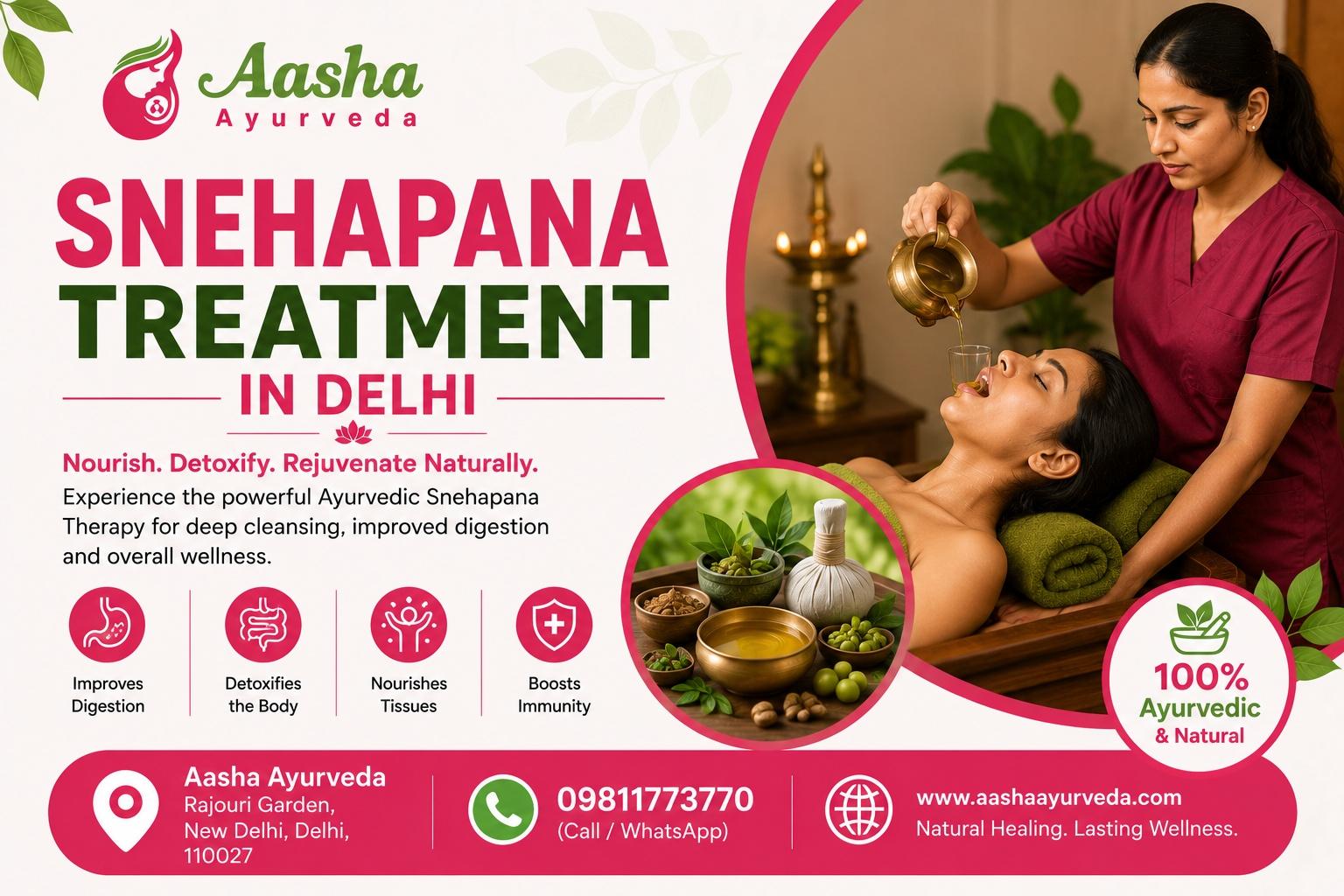
Ayurveda offers many traditional therapies designed to support the body and prepare it for specific treatments. Snehapana Treatment in Delhi is one such Ayurvedic procedure. Snehapana refers to the controlled internal intake of ghee or other suitable medicated oils under the guidance of an Ayurvedic practitioner. It is commonly used as part of the preparatory stage of Panchakarma, depending on the individual’s health condition and treatment plan.
What Is Snehapana?
The word Snehapana is derived from two Sanskrit terms: “Sneha,” which refers to oil, fat, or an unctuous substance, and “Pana,” which means taking or drinking. In this therapy, a prescribed quantity of ghee or medicated oil is given internally.
The type of substance, quantity, timing, and duration are not the same for everyone. An Ayurvedic practitioner considers factors such as digestion, constitution, health condition, and the purpose of treatment before deciding the procedure. Government Ayurveda training material also highlights the importance of selecting the appropriate Sneha, dose, duration, diet, and assessment according to the individual.
How Does Snehapana Work?
Snehapana is traditionally considered an internal oleation procedure. In Panchakarma treatment, it may be used before procedures such as Vamana or Virechana as part of Purvakarma, or preparatory therapy. Delhi government Ayurveda information also describes Snehana as an internal or external procedure that can be used before selected Panchakarma treatments.
The practitioner usually begins with an appropriate dose and observes how the person responds. Depending on the treatment plan, the dose may be adjusted over subsequent days. Classical and clinical descriptions show that the duration and quantity can vary according to digestive capacity and other individual factors.
Benefits of Snehapana Treatment
Snehapana has a traditional role in preparing the body for certain Ayurvedic cleansing procedures. Its commonly described purposes include supporting internal oleation and helping prepare the body for subsequent Panchakarma therapies.
Some people may also experience changes in digestion or bowel movements during the procedure. However, these effects can differ from person to person. Snehapana should therefore not be treated as a general “detox” remedy or self-care routine. It should be planned according to an individual assessment.
Snehapana Procedure in Delhi
If you are considering Snehapana Treatment in Delhi, the first step should be a consultation with a qualified Ayurvedic practitioner. During the consultation, the practitioner can understand your health history, digestion, current medicines, dietary habits, and the reason for considering the therapy.
The practitioner may then recommend a suitable Sneha, dose, schedule, and dietary routine. In some Panchakarma protocols, Snehapana is followed by other preparatory procedures such as Abhyanga and Swedana before the main cleansing procedure. A Central Ayurveda Research Institute protocol, for example, lists Snehapana followed by Abhyanga and Swedana before Virechana in a clinical study.
Why Choose Ayurvedic Care in Delhi?
Delhi has several government and private Ayurveda facilities where people can seek Ayurvedic consultation and treatment. The Directorate of AYUSH, Government of Delhi, lists Ayurveda facilities and government hospitals providing Ayurvedic services, including Ayurvedic and Unani Tibbia College & Hospital and Ch. Brahm Prakash Ayurved Charak Sansthan.
Choosing a qualified practitioner is important because Snehapana involves consuming concentrated amounts of fat or medicated preparations. The therapy may not be appropriate for everyone, particularly people with certain medical or digestive conditions. Proper assessment helps determine whether it is suitable.
Conclusion
Snehapana Treatment in Delhi is a traditional Ayurvedic internal oleation procedure that may be used as part of a personalized Panchakarma plan. The treatment involves carefully selected ghee or medicated oil and requires appropriate dosing, diet, monitoring, and professional guidance.
If you are interested in Snehapana, avoid starting it on your own. Consult a qualified Ayurvedic practitioner first so that the treatment can be planned according to your individual health needs and the intended Ayurvedic therapy.

 English
 Arabic
 French
 Portuguese
 Deutsch
 Turkish
 Dutch
Dutch
 Italiano
 Russian
 Romaian
 Portuguese (Brazil)
 Greek
Greek
