


Rectangle Plunge Pool Ideas for Modern Outdoor Spaces
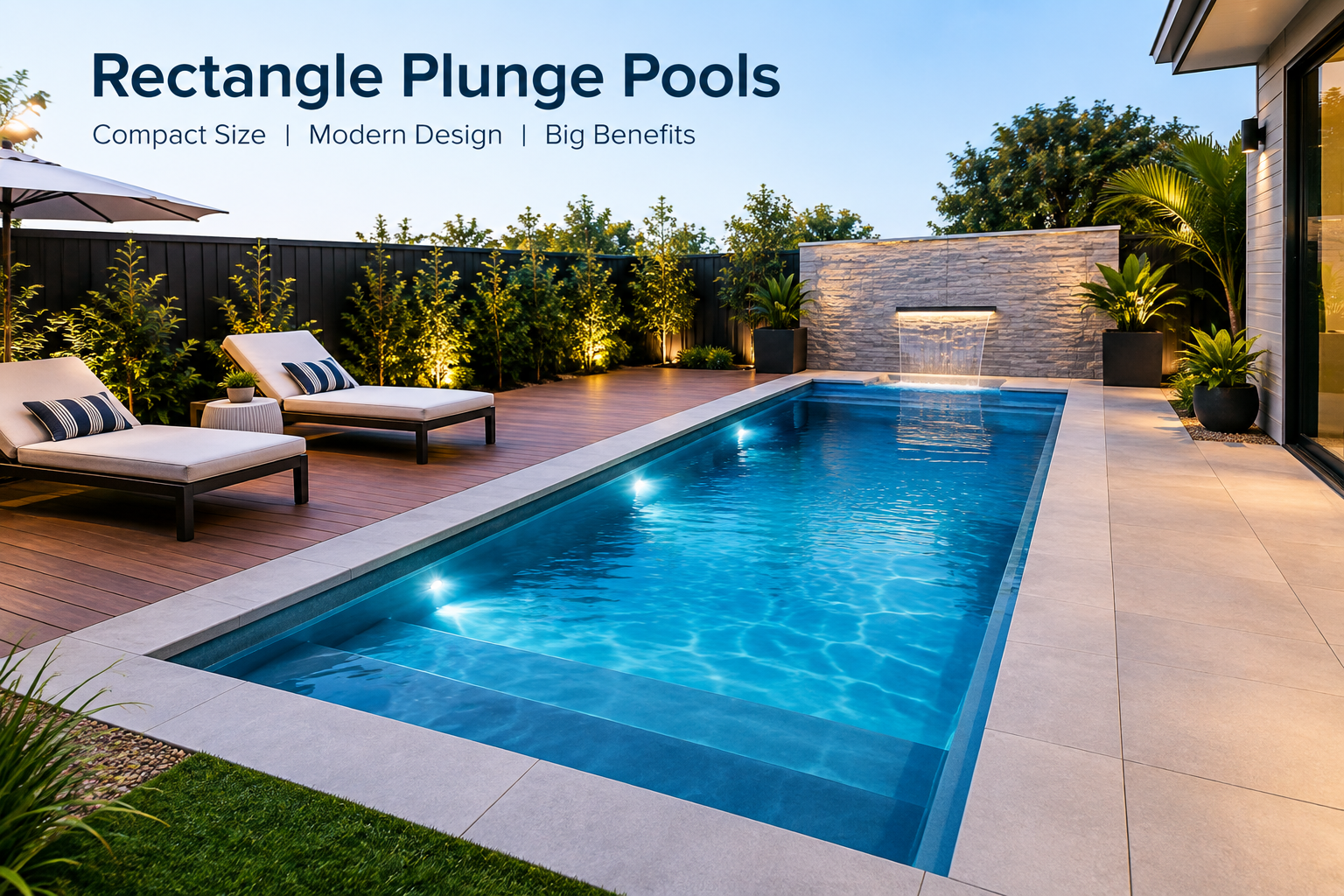
Modern outdoor spaces are increasingly designed as extensions of the home rather than simply areas of lawn and garden. A well-planned plunge pool can become the centrepiece of that environment, providing a place to cool off, relax, entertain, and enjoy the outdoors without requiring the footprint of a conventional swimming pool.
Among the many shapes available, rectangular designs are particularly suited to contemporary architecture. Their straight lines and defined proportions work naturally with modern houses, decks, paving, outdoor kitchens, gardens, and architectural landscaping. They can also make efficient use of narrow or compact areas.
The key, however, is not simply choosing a rectangular pool. The best result comes from designing the entire outdoor space around the pool, including circulation, seating, privacy, planting, lighting, access, drainage, and the relationship between the pool and the home.
Current plunge-pool designs increasingly combine compact dimensions with integrated seating, steps, lighting, water features, and carefully considered landscaping. New Zealand pool suppliers also offer compact rectangular designs specifically intended to make better use of smaller sections.
This guide explores practical and stylish rectangle plunge pool ideas for modern outdoor spaces, including small backyard layouts, landscaping concepts, feature options, colour choices, privacy solutions, and important planning considerations.
Why Choose a Rectangular Plunge Pool?
A rectangular plungee pool has a naturally architectural appearance.
Its clean geometry can complement:
- Contemporary homes
- Minimalist gardens
- Timber decking
- Concrete patios
- Large-format paving
- Outdoor kitchens
- Modern pergolas
- Privacy screens
- Architectural landscaping
- Narrow backyard spaces
Straight edges also make it easier to establish clear zones around the pool.
For example, one long side can border a deck, while the opposite side provides space for planting. One end can contain steps and a bench, leaving the central area open for cooling off and recreation.
The rectangular form can therefore be both aesthetically pleasing and highly practical.
Plungee's current rectangular design, for example, is approximately 4.8 metres long and 2.4 metres wide, with a compact footprint designed to provide substantial internal depth and usable swimming space. Its configuration includes a full-width ledge and cascading steps.
1. Create a Clean Minimalist Pool Design
Minimalism is one of the most effective design directions for a modern backyard.
Instead of filling the area with multiple decorative features, focus on a few strong elements:
- Simple pool geometry
- Neutral colours
- Clean paving
- Limited planting
- Integrated lighting
- Contemporary furniture
- Uncluttered circulation areas
A minimalist pool should feel intentional rather than empty.
For example, a rectangular pool can sit flush with a large-format paved terrace, with a narrow planting bed along one edge. A few architectural plants can provide greenery without making the area visually busy.
The result is a backyard that feels larger, calmer, and more connected to the architecture of the house.
Modern plunge-pool inspiration commonly uses straight-edged pools alongside patios, timber decking, restrained planting, and simple outdoor furniture.
2. Use the Pool as an Extension of the House
One of the strongest contemporary design approaches is to visually connect the pool to the home.
Instead of treating the pool as a separate backyard feature, align it with important architectural elements.
Consider aligning the pool with:
- Living-room windows
- Sliding doors
- Exterior walls
- Decking
- Architectural columns
- Outdoor dining areas
- Covered entertaining areas
For example, if your home's main living area opens onto the backyard, positioning the long edge of the pool parallel to the house can create a strong visual axis.
This makes the water feature visible from inside the home and gives the backyard a more cohesive architectural character.
3. Design a Narrow Pool for a Compact Backyard
A narrow rectangular design can be particularly effective where backyard width is limited.
Rather than trying to fit a large traditional swimming pool, use the available length efficiently.
A narrow plunge pool can run alongside:
- A house wall
- A boundary fence
- A deck
- A garden
- An outdoor entertaining area
The remaining space can then be used for circulation and seating.
The important point is to avoid designing the pool first and trying to fit everything else around it afterward.
Measure the entire usable area before selecting the pool dimensions. Remember to allow room for access, equipment, fencing, drainage, paving, and landscaping.
New Zealand pool designs demonstrate how compact footprints can still incorporate features such as seating and entry steps without sacrificing the main swimming area.
4. Add a Full-Width Bench or Relaxation Ledge
A built-in bench can significantly increase the functionality of a compact pool.
Instead of using valuable backyard space for separate pool furniture, integrated seating becomes part of the pool itself.
A bench can be used for:
- Sitting in shallow water
- Relaxing
- Socialising
- Supervising children
- Entering the water
- Taking a break from swimming
The positioning matters.
A full-width ledge at one end can create a visually strong termination point while leaving the central pool area open.
Plungee's rectangular design incorporates a full-width ledge and cascading steps as part of its compact layout.
5. Add Wide Entry Steps
Steps can become both a practical feature and an important design element.
Instead of using a small set of conventional steps, consider broad steps that occupy one end or corner of the pool.
Wide steps can create:
- Easier entry
- A place to sit
- A visual focal point
- A shallow-water relaxation area
- A seamless transition between different pool zones
When designing a modern pool, the steps should feel integrated into the overall geometry rather than added as an afterthought.
6. Combine Timber Decking With the Pool
Timber decking can soften the hard architectural appearance of a rectangular pool.
The contrast between water, concrete or pool surfaces, and natural timber can create a warm contemporary aesthetic.
Consider placing decking along one long side of the pool.
This can provide space for:
- Sun loungers
- Outdoor chairs
- Small tables
- Towels
- Plants
- Entertaining
For a stronger modern appearance, keep the decking lines parallel to the pool.
This reinforces the rectangular geometry while adding warmth.
7. Use Large-Format Pavers Around the Pool
Large-format paving is another excellent option for contemporary outdoor spaces.
Instead of numerous small tiles, larger slabs create fewer visual lines and can make the surrounding area feel more spacious.
Suitable materials may include:
- Concrete pavers
- Natural stone
- Porcelain
- Large-format outdoor tiles
- Architectural concrete
- Textured paving products
The selected surface should be suitable for wet outdoor conditions and provide appropriate slip resistance.
Colour is also important.
Light neutral paving can create a bright, spacious appearance, while darker surfaces can produce a dramatic architectural look.
8. Create a Resort-Inspired Backyard
You do not need a huge property to create a resort-like outdoor environment.
A compact rectangular pool can become the centre of a small private retreat when combined with carefully selected elements.
Consider:
- Comfortable outdoor loungers
- Soft landscape planting
- Warm lighting
- Privacy screening
- A pergola
- Outdoor shower
- Natural stone
- Timber details
- Feature plants
The goal is to create an experience rather than simply installing a pool.
A small pool surrounded by thoughtfully selected materials can feel considerably more luxurious than a larger pool surrounded by disconnected landscaping.
9. Add a Water Feature for Visual Interest
Water features can introduce movement and sound into a modern backyard.
Popular options include:
- Slim water walls
- Spillways
- Bubblers
- Deck-level cascades
- Scuppers
- Small fountains
A water feature should complement the rectangular architecture rather than overwhelm it.
For example, a narrow waterfall positioned on the end wall can create a strong focal point without consuming additional floor space.
A modern Auckland pool renovation demonstrates how a rectangular water feature can be incorporated into a contemporary plunge-pool environment to update an older design.
10. Use Lighting to Transform the Pool at Night
Outdoor lighting can dramatically change the appearance of a pool after sunset.
Underwater lighting can create a soft glow through the water, while surrounding lighting can highlight architectural and landscaping features.
Consider combining:
- Underwater LED lights
- Step lighting
- Pathway lights
- Deck lighting
- Wall lights
- Garden uplighting
- Subtle architectural lighting
Avoid excessive brightness.
Modern outdoor lighting usually works best when it creates layers rather than illuminating everything equally.
11. Choose a Strong Pool Interior Colour
The interior finish influences how the water looks.
Depending on the material and surrounding environment, different finishes can produce blue, turquoise, grey, greenish, or deeper tones.
For a modern outdoor space, popular design directions include:
Light Neutral
Creates a bright and contemporary appearance.
Soft Blue
Provides a classic pool aesthetic.
Deep Blue
Creates a richer, more dramatic appearance.
Grey
Works particularly well with concrete, stone, and minimalist architecture.
Dark Charcoal
Can create a sophisticated visual effect, although the appearance will depend heavily on sunlight, water depth, and surroundings.
Plungee offers multiple epoxy finish options for its rectangular model, including colours such as Pacific Blue, Adriatic, Serenity, Platinum, Slate, Deep Ocean, and Regency White.
12. Create a Pool-and-Deck Combination
If your backyard is small, integrating the pool with the deck can make the entire area feel more cohesive.
Instead of separating the pool from the entertaining space, use similar materials and aligned edges.
For example:
House → Deck → Pool → Garden
This creates a clear visual progression.
A deck can also provide a comfortable transition between indoor and outdoor areas.
13. Add Privacy Without Making the Yard Feel Closed
Privacy is often important in urban and suburban backyards.
However, completely enclosing a pool with tall solid fencing or dense vegetation can make a small area feel cramped.
Instead, consider layered privacy.
Options include:
- Slatted timber screens
- Vertical planting
- Hedges
- Architectural trees
- Pergolas
- Decorative fencing
- Outdoor curtains
- Green walls
A partially open privacy screen can block direct views while allowing light and airflow to pass through.
This approach is particularly effective for contemporary homes.
14. Use Vertical Landscaping
When horizontal space is limited, look upward.
Vertical landscaping can provide greenery without taking valuable floor area away from the pool.
Ideas include:
- Vertical gardens
- Climbing plants
- Tall grasses
- Narrow trees
- Green walls
- Planter boxes
- Wall-mounted planters
This technique can soften hard surfaces while maintaining a clean footprint.
15. Create a Tropical-Inspired Rectangle Pool
A tropical aesthetic can work surprisingly well with geometric pool shapes.
Combine the clean rectangular pool with:
- Large leafy plants
- Palms
- Natural stone
- Timber
- Warm lighting
- Textured walls
The contrast between geometric architecture and organic planting creates visual interest.
Keep the planting controlled, however. Too many plants around a compact pool can create maintenance challenges and make the space feel crowded.
16. Design a Black-and-White Modern Pool Area
For a sophisticated architectural look, consider a restrained monochromatic palette.
For example:
- White exterior walls
- Charcoal paving
- Dark pool interior
- Black outdoor furniture
- Green plants as natural accents
The pool then becomes a strong visual feature without relying on excessive decoration.
This style works particularly well with contemporary homes featuring large windows and simple geometric forms.
17. Integrate an Outdoor Kitchen
If your backyard is primarily used for entertaining, consider positioning the pool close to an outdoor kitchen or barbecue zone.
A good layout should keep cooking and dining areas close enough to the pool for social interaction while maintaining clear walking routes.
Avoid placing cooking equipment immediately beside the water where splashing and traffic could become problematic.
Instead, create distinct but connected zones:
Pool → Lounge → Dining → Outdoor Kitchen
This allows the backyard to function as one integrated living area.
18. Add a Pergola Beside the Pool
A pergola can provide shade while creating an architectural transition between different backyard zones.
It can be positioned:
- Along the long side of the pool
- At one end
- Beside an outdoor lounge
- Between the home and pool
- Over a dining area
A timber or aluminium pergola can complement the straight lines of a rectangular pool.
For smaller backyards, avoid oversized structures that dominate the entire area.
19. Create a Poolside Lounge
A pool does not need to be used only for swimming.
A compact lounge area can make the space useful throughout the day.
Add:
- Outdoor sofa
- Two lounge chairs
- Small coffee table
- Side tables
- Outdoor cushions
- Shade structure
Keep furniture proportional to the pool.
Oversized furniture can quickly consume the space you were trying to save with a plunge pool.
20. Make the Pool the Backyard Focal Point
A strong modern design usually benefits from one primary focal point.
For many homes, that focal point can be the pool.
You can strengthen its visual importance through:
- Symmetrical planting
- Architectural lighting
- Contrasting paving
- Feature walls
- Water features
- Carefully positioned furniture
Rather than adding multiple competing features, allow the pool to remain the visual anchor.
21. Consider a Cold-Water Wellness Zone
A modern plunge pool can also be designed around wellness and recovery.
Some homeowners want a dedicated cold-water experience rather than a traditional recreational pool.
If you are considering a Cold Plunge Pool NZ design, think carefully about the intended water temperature, filtration, sanitation, insulation, accessibility, and whether the system is designed specifically for cold-water use.
This is different from simply filling a conventional pool with cold water.
A dedicated cold-plunge setup may require equipment and design considerations that differ from those of a recreational swimming pool. The choice should therefore be based on how you actually intend to use the pool.
22. Use a Precast Concrete Pool for a Strong Architectural Look
Precast construction can be attractive for homeowners who want a solid, architectural pool without building the entire shell on site.
With controlled manufacturing, the pool shell can be produced before delivery and installation.
Plungee describes its pools as custom-poured precast concrete structures, with the rectangular model supplied with integrated equipment and features depending on the selected package.
Precast designs can work particularly well with modern architecture because the clean geometry of the pool complements straight building lines.
23. Design Around Delivery and Installation Access
One of the most overlooked parts of pool planning is getting the finished pool into the backyard.
This is especially important for precast pools.
Before choosing a design, investigate:
- Property access
- Driveway width
- Gate dimensions
- Overhead power lines
- Crane or lifting requirements
- Street access
- Ground conditions
- Excavation requirements
- Installation area
Plungee's installation guidance specifically notes that homeowners need to consider delivery and crane or Hiab access when planning a precast pool.
A beautiful design is only useful if it can actually be delivered and installed safely.
24. Keep Safety in the Design From the Beginning
Safety should be incorporated into the pool design rather than added afterward.
Consider:
- Appropriate fencing
- Non-slip surfaces
- Safe entry steps
- Adequate lighting
- Clear walkways
- Secure equipment areas
- Supervision zones
- Local pool regulations
Some compact pool designs incorporate safety ledges or shallow areas into the pool structure.
Always check the regulations that apply to your property before construction.
25. Plan for Maintenance Access
A modern pool should look beautiful, but it also needs to be practical to maintain.
Make sure there is sufficient access around:
- Pumps
- Filters
- Chlorination equipment
- Electrical components
- Plumbing connections
Avoid creating a beautifully landscaped area that makes essential equipment impossible to reach.
A good design balances appearance with long-term practicality.
26. Use the Same Geometry Throughout the Backyard
One of the easiest ways to make an outdoor space look professionally designed is to repeat the pool's geometry elsewhere.
If the pool is rectangular, use rectangular forms for:
- Paving
- Decking
- Planter boxes
- Outdoor furniture
- Pergolas
- Feature walls
- Garden beds
This repetition creates visual consistency.
You do not have to make everything identical. Instead, repeat similar proportions and lines.
27. Combine Straight Architecture With Organic Planting
A completely geometric backyard can sometimes feel too hard.
Balance the straight pool edges with softer natural elements.
For example:
Rectangular pool + timber deck + curved planting + ornamental grasses
This combination creates contrast while keeping the overall design contemporary.
Plants can also help soften boundary walls and create privacy.
28. Create a Narrow Backyard Retreat
Long, narrow backyards can actually work well for rectangular plunge pools.
Place the pool along the property's primary axis and use the remaining space for circulation and planting.
A possible layout could be:
House
↓
Outdoor dining
↓
Rectangular plunge pool
↓
Garden / privacy planting
This arrangement creates a strong visual perspective from inside the home.
The elongated proportions of a rectangular pool can also make a narrow yard feel intentional rather than constrained.
29. Think About the Pool From Inside the House
A commonly overlooked design perspective is the view from indoors.
Stand near your main living-room windows and imagine what you want to see.
A pool can become a beautiful year-round visual feature even when nobody is swimming.
Consider:
- Pool alignment
- Water colour
- Lighting
- Landscaping
- Feature walls
- Planting
- Decking
The best outdoor designs work from both directions: the backyard should look good from outside, and the view from inside should also feel considered.
30. Build a Complete Outdoor Living Environment
The most successful modern plunge-pool projects are rarely just about the pool.
They combine several elements into one cohesive environment:
Pool + Deck + Landscaping + Lighting + Seating + Privacy + Architecture
This integrated approach is particularly useful for smaller properties because every square metre needs to serve a purpose.
New Zealand's contemporary outdoor-design guidance increasingly treats pools as part of broader outdoor living environments, with decks, paving, planting, and entertaining areas designed around the pool rather than separately from it.
How to Choose the Right Rectangle Plunge Pool Design
Before selecting a model, answer five basic questions.
1. How Much Space Do You Have?
Measure the complete usable backyard rather than just the proposed pool footprint.
Include:
- Pool
- Surrounding paving
- Fencing
- Access
- Landscaping
- Equipment
- Outdoor furniture
2. How Will You Use It?
Do you want the pool primarily for:
- Cooling off?
- Relaxation?
- Family use?
- Entertaining?
- Light exercise?
- Wellness?
- A combination of these?
Your intended use should influence dimensions and features.
3. How Many People Will Use It?
A pool intended for one or two adults can have a very different configuration from one used regularly by a family.
Consider seating, entry points, open swimming space, and circulation.
4. What Style Is Your Home?
A pool should complement the architecture.
Modern homes generally pair well with clean geometric designs, while softer landscaping may benefit from rounded or organic forms.
5. What Is Your Long-Term Maintenance Plan?
Consider cleaning, water treatment, filtration, equipment access, covers, and landscaping maintenance before committing to a design.
Rectangle Plunge Pool Ideas: Features Worth Considering
Depending on your budget and intended use, useful features may include:
- Integrated steps
- Bench seating
- Full-width ledges
- Underwater LED lighting
- Water jets
- Automated filtration
- Saltwater or mineral chlorination
- Heating
- Pool covers
- Privacy screens
- Water features
- Outdoor showers
Not every feature is necessary.
A common design mistake is adding too many features simply because they are available.
Choose features that improve the way you actually intend to use the pool.
Final Thoughts
A modern rectangular plunge pool can do much more than provide a place to cool off. With thoughtful planning, it can become the architectural centre of your backyard and connect the home, landscaping, entertaining areas, and outdoor lifestyle into one cohesive space.
The strongest designs usually start with the property rather than a catalogue.
Measure the available space. Consider how the pool will be used. Plan delivery and installation access. Decide where people will sit, walk, entertain, and relax. Then select materials, colours, lighting, landscaping, and features that support that overall vision.
For homeowners looking for a design-led precast plunge pool solution in New Zealand, Plungee Pools offers the Rectangle Plungee as part of its range of compact concrete plunge pools.

 English
 Arabic
 French
 Spanish
 Portuguese
 Deutsch
 Turkish
 Dutch
Dutch
 Italiano
 Romaian
 Portuguese (Brazil)
 Greek
Greek
