


Digital Battery Passport Solutions: A Complete Guide to Battery Traceability, Compliance, and Lifecycle Data
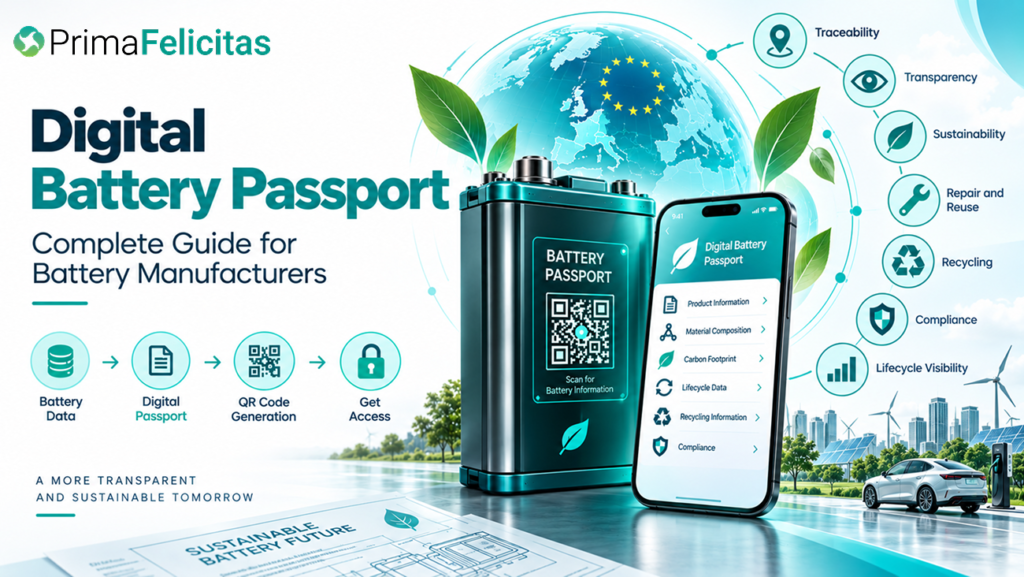
Digital Battery Passport Solutions are becoming increasingly important as battery manufacturers need better ways to manage battery data, traceability, lifecycle information, and regulatory compliance. The battery industry is moving toward greater transparency and lifecycle-level data management. One of the major developments is the Digital Battery Passport (DBP), which provides a digital record of relevant information about a battery model and, where applicable, an individual battery throughout its lifecycle.
For battery manufacturers, the Digital Battery Passport is more than simply creating a digital document. It involves collecting, validating, managing, and sharing battery information with the appropriate stakeholders.
Why Is the Digital Battery Passport Important?
A Digital Battery Passport Solution can connect important information throughout the battery lifecycle. This can support traceability, transparency, sustainability, repair, reuse, recycling, and regulatory compliance.
Battery data may include identification details, technical characteristics, manufacturer information, performance and durability data, sustainability information, and information related to repair, reuse, repurposing, and recycling.
By bringing this information together, manufacturers and other organizations across the battery value chain can have a more structured approach to managing important battery information.
Battery Data and System Integration
One of the practical challenges of implementing a Digital Battery Passport is bringing data together from different systems. Depending on the implementation, information may come from ERP, MES, PLM, BMS, IoT, supplier systems, and recycling systems.
Digital Battery Passport Software can help organizations organize and manage this information while connecting relevant data sources. A structured data architecture can help manufacturers connect these sources, validate information, and make the required data available through the Battery Passport.
Organizations may also consider Digital Battery Passport Solutions that are designed around their existing technology infrastructure and specific business requirements.
Battery Traceability Across the Lifecycle
Battery Traceability Software can connect information from materials and cells through modules, packs, use, reuse, and recycling. This creates a more complete view of the battery rather than treating each stage as a separate record.
A Battery Traceability System can help organizations understand where battery-related data originates and how that information is maintained throughout different stages of the lifecycle.
For manufacturers preparing for Battery Passport requirements, Battery Traceability Solutions can provide a structured approach to managing information across the battery value chain.
Battery Traceability Platform Development
Every organization may have different requirements for battery data management and traceability. As a result, some businesses may require customized technology rather than a standard platform.
Battery Traceability Platform Development can involve designing systems that connect battery information from different sources and make relevant data accessible throughout the lifecycle.
A Custom Battery Traceability Solution can also be designed according to an organization's existing systems, data requirements, workflows, and business processes.
Battery Passport Development Solutions
Implementing a Battery Passport can require several technical and operational steps. These may include identifying batteries in scope, mapping required data, collecting and validating information, preparing identifiers and QR codes, connecting existing systems, testing workflows, and establishing processes for maintaining lifecycle information.
Battery Passport Development Solutions can help organizations plan and develop the technology required to manage these processes.
Depending on business requirements, organizations can explore Battery Passport Solutions, Custom Battery Passport Solutions, or Battery Passport Platform Development approaches.
Preparing for Battery Passport 2027
Preparation for Battery Passport requirements can involve more than simply creating a digital record. Organizations need to understand their data sources, identify the information they need to maintain, establish processes for data validation, and determine how information will be shared with relevant stakeholders.
The EU Battery Passport requirement for covered batteries begins on 18 February 2027, making early preparation important for organizations that will be affected.
A well-planned approach can help manufacturers prepare their systems and processes for managing battery information and traceability requirements.
Choosing the Right Battery Passport Solution
When selecting a Battery Passport technology partner, organizations should consider factors such as data management capabilities, system integration, scalability, security, customization, and ongoing support.
The right Battery Traceability Solution should align with the organization's existing technology environment and provide a practical way to manage battery information across its lifecycle.
Businesses can also evaluate Custom Digital Battery Passport Solutions when they require specific workflows, integrations, or functionality that may not be available through a standard platform.
Conclusion
The Digital Battery Passport is becoming an important part of the battery industry's move toward greater transparency, traceability, sustainability, and lifecycle-level information management.
From Digital Battery Passport Software and Battery Traceability Software to customized Battery Passport Solutions and Battery Traceability Platform Development, organizations have different approaches available depending on their requirements.
For manufacturers preparing for upcoming Battery Passport requirements, understanding data sources, system integration, traceability, and lifecycle information management can be an important part of the implementation process.
For a detailed overview of Digital Battery Passport requirements, implementation considerations, battery traceability, data architecture, and system integration, the Digital Battery Passport guide by PrimaFelicitas can be used as a reference.

 English
 French
 Spanish
 Portuguese
 Deutsch
 Turkish
 Dutch
 Italiano
 Russian
 Romaian
 Portuguese (Brazil)
 Greek
