


How Customized Metal Solutions Support Modern Product Development
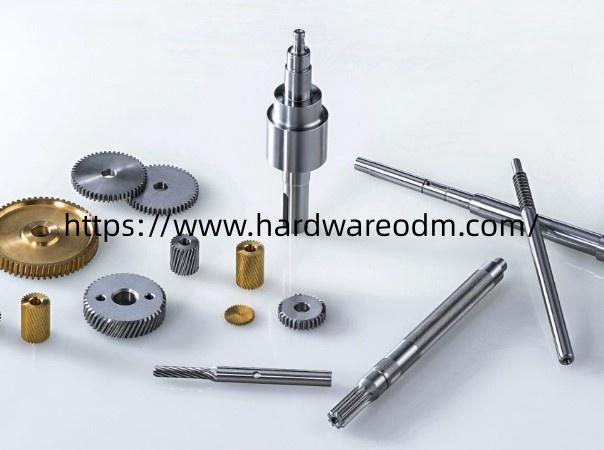
Metal selection is one of the earliest decisions in customized product development. Different materials provide different combinations of strength, corrosion resistance, machinability, surface characteristics, weight, and forming behavior. Common choices may include steel, stainless steel, aluminum, copper, and other metal materials, depending on the application. The important point is to select the material according to the component's working environment and structural role rather than treating material choice as an isolated purchasing decision.
Steel can be considered for components where structural support and mechanical stability are important. Stainless steel may be appropriate for products exposed to moisture or situations where a clean surface is desirable. Aluminum can be useful where weight and corrosion resistance are relevant, while copper can be selected for applications that benefit from its particular electrical and thermal characteristics. The final choice should always reflect the product's actual requirements.
The form of the raw material also affects the manufacturing approach. Sheet, plate, tube, bar, and other forms can support different product structures. Sheet metal may be suitable for covers, brackets, enclosures, and formed components, while tubes can be developed into frames, supports, handles, and structural assemblies. Starting with a suitable material form can help simplify subsequent processing and assembly.
Buyers should begin the selection process by identifying what the metal component needs to do. A custom part may function as a bracket, connector, support, protective cover, mechanical fitting, structural frame, or internal assembly component. Understanding its role helps determine the appropriate material, production method, surface treatment, and connection arrangement.
The relationship between the customized component and surrounding parts is equally important. Most metal components are installed alongside fasteners, shafts, bearings, electronic elements, plastic parts, or other metal structures. A part that appears suitable by itself may still create problems if its mounting arrangement does not correspond with the complete assembly. Sharing drawings, samples, or application information can give the manufacturer a clearer understanding of the intended product.
Manufacturing technology provides the bridge between a design concept and a finished component. Depending on the product, processes may include CNC machining, stamping, cutting, bending, forming, welding, pipe processing, or combinations of several methods. Yongkang Ruizan Industry and Trade Co., Ltd. states that it provides metal stamping, forming, finishing, pipe processing, production, and welding services, together with product design consultation, proofing, mold development, and production.
CNC machining can be useful when a component requires carefully controlled geometry, holes, grooves, threads, or contact surfaces. Stamping and forming can support shaped sheet-metal parts, particularly when the product structure is suitable for repeated production. Welding can connect separate metal sections, while pipe processing can create specialized tubular assemblies. Selecting the production route according to the component structure can help make manufacturing more practical.
Customization is particularly useful during OEM and ODM development. Standard components may not always fit a new product concept, especially when the design includes unusual mounting areas, specialized connections, integrated structures, or particular visual requirements. Ruizan's product range includes customized metal machining services, pipe-product processing, semiconductor module accessories, and wire-forming customization.
Surface treatment is another part of functional design. Depending on the material and application, polishing, brushing, plating, painting, or other finishing processes may be considered. Surface treatment can influence corrosion protection, cleaning convenience, tactile quality, and visual appearance. Buyers should discuss the intended environment before choosing a finish rather than selecting it solely according to color or visual preference.
Function and technology should remain connected throughout the development process. A metal component needs to interact properly with other parts while remaining practical to manufacture. Holes, bends, folds, threads, contact surfaces, and mounting points all affect the way a component is installed and used. Early engineering communication can reveal whether a design needs adjustment before production begins.
User experience starts during installation. Technicians benefit from parts that are easy to identify, handle, position, and fasten. Clear mounting features and logical geometry can make assembly more straightforward. When a component is designed around the actual installation process, unnecessary adjustment and interference with surrounding parts can often be reduced.
Maintenance should also influence the design. Industrial products may require inspection, cleaning, replacement, or adjustment during their service life. A component hidden behind several other parts can be difficult to access, even if its basic function is appropriate. Designers should therefore consider whether important connection points and service areas remain reasonably accessible after the product has been assembled.
The user's interaction with the final product can also depend on the tactile qualities of metal components. Smooth edges, appropriate surface finishing, clean joints, and well-integrated mounting structures can make equipment easier and more comfortable to handle. These details are particularly relevant when a metal component remains visible or accessible during everyday operation.
Appearance is another important aspect of customized metal design. Clean surfaces, consistent finishing, orderly joints, and coordinated shapes can help create a professional visual impression. For OEM products, the appearance of individual components can contribute to the overall identity of the finished equipment.
Good visual design should not be separated from practical function. A decorative feature that complicates cleaning or assembly may not provide a useful benefit, while a simple structural detail can improve both appearance and usability. The most practical approach is to consider how the metal component looks after installation and how it behaves during everyday use.
Customization also creates opportunities to integrate several functions into one metal structure. A bracket, protective cover, mounting plate, or support may combine several roles instead of requiring multiple separate components. This can influence assembly organization and make the overall product structure easier to understand.
Quality management is closely connected with customized production. Material preparation, tooling, machining, forming, welding, surface treatment, and inspection can all influence the finished component. Ruizan describes its production capabilities as including stamping equipment, machining facilities, pipe-processing equipment, and welding equipment, supporting different types of metal processing and fabrication.
Communication between buyer and manufacturer remains important throughout the process. A complete project discussion can cover material preferences, application conditions, assembly relationships, surface requirements, production methods, and expected user interaction. Ruizan states that customers can provide samples or drawings during early communication and that the company offers design consultation, proofing, mold development, and production services.
For purchasing teams and product designers, evaluating material selection, manufacturing technology, component function, installation, maintenance, surface treatment, user experience, and appearance together provides a practical framework for custom metal development. This approach can help connect an individual part with the larger product instead of treating it as an isolated component.
Yongkang Ruizan Industry and Trade Co., Ltd. focuses on customized metal manufacturing and related processing, with capabilities covering stamping, forming, machining, pipe processing, welding, mold development, and product design consultation. Its product portfolio includes customized metal machining services and other components developed for different industrial applications.
For more information about Yongkang Ruizan Industry and Trade Co., Ltd. and its customized metal processing solutions, visit https://www.hardwareodm.com/product

 English
 Arabic
 French
 Spanish
 Portuguese
 Deutsch
 Turkish
 Dutch
Dutch
 Italiano
 Russian
 Romaian
 Greek
Greek
