


Entrance Fire Door Security from CHENMA Factory
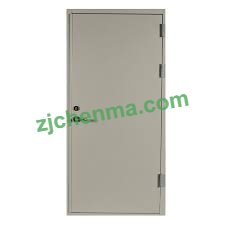
Property owners and facility managers often evaluate whether a single door can fulfill both fire containment and entry protection roles at the same time. Fire performance depends on materials that resist heat and maintain integrity under exposure while security depends on robust frames, multipoint locking, and resistance to forced entry. An Entrance Fire Door from zjchenma incorporates construction details that address both sets of demands within one assembly. Can an entrance fire door also provide good security features without compromising either function?
Frame construction forms the structural base. Steel or reinforced composite sections create a rigid perimeter that resists distortion under impact. The same rigidity supports the door leaf during fire conditions so the assembly remains in place and continues to block passage of flames and smoke. Continuous welding or secure mechanical joints keep the frame stable under both everyday use and emergency stress.
The door leaf itself receives layered attention. Core materials that achieve the required fire rating also contribute mass and stiffness that deter attempts to breach the surface. Outer skins of steel or specialized composites add further resistance to cutting or prying. Surface finishes protect the core while presenting a finished appearance suitable for entrance locations.
Locking systems integrate multipoint engagement. Bolts that extend into the frame at several locations distribute force and make forced entry more difficult. These mechanisms operate with standard handles or cylinders so daily use remains convenient. Compatibility with fire door certification ensures that the hardware does not reduce the fire performance of the overall assembly.
Hinges and closers contribute to both security and fire function. Heavy-duty hinges support the leaf weight and resist attempts to lift or remove the door. Self-closing devices ensure the door returns to the latched position after each opening, maintaining the fire barrier and the secure closed state. Adjustable tension allows fine control of closing speed for user comfort.
Sealing systems serve dual purposes. Intumescent strips expand under heat to seal gaps against fire and smoke. The same continuous contact around the perimeter reduces opportunities for tools to be inserted during an attempted forced entry. Compression seals also improve acoustic performance and weather resistance in everyday conditions.
Glazing options, when included, use fire-rated glass that maintains integrity under heat while offering visibility. Secure glazing beads and laminated layers resist impact, supporting the security role of the door. Placement of any vision panel follows certified configurations so fire performance remains intact.
Hardware selection follows certified lists. Locks, cylinders, and handles that appear on approved schedules maintain the fire rating while delivering the mechanical strength needed for security. Avoiding non-compatible additions preserves both certifications and long-term reliability.
Installation practices influence final performance. Correct anchoring of the frame to the surrounding structure ensures the assembly can resist both fire pressure and physical attack. Precise alignment of the leaf and hardware guarantees that multipoint locks engage fully and that seals compress evenly.
Buildings that require an Entrance Fire Door with integrated security benefit from reviewing available specifications and configuration details at https://www.zjchenma.com/product where zjchenma supplies clear product information that helps match the unit to the opening and supports selection of features serving both fire containment and entry protection.

 English
 Arabic
 French
 Spanish
 Portuguese
 Deutsch
 Turkish
 Dutch
Dutch
 Italiano
 Russian
 Romaian
 Greek
Greek
