


Solar System Companies in Pakistan: Choosing the Right Solar Partner
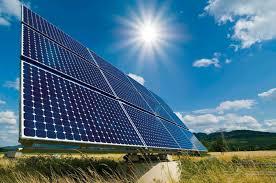
Pakistan has significant potential for solar energy because of its abundant sunlight and growing demand for reliable electricity. For households, businesses, industries, farms, and commercial properties, solar systems can help reduce dependence on conventional grid electricity and improve long-term energy planning. As electricity costs and energy requirements continue to change, choosing an experienced solar company has become an important decision.
When comparing solar system companies in Pakistan, customers should look beyond the initial installation price. A reliable solar provider should be able to understand electricity consumption, design an appropriately sized system, recommend suitable equipment, manage installation, provide monitoring, and support the system after commissioning. DSG Energy provides turnkey solar solutions for residential, commercial, industrial, and agricultural customers in Pakistan.
Why Solar Energy Is Growing in Pakistan
Electricity is a major operating expense for Pakistani households and businesses. Solar energy provides an alternative way to generate electricity directly from sunlight. A properly designed photovoltaic system can convert solar radiation into electricity for daily consumption.
The benefits depend on several factors, including system size, electricity consumption, available roof or land area, equipment quality, sunlight conditions, and how the system is operated.
For businesses, solar can also become part of a broader energy-management strategy. Commercial and industrial facilities often have substantial daytime electricity consumption, which can make solar generation particularly relevant to their energy planning.
However, solar should not be treated as a one-size-fits-all product. The right system depends on the customer's actual load profile and objectives.
What to Look for in Solar System Companies in Pakistan
There are many companies offering solar panels, inverters, installation, and related services. Before selecting a provider, customers should evaluate several important factors.
1. Engineering and System Design
A solar system should be designed according to actual electricity requirements rather than simply choosing a standard package.
A professional engineering team can assess electricity bills, connected loads, consumption patterns, available installation space, roof conditions, and other technical requirements. DSG Energy states that its solar solutions are designed by qualified engineers and customized according to customer requirements and energy utilization.
2. Quality of Solar Equipment
Panels and inverters are among the most important components of a solar installation. Equipment quality can affect energy production, reliability, monitoring, warranty support, and long-term performance.
DSG Energy says it uses equipment from manufacturers including Jinko, JA Solar, Canadian Solar, Trina Solar, and Huawei, depending on the project requirements.
Customers should always ask about the exact panel and inverter models being proposed rather than relying only on general descriptions such as "premium" or "Tier 1."
3. Installation Standards
Even good solar equipment can perform poorly if the installation is not properly engineered.
The mounting structure, panel orientation, wiring, earthing, protection systems, inverter placement, cable management, and waterproofing all require attention. Roof-mounted systems also need structures appropriate for the specific roof.
DSG Energy states that it provides customized solar structures for different installation requirements, including flat, beam, dome-shell, and shed structures.
4. Monitoring and Maintenance
Solar installation is not the end of the project. Customers need to know how the system will be monitored and maintained over time.
Monitoring can help identify production changes, equipment problems, or operational issues. DSG Energy offers cloud-based monitoring and describes its operations and maintenance services as part of its after-sales support.
Regular inspection and maintenance can also help keep panels and other equipment operating effectively.
DSG Energy Solar Solutions
DSG Energy provides renewable-energy solutions with a focus on solar power. Its services cover multiple market segments, including residential, commercial, industrial, and agricultural solar systems.
The company's approach is based around turnkey solar solutions, meaning customers can receive support across multiple stages of a project rather than purchasing individual components separately.
Its services include solar system design, equipment selection, installation, monitoring, net-metering support, financing assistance, and after-sales services.
This type of integrated approach can be useful for customers who want one provider to coordinate the technical aspects of a solar project.
Residential Solar Systems
For homeowners, solar can be used to generate electricity for everyday requirements such as lighting, appliances, cooling, water pumps, and other household loads.
DSG Energy identifies three common residential system categories:
- On-grid solar systems
- Hybrid solar systems
- Off-grid solar systems
Each configuration serves a different purpose.
On-Grid Solar
An on-grid system operates alongside the electricity grid. It can be suitable for properties that remain connected to utility electricity while generating part of their power through solar.
Hybrid Solar
A hybrid system combines solar generation with battery storage and grid connectivity. Depending on the design, batteries can provide additional flexibility when solar generation is unavailable.
Off-Grid Solar
Off-grid systems are designed for locations where grid electricity is unavailable or where independent power generation is required. Such systems generally require appropriate battery storage and careful load management.
The correct choice depends on electricity consumption, backup requirements, budget, and site conditions.
Commercial Solar Solutions
Businesses often have significant electricity requirements, making energy costs an important consideration.
DSG Energy provides commercial solar solutions designed around grid-tied, hybrid, and off-grid configurations. Its commercial offering includes system design, return-on-investment calculations, energy conservation considerations, and storage-related planning.
Solar installations for commercial properties can be placed on rooftops, open land, parking structures, and other suitable areas.
A commercial project should begin with an assessment of the company's electricity consumption. This helps determine how much solar capacity can be practically installed and how much of the generated electricity can be used.
Industrial Solar Systems
Industrial facilities can have substantial electricity demand because of machinery, production lines, refrigeration, ventilation, lighting, and other equipment.
For these customers, solar system design requires more detailed engineering. Factors such as load profiles, transformer capacity, available installation area, production schedules, and electrical infrastructure may need to be considered.
DSG Energy's portfolio includes large-scale industrial solar projects. For example, the company published a 2026 case study covering a 5.1 MW grid-tied solar power project associated with Nishat Group.
Large projects demonstrate why industrial customers should assess a provider's engineering capabilities and previous project experience rather than comparing companies solely on the price per watt.
Agricultural Solar Solutions
Agriculture is another important application for solar energy in Pakistan.
Solar-powered solutions can support agricultural operations such as water pumping and tube wells. DSG Energy specifically offers agricultural solar solutions and solar tube-well systems.
For farms, the system should be designed around factors such as pump capacity, operating hours, water requirements, seasonal sunlight, and site conditions.
Solar-powered agricultural equipment can be particularly useful where reliable electricity supply is difficult or where conventional pumping creates significant operating costs.
Net Metering and Solar
Net metering has historically been an important part of Pakistan's distributed solar market. It allows eligible solar consumers to export electricity to the grid under applicable regulatory arrangements.
The details of distributed generation and related arrangements are governed by Pakistan's regulatory framework and can change over time. NEPRA continues to issue distributed-generation approvals and related documents under applicable regulations.
For this reason, customers should confirm the current rules, eligibility requirements, applicable tariffs, and documentation requirements before making financial calculations based on exported electricity.
DSG Energy offers assistance related to net-metering as part of its solar services.
Solar Financing and Project Feasibility
The upfront cost of a solar system can be a major consideration for homeowners and businesses.
Rather than looking only at installation price, customers should consider the complete financial picture. This can include:
- Solar system capacity
- Equipment cost
- Installation cost
- Expected energy production
- Electricity consumption
- Financing cost
- Maintenance requirements
- Equipment warranties
- Expected payback period
DSG Energy states that its financing experts assist customers with financial feasibility and available financing options.
A proper feasibility assessment can help customers understand whether a proposed system matches their electricity requirements and financial objectives.
After-Sales Support Matters
One of the most overlooked factors when comparing solar system companies in Pakistan is what happens after installation.
Solar systems are long-term infrastructure. Customers may eventually need troubleshooting, equipment replacement, maintenance, inspections, software or monitoring assistance, and warranty support.
DSG Energy advertises 24/7 after-sales support and operations and maintenance services for its solar customers.
Before signing a solar contract, customers should ask:
- What warranty is provided for each component?
- Who handles warranty claims?
- Is monitoring included?
- Is maintenance available after installation?
- How quickly can technical support respond?
- What happens if an inverter or other major component fails?
Getting these details in writing can make the long-term relationship with a solar provider clearer.
DSG Energy's Solar Experience
DSG Energy's website currently reports more than 780 MW of installations, while other company materials display different capacity figures, so customers should confirm the latest project statistics directly with the company when evaluating its current portfolio.
The company also publishes project information and case studies, providing customers with an opportunity to examine examples of its work.
Its published portfolio includes residential, commercial, industrial, and agricultural applications, reflecting the different ways solar technology can be deployed across Pakistan.
How to Choose Among Solar Companies in Pakistan
When comparing providers, customers can create a simple checklist:
| Factor | What to Check |
|---|---|
| Engineering | Is the system customized to actual electricity usage? |
| Panels | Manufacturer, model, specifications and warranty |
| Inverter | Manufacturer, capacity, efficiency and warranty |
| Structure | Material, design and installation quality |
| Monitoring | Online monitoring and performance tracking |
| Net metering | Current eligibility and application support |
| Maintenance | Availability of O&M services |
| Warranty | Product and installation coverage |
| Experience | Relevant residential, commercial or industrial projects |
| Financial analysis | Expected production, savings and payback |
| Support | Availability of technical assistance |
The cheapest quotation is not necessarily the most appropriate option. At the same time, a higher quotation should not automatically be considered better. Customers should compare what is actually included in each proposal.
Conclusion
The solar market in Pakistan includes providers serving homes, businesses, industries, farms, and large-scale energy projects. Choosing between solar system companies in Pakistan requires more than comparing panel prices. System design, equipment quality, installation standards, monitoring, warranties, financing, regulatory requirements, and after-sales support all deserve attention.
DSG Energy offers turnkey solar solutions across residential, commercial, industrial, and agricultural segments, along with services such as system design, monitoring, net-metering assistance, financing support, and after-sales maintenance.
For anyone considering solar, the best starting point is a professional assessment of electricity consumption and site conditions. From there, customers can compare system designs, equipment specifications, projected generation, warranties, and total project costs before selecting a solar provider.

 English
 Arabic
 French
 Spanish
 Portuguese
 Deutsch
 Turkish
 Dutch
Dutch
 Italiano
 Russian
 Portuguese (Brazil)
 Greek
Greek
