


How Repeated Wet-and-Dry Cycles Affect Deck Boards
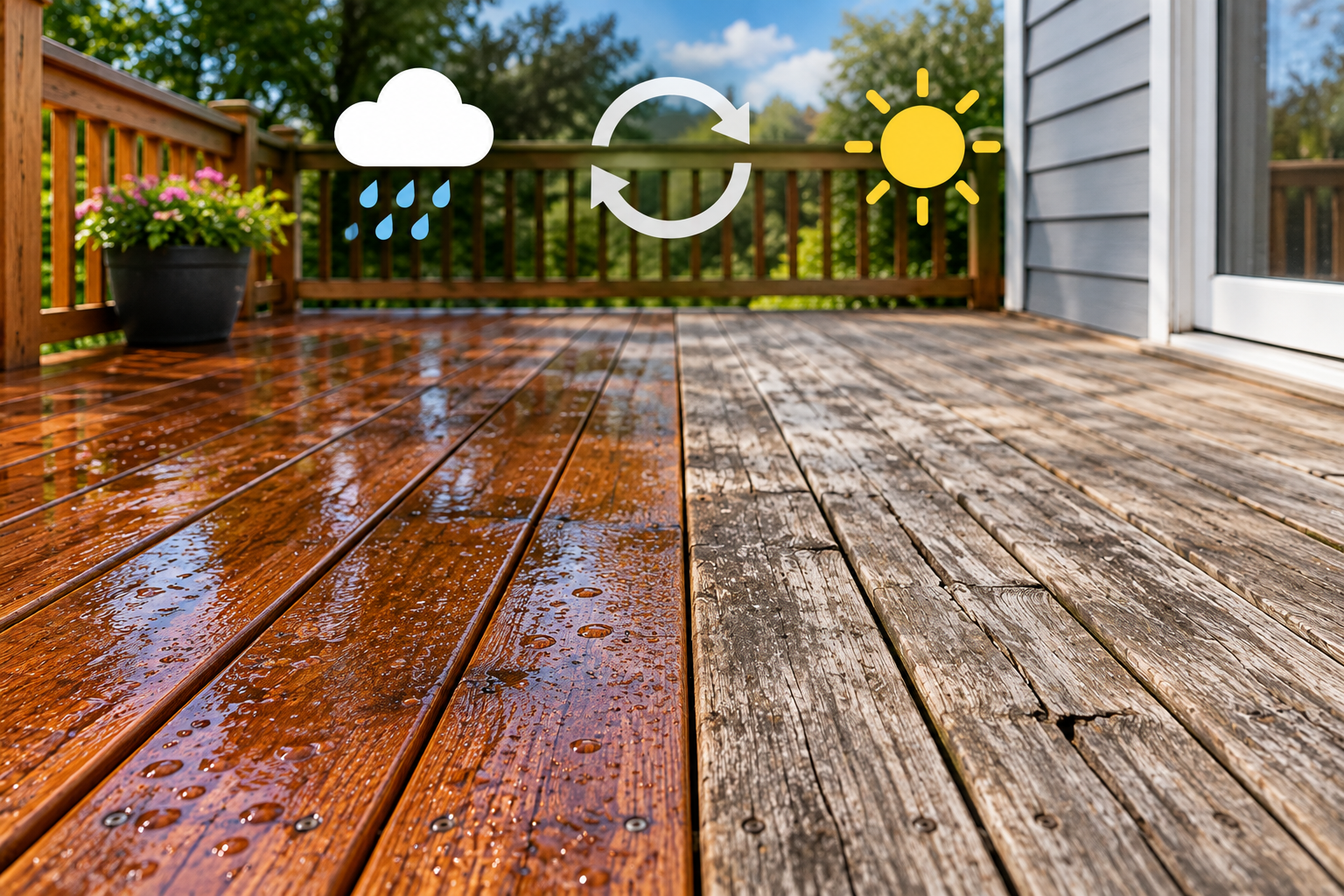
A wooden deck spends much of its life exposed to changing weather. Rain soaks into the boards, sunlight and warm temperatures dry them out, and humidity can add even more moisture between wet and dry periods. While one rainy day followed by sunshine may not seem like a major concern, repeating this process over and over can gradually weaken deck boards. Understanding how these cycles affect wood can help homeowners recognize problems before they become expensive repairs. If your deck is already showing signs of deterioration, professional help with Deck Repair in Greenville can help identify moisture-related damage and determine what needs attention.
What Are Wet-and-Dry Cycles?
A wet-and-dry cycle occurs whenever wood absorbs moisture and then loses it as conditions become warmer or drier. Deck boards naturally respond to changes in moisture content because wood is a porous material.
During wet weather, wood absorbs water and swells. When the weather becomes dry, the moisture leaves the wood, causing it to shrink. This expansion and contraction may happen gradually, but repeated cycles can put considerable stress on the boards, fasteners, joints, and protective coatings.
The problem usually isn't one cycle. It is the constant repetition.
Over months and years, repeated movement can contribute to cracking, warping, splitting, loose fasteners, surface deterioration, and other forms of damage.
Why Wood Swells When It Gets Wet
Wood contains tiny spaces and fibers that can absorb moisture from rain, humidity, and surrounding conditions. As moisture enters the wood, the fibers expand.
Deck boards don't necessarily expand equally in every direction. Their movement depends on the species of wood, grain orientation, board dimensions, age, and moisture exposure.
When boards repeatedly become saturated and then dry, this movement can gradually change their shape and condition.
For example, a board that repeatedly swells and contracts may eventually develop:
- Small surface cracks
- Splits along the grain
- Warped edges
- Raised grain
- Cupping or twisting
- Loose connections
- Rough or deteriorated surfaces
These issues may start small, but they can become more noticeable as the deck continues to experience changing weather.
How Drying Creates Stress in Deck Boards
Wet wood isn't necessarily the only concern. Drying can be just as important.
When the sun comes out after rainfall, exposed surfaces can dry relatively quickly. The top of a deck board may lose moisture faster than the underside or areas near fasteners.
This difference can create uneven movement within the board.
Over time, repeated uneven drying can encourage:
Cracking and Splitting
Small cracks may form as the wood repeatedly expands and contracts. Once a crack develops, water can enter more easily, increasing the potential for additional deterioration.
Cracks near screw holes or board ends deserve particular attention because these areas can be vulnerable to splitting.
Cupping
Cupping occurs when the edges of a board curve upward or downward compared with the center. Moisture differences between the top and bottom of a board can contribute to this problem.
Slight cupping may be mostly cosmetic, but severe movement can create uneven walking surfaces and make water drainage more difficult.
Warping and Twisting
Repeated moisture changes can cause boards to lose their original shape. A warped or twisted board may lift away from the framing or create an uncomfortable surface underfoot.
In some cases, replacing the affected board is more practical than attempting to force it back into position.
Moisture Can Also Damage the Protective Finish
Many homeowners rely on stain or sealant to reduce moisture absorption. A properly maintained finish can help protect deck boards, but it isn't permanent.
Sunlight, rain, foot traffic, dirt, and temperature changes gradually wear protective coatings down.
Once a finish becomes thin or uneven, certain parts of the board may absorb more water than others. That can make moisture-related movement less consistent across the deck.
A faded appearance isn't always just an aesthetic issue. It can be a useful reminder that the wood may need inspection and maintenance.
Watch for These Signs
You may need to inspect your deck more closely if you notice:
- Water soaking into the wood instead of forming small droplets
- Faded or peeling stain
- Gray, rough-looking boards
- Cracks around fasteners
- Splintering
- Raised board edges
- Boards that feel soft
- Persistent discoloration
- New gaps between boards
- Loose screws or nails
None of these signs automatically means the entire deck needs replacement. The important step is determining how widespread the damage is.
Wet-and-Dry Cycles Can Affect Fasteners Too
Deck boards aren't the only components affected by changing moisture levels.
As wood expands and contracts, screws and other fasteners can gradually loosen. Movement around fastener holes may enlarge the openings or reduce the wood's ability to hold the fastener securely.
A screw that once sat firmly against the board may eventually become raised.
This can create several problems. Raised screws can become a trip hazard, catch shoes, or make the deck uncomfortable to walk across. More importantly, loose connections can allow boards to move when people walk on them.
During an inspection, don't only look at the center of the boards. Check the areas around screws, nails, brackets, and other connections.
Repeated Moisture Can Increase Rot Risk
Moisture itself doesn't automatically mean a board will rot. However, consistently damp wood creates conditions that can support fungal decay.
Problems become more likely when water remains trapped against the wood or when boards don't dry properly.
Common moisture traps include:
- Leaves and debris between boards
- Soil touching deck components
- Poor drainage
- Areas beneath planters
- Dirt accumulated along the edges
- Water collecting around posts
- Poor ventilation beneath the deck
If a board stays damp for long periods, its condition can deteriorate faster than a board that gets wet but dries thoroughly.
That's why good drainage and airflow are important parts of deck maintenance.
How to Reduce Damage From Wet-and-Dry Cycles
You can't control the weather, but you can reduce how severely your deck responds to it.
Keep the Surface Clean
Leaves, dirt, and organic debris can hold moisture against the boards. Regular sweeping helps the surface dry more efficiently.
Pay special attention to spaces between boards and areas where debris tends to collect.
Maintain the Finish
A suitable exterior stain or protective coating can help limit excessive moisture absorption. However, products should be selected based on the type and condition of the wood.
Don't simply apply a new coating over boards that are already severely deteriorated. Preparation and inspection matter.
Improve Drainage
Water should be able to move away from the deck rather than pooling on or beneath it.
Check downspouts, surrounding landscaping, and areas beneath the deck. Redirecting water away from the structure can reduce unnecessary moisture exposure.
Inspect the Deck Regularly
A quick inspection several times a year can help you spot changes early.
Look for movement, cracking, discoloration, soft areas, loose fasteners, and signs of water retention. Early repairs are often simpler than addressing widespread deterioration later.
When Should You Repair or Replace a Board?
Not every damaged board needs to be replaced immediately. Minor surface checking or fading may be manageable with proper maintenance.
Replacement becomes more important when a board is:
- Soft or spongy
- Severely cracked
- Structurally split
- Heavily warped
- Rotting
- Unable to hold fasteners securely
- Creating a safety hazard
If you're unsure whether a problem is cosmetic or structural, having the affected area inspected can provide a clearer answer. A qualified Deck repair service in Valhalla can evaluate damaged boards and help determine whether individual repairs are appropriate or whether a larger section requires attention.
Why Regular Inspections Matter
One of the easiest mistakes homeowners make is waiting until damage becomes obvious.
A deck can look reasonably attractive from a distance while individual boards are already experiencing deterioration. Moisture-related damage often begins gradually, particularly around fasteners, board ends, joints, and shaded areas.
Regular inspections give you an opportunity to catch these changes before they spread.
It's also useful to inspect your deck after periods of unusually wet weather. Look for areas that remain damp longer than others, boards that have changed shape, and places where water appears to collect.
A Simple Seasonal Deck Inspection
You don't need specialized equipment to perform a basic visual inspection.
Spring
Look for damage caused by winter moisture, freezing temperatures, and temperature fluctuations. Check for new cracks, loose boards, and raised fasteners.
Summer
Inspect for excessive drying, fading, splintering, and surface cracking. Hot, sunny conditions can accelerate moisture loss from exposed boards.
Fall
Remove leaves and debris regularly. Check drainage areas and make sure organic material isn't accumulating against the deck.
After Heavy Rain
Walk around the deck and observe how quickly different areas dry. Persistent damp spots may point to drainage or ventilation problems.
The Bottom Line
Repeated wet-and-dry cycles are a normal part of owning a wooden deck, but constant moisture changes can gradually take their toll. Swelling, shrinking, cracking, warping, loose fasteners, and moisture-related decay can all develop when boards repeatedly absorb and release water.
The good news is that regular cleaning, proper drainage, timely maintenance, protective finishes, and routine inspections can help extend the life of your deck. When damage does appear, addressing it early is usually easier than waiting for small problems to become structural concerns. For homeowners looking for practical guidance and professional support, JLL Painting can be part of a broader deck maintenance plan focused on keeping outdoor wood surfaces attractive, protected, and ready for years of use.
Frequently Asked Questions
1. How often should I inspect my deck for moisture damage?
A basic inspection at least twice a year is a good starting point. It's also wise to check the deck after unusually heavy rainfall, storms, or extended periods of wet weather.
2. Can repeated rain cause deck boards to crack?
Yes. Repeated moisture absorption and drying can cause wood to expand and contract. Over time, this movement can contribute to surface checking, cracks, and splits, particularly in boards that are already weathered.
3. Does sealing a deck prevent wet-and-dry cycle damage?
A suitable stain or sealer can reduce moisture absorption and provide additional protection, but it cannot completely stop wood from responding to environmental changes. Regular maintenance is still important.
4. Should I replace a deck board that is slightly warped?
It depends on the severity and location of the warping. Minor movement may not require immediate replacement, while severe warping can create drainage or safety problems. Inspect the board and its connections before deciding.

 English
 Arabic
 French
 Spanish
 Portuguese
 Deutsch
 Turkish
 Dutch
Dutch
 Italiano
 Russian
 Portuguese (Brazil)
 Greek
Greek
