


What Amenities Should Buyers Look for at Lodha Hopefarm Whitefield?
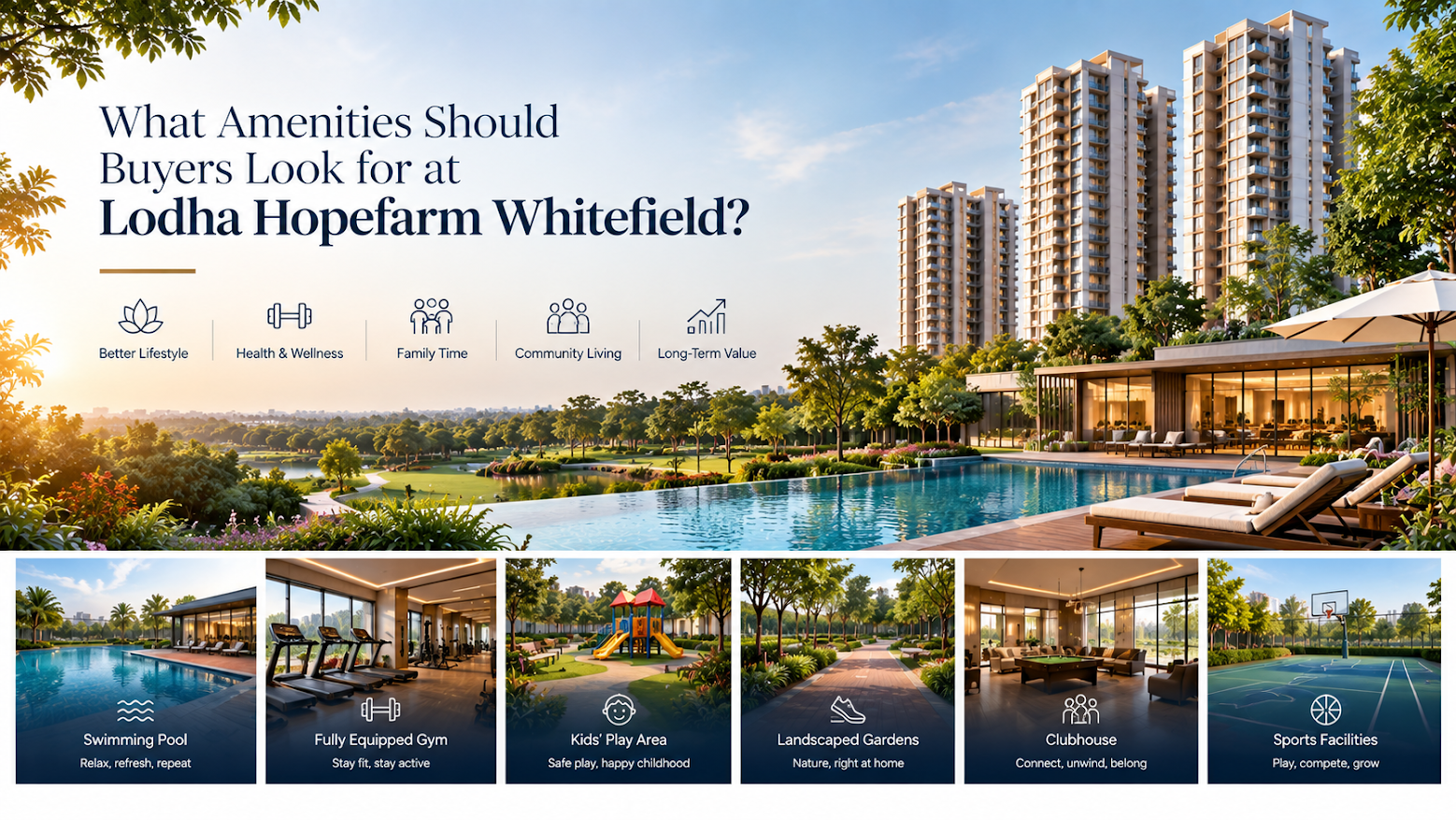
Amenities have become an important part of modern apartment living, particularly for buyers looking at premium residential communities. However, a long list of facilities does not automatically mean better everyday living. What matters is whether the amenities are useful, accessible, well-planned and suitable for the people who will actually use them. For buyers researching Lodha Hopefarm Whitefield, understanding the practical role of amenities can help create a more realistic picture of community living.
Current project information indicates that the proposed development is being planned around facilities such as a clubhouse, swimming pool, fitness areas, indoor activities, children's spaces, landscaped areas and other resident conveniences. Since the project is still at a pre-launch stage, buyers should verify the final amenity list, specifications and delivery schedule through official project documents.
Why Amenities Matter in a Premium Home
For a premium apartment, amenities can extend the usable lifestyle beyond the four walls of the residence. A well-designed community can provide spaces for exercise, relaxation, socialising and children's activities without requiring residents to travel across the city.
This can be particularly useful for families with busy weekday schedules. Instead of driving to a gym, sports facility or recreational space, residents may be able to use facilities within the community.
At the same time, buyers should consider how frequently they are likely to use each facility. A practical amenity that supports everyday routines may provide more value than a facility that looks impressive but is rarely used.
Clubhouse and Community Spaces
A clubhouse often acts as the social centre of a residential development. It can provide spaces for gatherings, indoor activities, celebrations and community interaction.
When evaluating Lodha Hopefarm Whitefield, buyers should ask about the planned clubhouse size, facilities, accessibility and operating arrangements. It is also worth understanding whether the clubhouse will be delivered along with the first phase or at a later stage.
Capacity is another important consideration. A facility needs to be large enough to serve the residential community comfortably without becoming overcrowded during weekends and peak hours.
Swimming Pool and Leisure Areas
A swimming pool can be useful for both recreation and fitness. Families may use it during weekends, while adults may incorporate swimming into their regular exercise routine.
However, buyers should look beyond the presence of a pool. Pool size, children's access, changing facilities, seating, maintenance and operating hours can all influence its practical value.
The surrounding deck and landscaping can also contribute to the overall experience, particularly for residents who use the area as a leisure space.
Fitness and Sports Facilities
Fitness facilities have become increasingly relevant to apartment buyers. A residential community may include a gym, walking or jogging areas and sports facilities.
For families, access to sports spaces can provide children with opportunities for physical activity close to home. Adults may also appreciate having exercise options without needing an additional commute.
Buyers should check whether the facilities are designed for regular use and whether sufficient space is available for the expected number of residents.
Children's Spaces
For families with young children, children's amenities can influence the overall suitability of a project.
A dedicated play area can provide children with a convenient place to spend time outdoors while parents remain close by. Depending on the final plan, other spaces may also support indoor activities or age-specific recreation.
Safety should be considered alongside appearance. Parents should look at flooring, visibility, access points, shade and separation from vehicle movement.
Landscaped Open Spaces
Open space is another important part of a residential community. Landscaped gardens, walking paths and central green areas can create places for residents to spend time outdoors.
But the amount of open space alone does not tell the complete story. Buyers should understand how much of it is genuinely usable and how much is occupied by driveways, fire access, ramps, utility areas and other infrastructure.
The current indicative master-plan information specifically recommends checking whether green areas remain practical after accounting for circulation and service requirements.
Indoor Activities and Multipurpose Spaces
Indoor spaces can become especially useful during hot weather or rainy days.
Indoor games, multipurpose rooms and community spaces can provide alternatives when outdoor facilities are less convenient. These areas can also be used for small gatherings, hobby activities or resident events depending on the final design.
Buyers should ask whether such spaces are included in the final amenity plan and whether additional usage charges may apply.
Senior-Friendly Amenities
A family home may include multiple generations, making senior-friendly facilities worth considering.
Seating areas, walking paths, shaded spaces and easy access to common facilities can make a residential community more comfortable for older residents.
The location of these spaces matters too. Senior areas should ideally be accessible without requiring long walks through vehicle-heavy zones.
Security and Everyday Convenience
Not every useful amenity is recreational. Security, visitor management, delivery handling, pedestrian movement, parking and waste management all influence everyday living.
Buyers considering Lodha Hopefarm Whitefield should ask how visitor entry will be managed, where delivery vehicles will stop, how school buses and cabs will operate, and whether service movement is separated from resident circulation.
These operational details may not be as visually impressive as a swimming pool or clubhouse, but they can have a direct effect on daily convenience.
Maintenance Is Part of the Amenity Experience
An amenity is useful only when it is properly maintained.
Before booking, buyers should ask about estimated maintenance charges and understand what these charges are expected to cover. Swimming pools, landscaped areas, gyms, security systems, lifts and clubhouse facilities all require ongoing maintenance.
It is also useful to understand who will manage the facilities after possession and how the residents' association will eventually become involved.
Check Amenity Phasing
For a large residential development, amenities may not all become operational simultaneously.
Buyers should ask which facilities are part of the initial phase and which may be delivered later. If construction continues around occupied towers, residents should also understand how access to amenities will be managed during the development period.
This is particularly important for buyers planning to move in soon after possession.
Match Amenities With Your Lifestyle
The right amenity package depends on the household.
A family with children may prioritise play areas, swimming facilities and open spaces. Working professionals may value a gym, walking track or multipurpose space. Older residents may prefer landscaped areas, seating and quieter community zones.
Therefore, buyers should create their own priority list instead of choosing a project simply because its brochure contains a long amenity list.
Final Thoughts
Amenities can add significant convenience to apartment living, but their real value depends on planning, accessibility, capacity, maintenance and delivery. For buyers exploring Lodha Hopefarm Whitefield, the clubhouse, pool, fitness facilities, children's areas, landscaped spaces and resident conveniences should be evaluated alongside the apartment itself.
Since the project is still being developed and final details may change, buyers should verify the latest official amenity plan, master plan, specifications, maintenance estimates and delivery commitments before booking.
A thoughtful evaluation can help buyers understand whether the proposed community facilities genuinely support their lifestyle rather than simply adding more features to a brochure.
FAQs
1. What amenities are expected at Lodha Hopefarm Whitefield?
Current project information points toward a clubhouse, pool, fitness facilities, indoor activities, children's spaces, landscaping and resident conveniences. The final list should be verified from official documents.
2. Why is clubhouse capacity important?
A clubhouse needs to accommodate residents comfortably, particularly during weekends and community events.
3. Should buyers check maintenance costs for amenities?
Yes. Maintenance of pools, landscaping, gyms, security and common facilities contributes to recurring ownership expenses.
4. Are children's amenities important for families?
They can be, particularly for households with young children who want recreational spaces close to home.
5. What should buyers check about landscaped areas?
Check whether the open spaces are genuinely usable, accessible and separated from vehicle movement.
6. Can amenities be delivered in phases?
Yes, depending on the project's development plan. Buyers should ask which facilities are included in the initial phase.
7. What operational amenities should buyers ask about?
Visitor management, delivery areas, security, parking, waste handling, cab movement and service access are worth discussing.
8. Should buyers choose a project based only on its amenities?
No. Amenities should be considered alongside location, apartment layout, project documents, total cost, construction status and the household's actual requirements.

 English
 Arabic
 French
 Spanish
 Portuguese
 Turkish
 Dutch
Dutch
 Italiano
 Russian
 Romaian
 Portuguese (Brazil)
 Greek
Greek
