


How to Become a Pilot in India: Step-by-Step Guide to Pilot Training
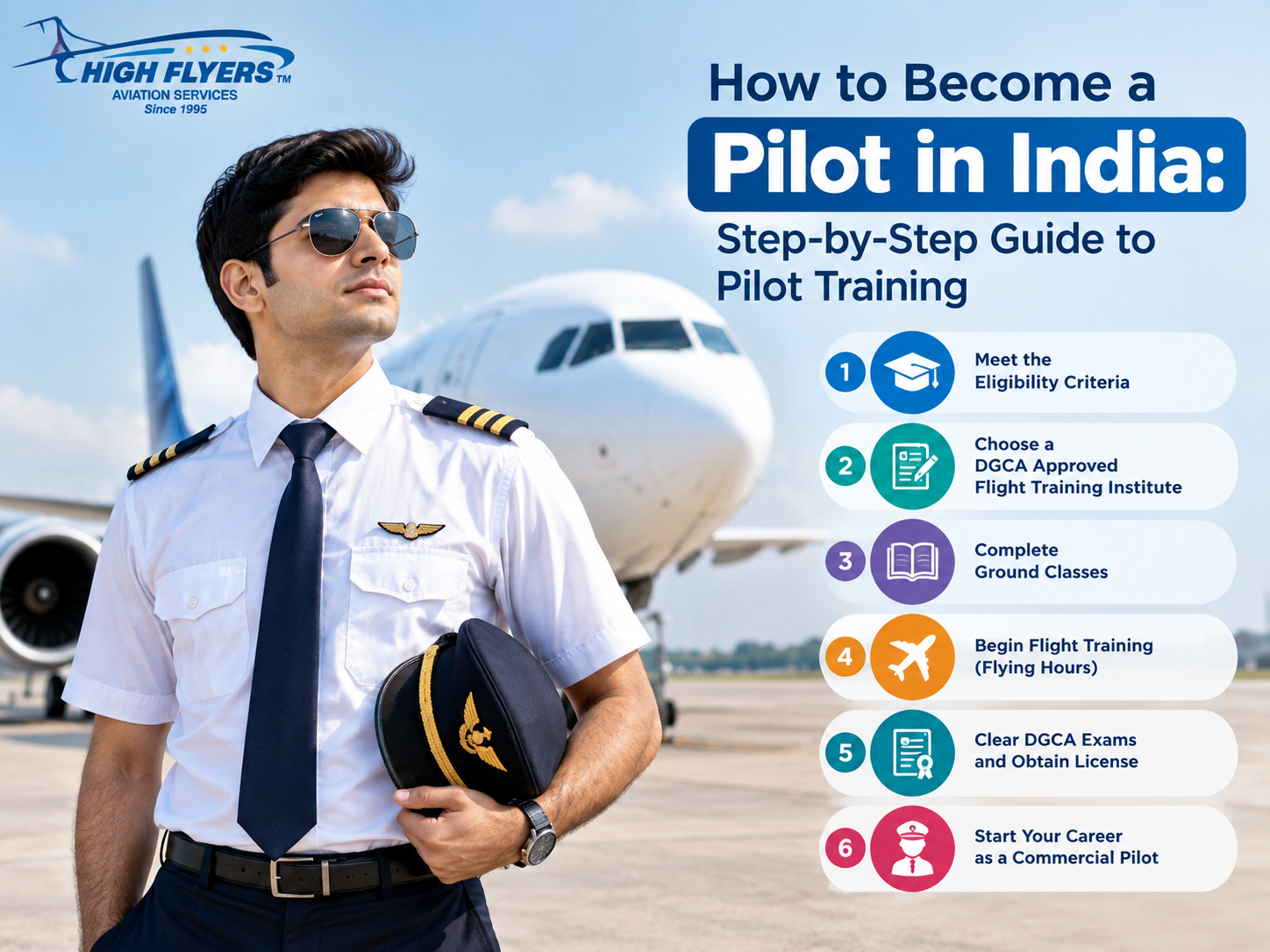
Have you ever looked at an aircraft flying across the sky and wondered how to become a pilot? For many students, becoming a pilot is an exciting career goal that combines technology, responsibility, travel, and professional growth. In India, aspiring pilots need to meet eligibility requirements, complete ground training, undergo flight training, and obtain the required licences. Choosing the right training institute can make this journey more structured. The High Flyers helps students understand the different stages of pilot training and prepare for a professional aviation career.
Who Can Become a Pilot in India?
Students who want to become commercial pilots need to meet specific educational and regulatory requirements. Generally, students should complete Class 12 with Physics and Mathematics or meet the applicable equivalent requirements.
Students must also meet the applicable medical standards for pilot licensing. A medical assessment helps determine whether a candidate meets the required aviation health standards.
Before joining a pilot training programme, students should carefully check the current requirements applicable to their desired licence. Understanding eligibility at the beginning can help students avoid confusion later.
How to Become a Pilot After 12th
Many students start planning their aviation careers after completing Class 12. The first step involves understanding the eligibility requirements and deciding which type of pilot career they want to pursue.
Students interested in becoming commercial pilots generally work toward a Commercial Pilot Licence, commonly known as a CPL. The process involves theoretical studies, examinations, flight training, and the completion of required flying experience.
A student can follow these basic steps:
-
Complete the required educational qualifications.
-
Meet the applicable medical requirements.
-
Register for the required aviation examinations.
-
Complete DGCA ground training.
-
Choose a suitable flight training organisation.
-
Complete the required flight training.
-
Pass the applicable examinations and skill tests.
-
Apply for the appropriate pilot licence.
Following a structured process helps students understand what they need to accomplish at every stage.
Step 1: Complete Your Educational Qualification
Education provides the foundation for pilot training. Students generally need Physics and Mathematics at the required level for commercial pilot training.
These subjects become useful during aviation studies. Mathematics supports navigation and flight calculations, while Physics helps students understand aircraft movement, forces, and basic aerodynamics.
Students who have questions about eligibility should verify the current DGCA requirements before beginning their training.
Step 2: Complete Your Medical Examination
Medical fitness is an important part of pilot training. Aspiring pilots need to complete the appropriate aviation medical examinations according to the licence they intend to obtain.
Students should complete their medical assessment early. Doing so can help them understand whether they meet the applicable requirements before making major training commitments.
Medical requirements can differ depending on the type of licence and applicable regulations. Therefore, students should always follow current official requirements.
Step 3: Start DGCA Ground Training
Ground training introduces students to the theoretical side of aviation. It covers important subjects that commercial pilots need to understand before and during flight training.
Students may study areas such as Air Navigation, Aviation Meteorology, Air Regulations, and aircraft-related technical subjects.
Ground classes also help students prepare for the relevant DGCA examinations. Regular study, revision, practice questions, and instructor guidance can improve understanding.
The High Flyers focuses on helping aspiring pilots build a strong theoretical foundation as they progress toward their aviation goals.
Step 4: Choose the Right Pilot Training School
Choosing the right Best Pilot training school requires careful research. Students should not select an institute based only on advertisements or course fees.
Instead, they should examine factors such as:
-
Training structure
-
Instructor qualifications
-
Aircraft availability
-
Flight scheduling
-
Ground training facilities
-
Safety procedures
-
Student support
-
Training location
-
Examination preparation
-
Additional training costs
Students should also understand how the institute manages practical flight training. Consistent access to aircraft and instructors can support continuity during the learning process.
Step 5: Complete Flight Training
Flight training allows students to apply classroom knowledge inside the cockpit. Under instructor supervision, students gradually learn essential flying skills.
Training can include aircraft handling, take-offs, landings, navigation, communication, circuit procedures, flight planning, and emergency procedures.
Students also learn how to make decisions while managing different aspects of a flight. With regular practice and instructor feedback, they gradually become more confident and capable.
Flight training requires patience. Students may not master every skill immediately, and consistent practice plays an important role in development.
Step 6: Prepare for Pilot Examinations
Theoretical examinations form an important part of the pilot licensing process. Students need to understand the syllabus and prepare systematically.
Creating a study schedule can make preparation easier. Students can divide subjects into smaller sections, revise regularly, solve practice questions, and discuss difficult concepts with instructors.
Strong theoretical knowledge also supports practical flying. For example, navigation knowledge helps students understand flight planning, while meteorology knowledge helps them interpret weather information.
Step 7: Build Professional Aviation Skills
A commercial pilot needs more than technical knowledge. Professional skills also matter.
Communication, discipline, teamwork, situational awareness, decision-making, time management, and attention to procedures are important qualities in aviation.
Students can begin developing these skills during their training. Preparing before flights, following standard procedures, listening to instructor feedback, and reviewing lessons after every session can create valuable professional habits.
Considering the Best Pilot Training Institute in Jammu
Students researching training options may also come across the phrase Best Pilot training institute in Jammu. Jammu can be considered by students looking for aviation training opportunities in the region.
However, students should evaluate any training institute based on relevant factors rather than relying solely on a “best” label. Course structure, instructor support, facilities, aircraft availability, safety practices, and training requirements should all be examined before enrollment.
The same approach applies when comparing pilot training options across India.
Why Choose The High Flyers?
The High Flyers helps aspiring pilots understand the different stages involved in professional pilot training. From theoretical preparation to practical flying, students need proper guidance throughout their journey.
The institute provides an environment where students can focus on aviation knowledge and develop the foundation required for their future career.
Students who are searching for a Best Pilot training school should take time to understand their own goals and compare relevant training factors before making a decision.
A Student’s Conversation About Becoming a Pilot
Mampi: I want to know how to become a pilot. Can The High Flyers guide me?
The High Flyers: Yes, Mampi. We can explain the training steps, eligibility, exams, and flight-training journey.
Common Mistakes Aspiring Pilots Should Avoid
Students sometimes make decisions without researching the complete training process. One common mistake is focusing only on the advertised course fee without checking additional expenses.
Another mistake involves choosing a training school without understanding aircraft availability or flight scheduling.
Students should also avoid ignoring theoretical studies. Ground knowledge directly supports practical flight training and professional aviation development.
Finally, students should maintain realistic expectations. Pilot training requires commitment, discipline, financial planning, and consistent effort.
FAQs
1. How to become a pilot after Class 12?
Students generally need to meet the applicable educational and medical requirements, complete ground training, pass required examinations, undergo flight training, and fulfil the requirements for the desired pilot licence.
2. What subjects are important for pilot training?
Physics and Mathematics are particularly important for aspiring commercial pilots. Students also study aviation subjects such as navigation, meteorology, regulations, and technical topics.
3. How do I choose the Best Pilot training school?
Compare the curriculum, instructors, aircraft availability, facilities, safety procedures, flight scheduling, examination support, and overall training requirements before enrolling.
4. Is ground training necessary for aspiring commercial pilots?
Yes. Ground training provides essential theoretical knowledge and helps students prepare for the examinations and practical aspects of professional flying.
Conclusion
Understanding how to become a pilot is the first step toward planning a professional aviation career. Students need to understand eligibility, complete the appropriate medical examination, study aviation theory, pass required examinations, and gain practical flight experience.
Choosing a suitable training institute also matters. Whether a student is researching the Best Pilot training institute in Jammu, a Best Pilot training school, or other training options in India, careful research can help them select a programme that matches their goals.
With dedication, structured preparation, and consistent training, aspiring pilots can build the knowledge and practical skills required to progress toward a commercial aviation career. The High Flyers supports students throughout this learning journey and helps them take informed steps toward their aviation ambitions.

 English
 Arabic
 French
 Spanish
 Portuguese
 Deutsch
 Turkish
 Dutch
Dutch
 Italiano
 Russian
 Romaian
 Portuguese (Brazil)
