


Will There Be A Free Boiler Scheme In 2026?
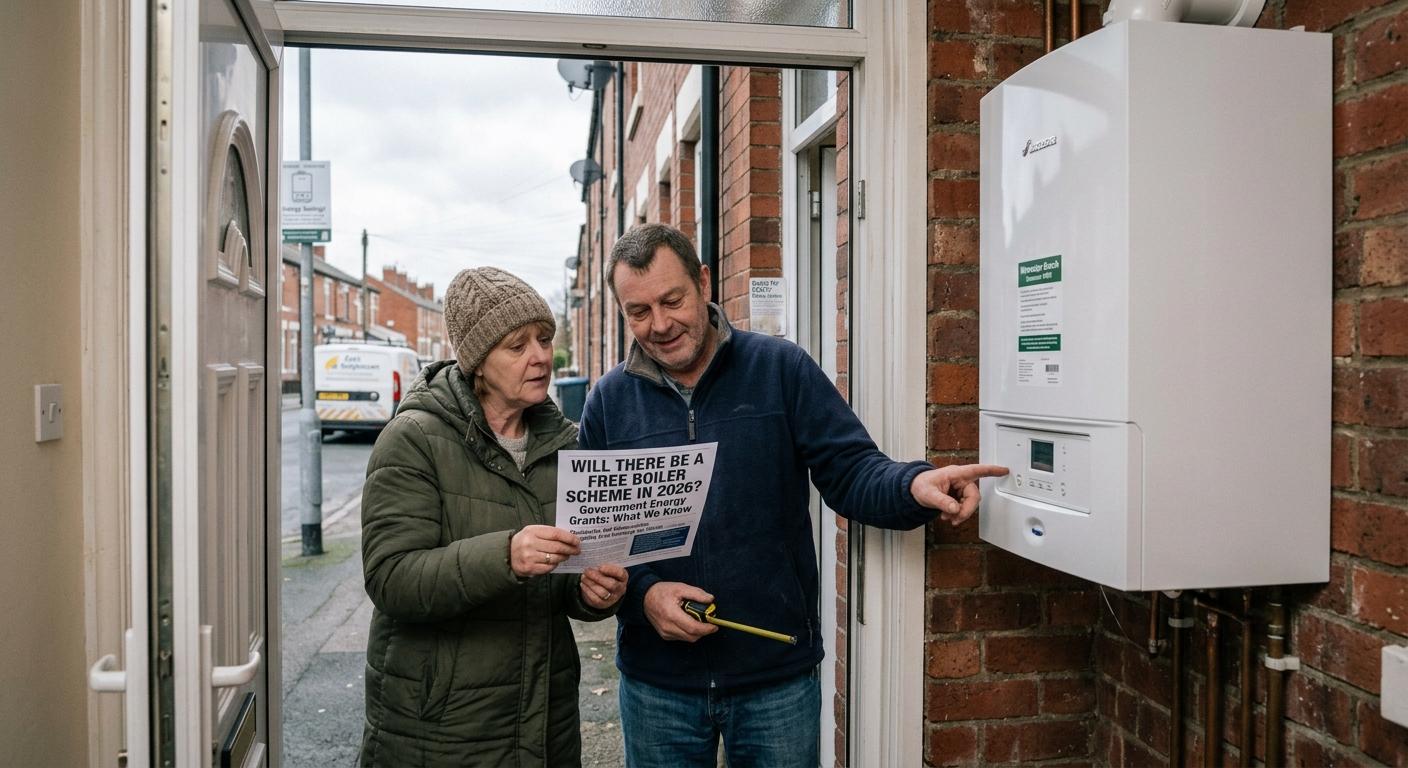
If you are hoping to replace an old boiler without paying the full cost, 2026 has several forms of government-backed support, but there is not one nationwide scheme that simply gives every household a free boiler.
The rules also depend on where you live, your income, your property and the heating system you already have. That makes it important to look at the actual scheme behind an offer rather than relying on adverts that use the phrase “free boiler scheme”.
For homeowners in England, government support is changing as older programmes close and newer home upgrade funding expands.
What Is Happening To Boiler Grants In 2026?
ECO4 was extended to 31 December 2026. The government has also confirmed that there will be no successor supplier obligation to ECO4. Instead, additional funding is being directed towards low-income households through the wider Warm Homes Plan.
That does not mean every household can claim a replacement boiler before the end of 2026. ECO4 support has its own eligibility rules, and funding is delivered through participating energy suppliers and installers.
The change is worth knowing because an advert promising a “free boiler” may refer to a specific eligibility route rather than a new universal boiler replacement programme.
Could You Still Get Help With Heating Costs?
Yes, but the support may not take the form of a free gas boiler.
The Warm Homes: Local Grant is already being delivered in England. It supports energy improvements and low-carbon heating for eligible low-income households living in privately owned homes with an EPC rating from D to G. The local authority arranges approved work, and eligible occupants do not contribute towards the agreed improvements.
The measures can include insulation, smart controls, solar panels and air source heat pumps. A replacement gas boiler is not listed as one of the standard measures in the current Warm Homes: Local Grant guidance.
This is an important difference. If your existing boiler is old, you should not assume that a grant designed to improve the home's energy performance will automatically pay for another gas boiler.
What If Your Boiler Uses Oil?
Oil-heated homes have a different set of options.
The Boiler Upgrade Scheme currently provides support for replacing fossil-fuel heating with qualifying low-carbon systems. From 21 July 2026, eligible off-gas-grid properties that replace an oil heating system can receive up to £9,000 towards an air-to-water or ground source heat pump. This higher amount is available until 31 March 2027.
That could be relevant if you live in a rural property that relies on an oil boiler. Before comparing grants, it is also worth understanding your current heating costs. Questions such as are oil heaters expensive to run depend on fuel prices, property insulation, boiler efficiency and how much heat the household needs.
The grant therefore changes the cost of switching technology rather than simply making an oil boiler replacement free.
Is The Boiler Upgrade Scheme A Free Boiler Grant?
No. The name can cause confusion because it is a boiler-related government scheme, but its purpose is different.
The Boiler Upgrade Scheme helps fund low-carbon heating. Current grant levels include:
| Heating System | Current Grant |
|---|---|
| Air-to-water heat pump | £7,500 |
| Ground source heat pump | £7,500 |
| Air-to-air heat pump | £2,500 |
| Biomass boiler | £5,000 |
| Eligible off-gas-grid oil/LPG/coal replacement | Up to £9,000 |
The £9,000 amount applies to eligible off-gas-grid properties under the current rules, rather than being a general payment available to anyone with an oil boiler.
You also need to meet the scheme's property and installation requirements. The installer applies for the grant on the property owner's behalf, and the chosen system must meet the relevant technical requirements.
What Should You Check Before Applying?
Start with the heating system you have now. A gas boiler, oil boiler, LPG system and electric heating can lead to different options.
Then check these points:
- Your location: Some schemes only operate in England, while others cover England and Wales.
- Your EPC: Certain home upgrade programmes require a particular EPC range.
- Household income: Low-income schemes can have income or benefit criteria.
- Property ownership: Some grants are limited to privately owned homes or have separate rules for landlords.
- Existing heating: The system you want to replace can affect which support applies.
- Local funding: Council-led programmes may only operate in selected areas.
Do not pay a company simply because someone tells you that you qualify for a “free boiler”. Ask which scheme is funding the work, who administers it and what conditions apply.
What Could Happen After 2026?
The government has already set out longer-term funding through the Warm Homes Plan. It includes billions of pounds for home upgrades and continued funding for the Boiler Upgrade Scheme through 2029–30.
That points towards continued government support for heating and energy improvements, but it does not confirm a new nationwide free boiler scheme that will replace ECO4 on the same terms.
For someone planning a boiler replacement in 2026, waiting for an unnamed future scheme may not be the most useful approach. Check the support currently open in your area first, particularly if your household or property falls within a low-income or off-gas-grid programme.
The Key Point For 2026
There will be heating support available during 2026, but “free boiler scheme” is not a reliable name for one universal government grant.
ECO4 remains scheduled to run until the end of December 2026, while the Warm Homes Plan is moving more funding towards broader home upgrades and low-carbon heating. The Boiler Upgrade Scheme is also continuing, with higher support available for some off-gas-grid homes replacing oil or LPG heating.
Before applying, check the scheme's current eligibility rules and the type of heating system it actually funds. That can prevent you from spending time on a grant that was never intended to cover your boiler replacement.

 English
 Arabic
 Spanish
 Portuguese
 Deutsch
 Turkish
 Dutch
Dutch
 Italiano
 Russian
 Romaian
 Portuguese (Brazil)
 Greek
Greek
